Maintaining toilet hygiene in food processing plants requires regular cleaning, suitable toilet cleaning chemicals and proper handwashing facilities. Employee washrooms must remain clean, well-maintained and separate from food handling areas to reduce the risk of cross-contamination. Choosing the right toilet cleaning chemicals for food processing plants also means checking surface compatibility, product instructions and safe chemical handling procedures.
A planned washroom cleaning programme helps facility managers maintain hygienic employee facilities while supporting the plant’s overall food safety management system.
Why Is Toilet Hygiene Important in Food Processing Plants?
Employees move between washrooms, changing rooms, corridors and production areas during their shifts. Poor washroom maintenance can create hygiene concerns, unpleasant odours and unsuitable conditions for staff.
Common washroom cleaning challenges include:
- Toilet bowl stains and mineral deposits.
- Urine marks around toilet bases and floor edges.
- Dirt on washroom floors and wall tiles.
- Germ and soil build-up on frequently touched surfaces.
- Unpleasant odours caused by inadequate cleaning.
- Poorly maintained handwashing facilities.
- Overflowing waste bins and blocked drains.
FSSAI hygiene requirements state that food premises should provide adequate toilets with handwashing facilities and effective drainage. Toilets and changing rooms should not open directly into rooms where food is handled and must be maintained in a clean condition.
Which Areas Should Be Included in a Food Factory Toilet Cleaning Schedule?
Toilet cleaning should cover more than the toilet bowl. Housekeeping teams should follow a checklist for the entire washroom.
1. Toilet Bowls and Urinals
Clean toilet bowls and urinals regularly to manage stains, visible deposits and odours. Select a toilet cleaner suitable for the fixture material and follow its application instructions.
2. Washroom Floors and Wall Tiles
Pay attention to corners, floor edges and areas around toilet fixtures. Remove visible dirt and spills using a suitable floor or surface cleaner.
3. Washbasins and Taps
Clean washbasins, taps and surrounding surfaces regularly. Check that soap dispensers and hand-drying facilities are working and supplied.
4. Frequently Touched Surfaces
Include door handles, flush controls, taps, switches and dispensers in the cleaning schedule. These points receive repeated contact throughout the working day.
5. Waste Bins and Drainage Areas
Empty waste bins at planned intervals and clean them when required. Check drains for blockages, standing water and unpleasant odours.
How to Choose Toilet Cleaning Chemicals for Food Processing Plants
Selecting a suitable toilet cleaner requires attention to the cleaning task and the washroom surfaces.
1. Check the Type of Stains
Identify whether the main problem is toilet bowl staining, mineral deposits, urine marks or general dirt. Choose a product whose stated purpose matches the cleaning requirement.
2. Check Surface Compatibility
Toilet fixtures and washroom surfaces may include ceramic, porcelain, stainless steel, chrome and other materials.
Do not assume that a toilet bowl cleaner is suitable for every washroom surface. Check the manufacturer’s instructions before using it on taps, metal fittings, floors or other materials.
3. Review Product Instructions
Check the product label for dilution, application method, contact time, rinsing instructions and precautions. Do not estimate the quantity or mix the cleaner with other chemicals.
4. Consider Chemical Storage and Handling
Keep cleaning chemicals in clearly identified containers and store them separately from food, ingredients and packaging materials. Housekeeping staff should follow the product’s safety instructions and use the recommended personal protective equipment.
Practical Toilet Cleaning Procedure for Food Factories
A standard procedure helps housekeeping teams maintain consistency.
- Display cleaning signs: Restrict access during cleaning and place wet-floor warning signs where required.
- Wear suitable protective equipment: Follow the product label and workplace safety procedure.
- Remove waste: Empty bins and remove visible dirt before applying cleaning chemicals.
- Clean toilet fixtures: Apply the approved toilet cleaner according to the manufacturer’s instructions.
- Clean surrounding surfaces: Use separate, designated cleaning products and tools for floors, washbasins and other surfaces.
- Clean touchpoints: Include door handles, taps, flush controls and dispensers.
- Rinse or wipe as instructed: Follow each product’s directions to remove loosened dirt and chemical residue.
- Inspect the washroom: Check cleanliness, drainage, odours, soap availability and hand-drying facilities.
- Record the activity: Enter the date, time and cleaning staff details in the washroom cleaning checklist.
How to Prevent Cross-Contamination Between Washrooms and Production Areas
Toilet hygiene is closely connected to employee hygiene.
Food processing facilities should maintain clear separation between washroom cleaning activities and production-area cleaning.
Follow these practices:
- Use dedicated cleaning tools for toilets and washrooms.
- Never use toilet-cleaning brushes or cloths on production equipment.
- Store washroom chemicals and tools separately from food-area cleaning materials.
- Ensure washrooms do not open directly into food handling areas.
- Provide convenient handwashing facilities with soap and hygienic hand-drying arrangements.
- Display handwashing instructions for employees.
- Include washroom inspections in the facility’s documented hygiene programme.
Cleaning a toilet does not replace proper handwashing or the plant’s food safety procedures.
How Eco-Green Shine Fits Food Factory Washroom Cleaning
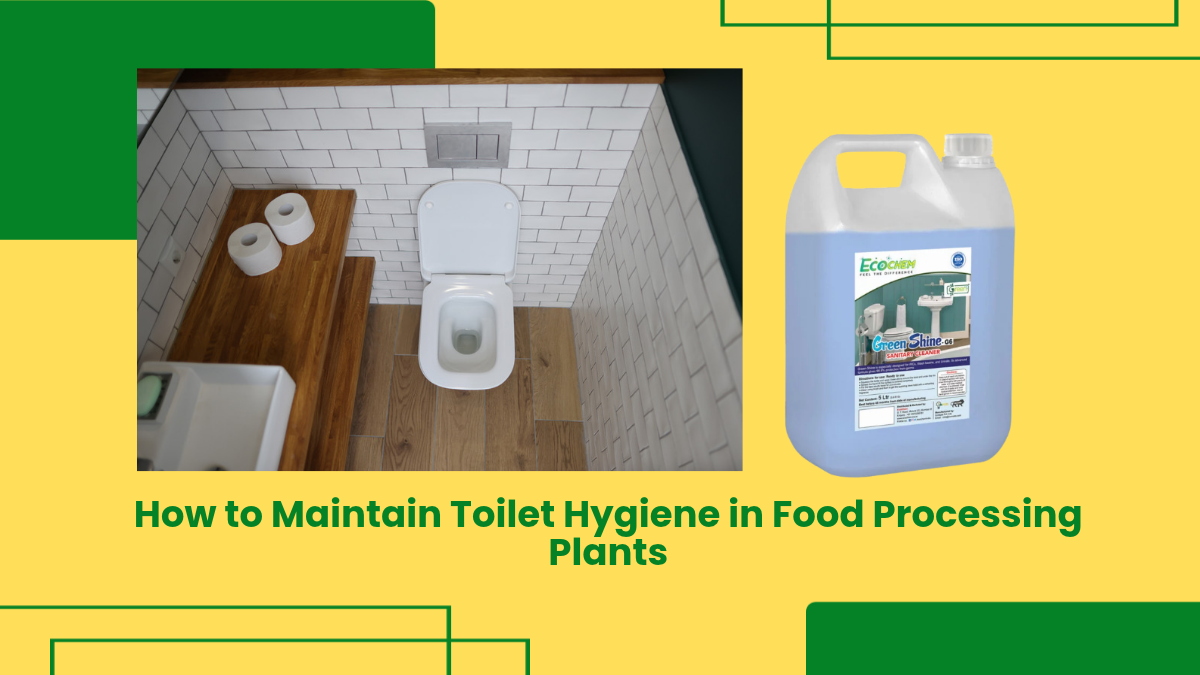
Ecochem’s Eco-Green Shine is listed on its official website as a toilet cleaner intended for cleaning toilets and ceramic surfaces. The product page describes it as a toilet-cleaning formulation for addressing tough stains.
Food processing facilities can evaluate Eco-Green Shine for compatible toilet and ceramic washroom cleaning applications, subject to the product’s current instructions.
The published product information does not establish that Eco-Green Shine is a certified disinfectant or suitable for food-contact surfaces. It should not replace a separately approved disinfection procedure where one is required.
Before purchasing, confirm the application method, dilution instructions, surface compatibility and handling precautions with Ecochem.
Explore Eco-Green Shine Toilet Cleaner for the available product information.
Common Toilet Hygiene Mistakes to Avoid
- Cleaning only the toilet bowl and ignoring surrounding surfaces.
- Using the same cleaning tools in washrooms and production areas.
- Applying toilet cleaner to surfaces without checking compatibility.
- Mixing toilet cleaners with bleach or other chemicals.
- Ignoring handwashing and hand-drying facilities.
- Leaving wet floors without warning signs.
- Storing washroom chemicals near food or packaging materials.
- Failing to maintain cleaning records.
Frequently Asked Questions
Which toilet cleaning chemicals are suitable for food processing plants?
Choose products intended for toilet and washroom cleaning, checking surface compatibility and manufacturer instructions.
How often should food factory toilets be cleaned?
Set cleaning frequency according to employee usage, visible contamination, facility procedures and documented hygiene requirements.
Can toilet cleaner be used on washroom floors?
Only when the manufacturer confirms compatibility with the floor material and intended application.
Why should toilet cleaning tools be kept separate?
Separate tools help prevent contamination from spreading between washrooms and food production areas.
Is Eco-Green Shine a disinfectant?
Ecochem lists it as a toilet cleaner. Confirm any disinfection claims with supporting product documentation.
Written By: Vinny Jain