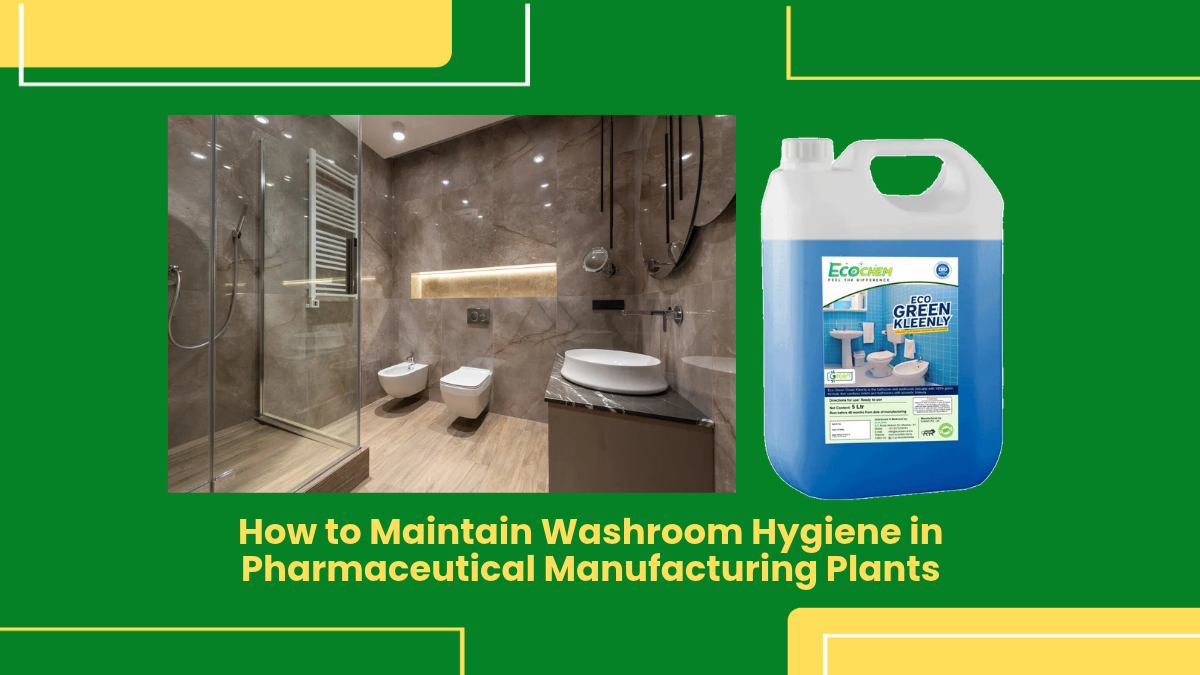
Maintaining washroom hygiene in pharmaceutical manufacturing plants requires suitable toilet cleaning chemicals, written cleaning procedures, regular inspections and proper waste management. Washrooms should be kept clean and maintained separately from production and storage areas. A suitable toilet cleaner can help remove stains, lime deposits and visible dirt, but it should not replace a separately approved disinfection procedure.
For pharmaceutical facilities, the objective is to maintain clean and usable staff washrooms while preventing hygiene risks from affecting manufacturing operations.
Why Is Washroom Hygiene Important in Pharmaceutical Plants?
Employees, visitors and contractors use washrooms throughout the working day. Poorly maintained toilets, wash basins and surrounding surfaces can create unpleasant odours, visible deposits and hygiene concerns.
Pharmaceutical GMP guidance requires toilet and washing facilities to be accessible and appropriate for the number of users. It also states that toilets should not communicate directly with production or storage areas.
Common washroom cleaning challenges include:
- Lime and hard water deposits: Mineral deposits can accumulate around toilet bowls, taps and fittings.
- Stubborn stains: Regular use can leave visible marks on ceramic surfaces.
- Unpleasant odours: Inadequate cleaning and waste removal can affect washroom conditions.
- High usage: Shared facilities need a cleaning frequency that reflects staff numbers and usage.
- Inconsistent cleaning: Missing schedules or incomplete records can result in neglected areas.
How to Choose Toilet Cleaning Chemicals for Pharmaceutical Industry
Selecting toilet cleaning chemicals for pharmaceutical industry facilities requires attention to cleaning needs, surface compatibility and the facility’s hygiene procedures.
1. Identify the cleaning requirement
Determine whether the problem involves visible stains, hard water deposits, lime deposits or general soil. Choose a product intended for the specific cleaning task rather than using one chemical for every washroom surface.
2. Check surface compatibility
Toilet bowls and ceramic surfaces may require a different cleaning approach from taps, metal fittings, tiles and other washroom materials. Check product instructions before applying a chemical to a new surface.
3. Review dilution and application instructions
Follow the manufacturer’s stated dilution, application method and contact-time instructions. Avoid mixing cleaning chemicals, as incompatible products can create hazardous reactions.
4. Separate cleaning from disinfection
A toilet cleaner removes visible soil and deposits. A disinfectant is intended to reduce or inactivate specified microorganisms under defined conditions. If disinfection is required, use a separately approved product according to the facility’s procedure.
Practical Washroom Cleaning Procedure
A written cleaning schedule helps housekeeping teams maintain consistent standards.
- Prepare the area: Display a cleaning-in-progress sign and arrange the required tools and PPE.
- Remove waste: Empty bins and dispose of waste according to site procedures.
- Clean toilet bowls: Apply the approved toilet cleaner as directed, paying attention to visible stains and deposits.
- Clean surrounding surfaces: Clean seats, flush handles, wash basins, taps, doors and frequently touched points using suitable products.
- Rinse or wipe as instructed: Follow each product’s label for removal of chemical residues.
- Disinfect where required: Apply the facility-approved disinfectant according to its label and the washroom SOP.
- Inspect and record: Check cleanliness, odour, supplies and condition of fixtures. Record the cleaning activity.
Use separate, clearly identified cleaning tools for toilets and other washroom surfaces. Do not use washroom cleaning equipment in production areas.
Safety and Prevention Tips
Pharmaceutical washrooms should be maintained through documented procedures, not occasional cleaning alone.
- Set cleaning frequencies: Establish schedules based on washroom usage and site requirements.
- Train housekeeping staff: Explain correct dilution, application, PPE and chemical storage.
- Prevent cross-contamination: Keep toilet brushes, mops and cloths separate from other cleaning equipment.
- Maintain ventilation: Address persistent moisture and unpleasant odours.
- Check supplies: Refill soap, handwashing supplies and other hygiene essentials.
- Keep records: Document cleaning activities, inspections and corrective actions.
WHO GMP guidance recommends cleaning premises according to written procedures and maintaining relevant records.
How Eco-Green Shine Fits Pharmaceutical Washroom Cleaning
Eco-Green Shine
Ecochem’s Eco-Green Shine is a toilet cleaner intended for toilet and ceramic surface cleaning. Its product information highlights cleaning of hard water stains and lime deposits.
View the official product page
The product page provides the following specifications:
- Intended application: Toilet and ceramic surface cleaning.
- Stated cleaning needs: Hard water staining and lime deposits.
- Dilution ratio: 10 ml in 1 litre of water.
- Other stated feature: Mild fragrance after application.
The page also describes its formulation as having a suitable viscosity for cleaning vertical and sloped surfaces.
For pharmaceutical facilities, Eco-Green Shine may be considered for suitable toilet and ceramic cleaning applications, subject to checking surface compatibility and the site’s chemical approval process. Its product description should not be treated as proof of validated antimicrobial performance. Use a separately approved disinfectant wherever the washroom SOP requires disinfection.
Common Washroom Cleaning Mistakes to Avoid
- Using toilet cleaner on every washroom surface without checking compatibility.
- Treating a toilet cleaner as a disinfectant.
- Mixing different cleaning chemicals.
- Ignoring product dilution instructions.
- Using the same cleaning tools for toilets and wash basins.
- Skipping cleaning records and routine inspections.
- Allowing washroom waste bins to overflow.
Conclusion
Maintaining washroom hygiene requires suitable toilet cleaning chemicals for pharmaceutical industry facilities, trained housekeeping staff, regular inspections and documented cleaning schedules. Toilet cleaning and disinfection should be treated as separate activities, with products selected according to their intended purpose.
Ecochem’s Eco-Green Shine is designed for toilet and ceramic cleaning, including hard water stains and lime deposits. Pharmaceutical facility teams should review its product instructions and confirm suitability through their internal approval process before use.
FAQ’S
Why is washroom hygiene important in pharmaceutical plants?
It supports staff hygiene, reduces visible contamination risks and helps maintain clean ancillary facilities.
Which chemicals are used for pharmaceutical washroom cleaning?
Facilities use approved toilet cleaners, surface cleaners and, where required, separately approved disinfectants.
Can Eco-Green Shine remove hard water stains?
Ecochem lists hard water staining and lime deposits among the cleaning requirements addressed by Eco-Green Shine.
What is the dilution ratio of Eco-Green Shine?
The Ecochem product page lists 10 ml of product in 1 litre of water.
Is toilet cleaner enough to disinfect pharmaceutical washrooms?
No. Use a separately approved disinfectant when required by the facility’s hygiene procedure.
Written By: Vinny Jain