Introduction
Choosing the right washroom cleaning chemicals for the pharmaceutical industry is essential for maintaining clean employee washrooms, toilets and changing facilities. Pharmaceutical manufacturing plants need planned housekeeping procedures, suitable cleaning products and trained cleaning staff to maintain hygienic conditions.
Washroom cleaning chemicals should be selected according to the type of stains, surface material, cleaning requirements and product instructions. Facilities must also distinguish routine cleaning from disinfection, as a general washroom cleaner cannot automatically replace an approved disinfectant.
For pharmaceutical manufacturers, the objective is to maintain clean and properly managed washroom facilities while preventing cleaning chemicals and equipment from creating contamination risks in production areas.
2. Common Washroom Cleaning Challenges in Pharmaceutical Plants
Pharmaceutical facilities accommodate production employees, laboratory staff, maintenance workers, contractors and visitors. Regular use of washrooms creates several housekeeping challenges.
Common problems include:
- Hard-water deposits: Mineral deposits can accumulate around taps, washbasins and toilet fixtures.
- Soap and dirt accumulation: Frequent use can leave deposits on washroom surfaces.
- Urine stains and odours: Toilet areas require regular cleaning to manage visible soiling and unpleasant smells.
- Grease and stubborn stains: Certain washroom surfaces may collect difficult-to-remove marks.
- Frequent usage: Shared facilities require consistent cleaning schedules throughout operating hours.
If these problems are not addressed, washrooms can become difficult to maintain and may affect employee comfort and workplace hygiene.
3. How to Choose Washroom Cleaning Chemicals for the Pharmaceutical Industry
Before purchasing a washroom cleaner, facility managers and procurement teams should evaluate the following factors.
A. Cleaning Performance
Select chemicals according to the type of contamination.
For example:
- Toilet bowls require products specifically intended for toilet cleaning.
- Washbasins need cleaners compatible with their material.
- Floor surfaces require suitable floor-cleaning products.
- Hard-water deposits may require a product designed for descaling.
One chemical should not automatically be used for every washroom surface.
B. Surface Compatibility
Washrooms contain different materials, including ceramic, stainless steel, chrome fittings, plastic and natural stone.
Acid-based cleaners can damage acid-sensitive surfaces such as marble and certain metal finishes. Always check product compatibility before application.
C. Dilution Instructions
The manufacturer’s dilution instructions help housekeeping teams prepare cleaning solutions consistently.
Check:
- Recommended chemical-to-water ratio.
- Application method.
- Required contact time, if specified.
- Rinsing instructions.
- Storage and handling precautions.
Use measuring equipment rather than estimating chemical quantities.
D. Safety Documentation
Procurement teams should request the product label, technical information and Safety Data Sheet (SDS).
These documents help determine appropriate handling, protective equipment, storage and emergency precautions.
4. Practical Washroom Cleaning Procedure for Pharmaceutical Facilities
A structured cleaning procedure helps maintain consistency across employee washrooms and shared facilities.
Recommended housekeeping steps:
- Display wet-floor warning signs before cleaning.
- Remove visible waste and dispose of it according to facility procedures.
- Clean washbasins, taps and other approved surfaces using compatible products.
- Apply the designated toilet cleaner according to its instructions.
- Clean floors using an appropriate floor-cleaning chemical.
- Rinse surfaces wherever required by the product instructions.
- Check washroom fixtures, drainage areas and visible stains.
- Replenish handwash, tissue and other hygiene supplies.
- Record the cleaning activity according to the facility’s housekeeping SOP.
Cleaning equipment should be separated between toilets, washbasins and other areas to reduce the risk of transferring contamination.
5. GMP and Safety Considerations for Pharmaceutical Washrooms
Pharmaceutical washrooms require attention because they are part of the facility’s overall hygiene management system.
India’s Schedule M GMP requirements address the provision and maintenance of washing and toilet facilities, including written cleaning and disinfection instructions. pharmexcil.com+1
Facility managers should consider the following:
- Establish written washroom cleaning schedules.
- Assign responsibilities to trained housekeeping employees.
- Use designated cleaning equipment for washroom areas.
- Keep cleaning chemicals labelled and properly stored.
- Follow product-specific handling and dilution instructions.
- Keep washroom cleaning materials separate from production-area materials.
- Maintain cleaning records according to internal SOPs.
- Use approved disinfectants where disinfection is required.
Important: Cleaning and disinfection are different processes. A washroom cleaner may remove dirt and deposits, but antimicrobial effectiveness must not be assumed without supporting product evidence.
6. How Eco-Green Kleenly Fits Pharmaceutical Washroom Cleaning
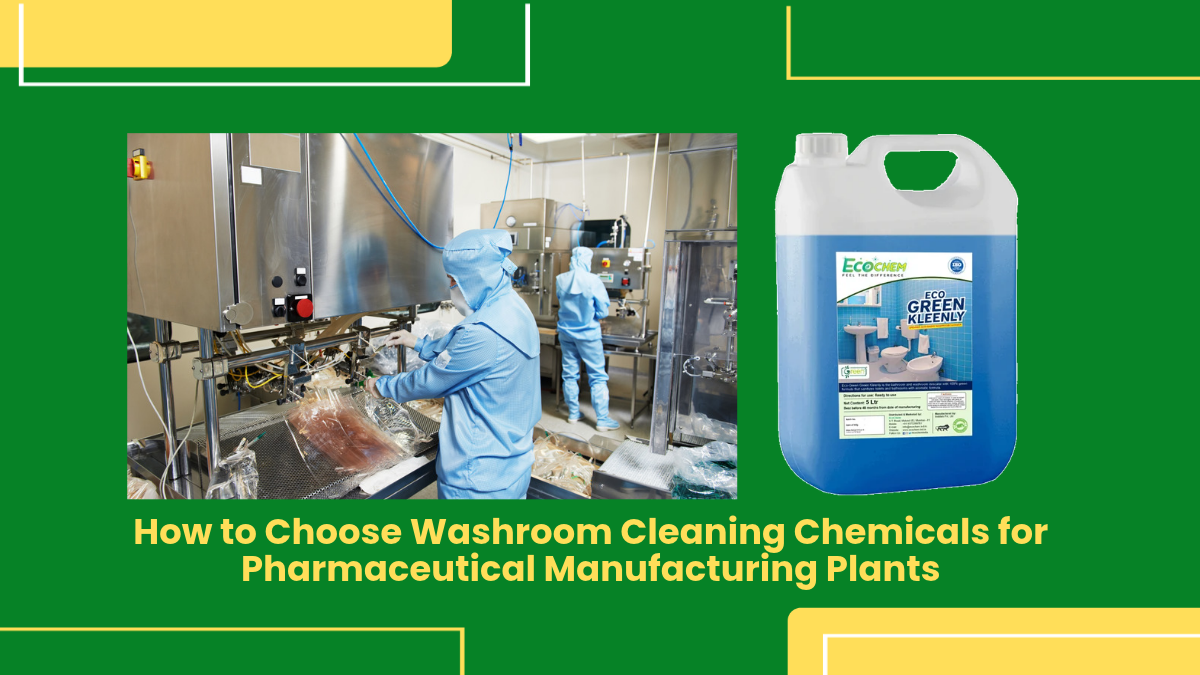
Eco-Green Kleenly by Ecochem
Eco-Green Kleenly is an acid-based washroom and bathroom cleaning product developed for removing stubborn stains and deposits. Ecochem lists pharmaceutical facilities among the industries it serves.
Published dilution ratio: 10 ml in 1 litre of water.
According to Ecochem’s official product information, Eco-Green Kleenly has the following stated features:
- Designed for washroom and bathroom cleaning.
- Acid-based formulation.
- Intended for tackling stubborn stains, including oil, grease and paint marks.
- Published dilution ratio of 10 ml per litre of water.
- Described by Ecochem as having an aromatic formulation.
For pharmaceutical facilities, it may be evaluated for suitable washroom cleaning applications, subject to the specific surface material and facility approval.
Because it is acid-based, it should not be assumed suitable for marble, acid-sensitive metals or every washroom fitting. Its use should also follow the latest product label and SDS.
Explore the Eco-Green Kleenly Washroom and Bathroom Cleaner for product details.
7. Common Mistakes to Avoid When Selecting Washroom Chemicals
Pharmaceutical housekeeping teams should avoid these mistakes:
- Using the same chemical on every washroom surface.
- Applying acid-based cleaners to marble or acid-sensitive fittings.
- Increasing chemical concentration without manufacturer instructions.
- Mixing different cleaning chemicals.
- Ignoring product labels and safety instructions.
- Using washroom cleaning equipment in production areas.
- Treating a cleaning chemical as a disinfectant without verification.
- Skipping cleaning inspections and documentation.
Following product instructions and facility SOPs helps maintain consistent washroom cleaning practices.
8. Washroom Maintenance Checklist for Pharmaceutical Facilities
Facility managers can use this checklist to monitor routine housekeeping activities.
- Clean toilet bowls and approved toilet surfaces.
- Remove visible stains from washbasins.
- Clean taps and compatible fittings.
- Remove dirt and deposits from suitable floor surfaces.
- Check drainage areas.
- Refill handwash and tissue dispensers.
- Empty waste bins.
- Check for unpleasant odours and visible soiling.
- Verify cleaning records.
- Ensure cleaning chemicals are stored correctly.
Cleaning frequency should depend on the number of users, washroom conditions and facility requirements.
Conclusion
Selecting suitable washroom cleaning chemicals for pharmaceutical industry applications requires attention to cleaning performance, surface compatibility, dilution instructions and chemical safety.
Pharmaceutical manufacturers should establish documented housekeeping schedules and use separate cleaning procedures for washrooms and production areas.
Ecochem’s Eco-Green Kleenly is an option to evaluate for suitable washroom cleaning requirements. Its acid-based formulation makes surface compatibility particularly important before use.
Choosing the right cleaning chemical and following an organised housekeeping routine can help pharmaceutical facilities maintain cleaner employee washrooms and better workplace hygiene.
FAQ’S
Which cleaning chemicals are used in pharmaceutical plant washrooms?
Common options include toilet cleaners, washbasin cleaners, floor cleaners and suitable descaling products selected according to surface requirements.
Why is washroom cleaning important in pharmaceutical manufacturing plants?
Regular washroom cleaning supports workplace hygiene, employee comfort and the facility’s overall sanitation programme.
Can acid-based cleaners be used on all washroom surfaces?
No. Acid-based cleaners may damage marble, certain metals and sensitive finishes. Always check product compatibility.
What is the dilution ratio of Eco-Green Kleenly?
Ecochem lists 10 ml of Eco-Green Kleenly per litre of water. Follow the latest manufacturer instructions.
Is a washroom cleaner the same as a disinfectant?
No. A cleaner removes dirt and deposits, while a disinfectant requires demonstrated antimicrobial effectiveness under specified conditions.