Choosing the right food processing floor cleaning chemicals depends on the type of flooring, the contamination present and the hygiene requirements of each facility area. Food processing floors may collect food particles, oil, grease, dust, water and packaging waste. A suitable floor cleaner should match the surface and cleaning task, while the cleaning procedure must prevent chemical residue and cross-contamination.
Facility managers should assess production floors, packing areas, storage zones and staff movement areas separately rather than using one cleaning chemical for every location.
Why Is Floor Cleaning Important in Food Processing Plants?
Food processing floors experience regular movement of employees, raw materials, trolleys and equipment. Spills and production waste can accumulate during operations.
Common floor-cleaning challenges include:
- Food particles and ingredient spills around production lines
- Oil and grease near machinery and maintenance areas
- Water accumulation in washing and processing zones
- Dust and dirt in storage and packaging areas
- Footprints and surface marks in corridors
- Slippery floors caused by spills or cleaning residue
Poor floor maintenance can increase slip risks and make it harder to maintain hygienic conditions. Floors should be easy to clean, maintained in good repair and supported by adequate drainage.
FSSAI’s hygiene requirements address floor condition, drainage, cleaning and prevention of contamination in food processing premises.
What Should You Consider Before Selecting Floor Cleaning Chemicals?
1. Identify the Floor Material
Food processing facilities may have ceramic tiles, concrete, epoxy-coated floors, marble or other industrial flooring materials.
A cleaner suitable for one material may not be appropriate for another. Before purchasing a product, check its compatibility with the floor finish and the manufacturer’s maintenance recommendations.
2. Identify the Type of Dirt
Different contaminants may require different cleaning approaches.
| Floor contamination | Cleaning consideration |
|---|---|
| Food particles and loose dirt | Remove debris before wet cleaning |
| Everyday dust and footprints | Use a suitable routine floor cleaner |
| Water and rust stains | Check whether the product is intended for these stains |
| Heavy oil and grease | Assess whether a specialised degreaser is required |
| Sticky food spills | Follow a suitable cleaning procedure for the residue and floor |
A routine floor cleaner should not automatically be expected to remove heavy industrial grease.
3. Consider the Area Being Cleaned
Divide the facility into cleaning zones:
- Production areas: Follow the plant’s documented hygiene and contamination-control procedures.
- Packaging areas: Prevent chemical splashes or residues from reaching packaging materials.
- Storage areas: Manage dust, spills and dirt from material movement.
- Staff corridors: Maintain regular cleaning to manage foot traffic and tracked-in dirt.
- Maintenance areas: Assess whether oil and grease require a separate degreasing product.
4. Check Dilution and Product Instructions
Concentrated cleaning chemicals must be prepared according to the manufacturer’s instructions. Incorrect dilution can affect cleaning results and may leave unnecessary chemical residue.
Review the label for dilution, application method, contact time, rinsing requirements and precautions.
How to Clean Food Processing Plant Floors Effectively
A consistent cleaning procedure helps housekeeping teams manage routine dirt and respond to spills.
Step 1: Remove Loose Dirt and Food Debris
Collect loose food particles, dust and packaging waste before wet cleaning. This prevents debris from spreading across the floor.
Step 2: Protect Food and Packaging Materials
Follow the facility’s procedure for stopping or protecting nearby operations. Remove or cover exposed food and packaging materials as required before applying cleaning chemicals.
Step 3: Prepare the Cleaning Solution
Use the correct product for the floor material and contamination. Measure the chemical according to its label instructions instead of estimating the quantity.
Step 4: Clean the Floor Systematically
Use suitable mops, brushes or floor-cleaning equipment. Work in a planned direction so that dirty water is not carried back into cleaned sections.
Keep cleaning tools assigned to their designated zones to reduce cross-contamination.
Step 5: Remove Residue and Manage Water
Rinse or remove cleaning solution according to the product instructions. Avoid leaving standing water, particularly in high-traffic areas.
Step 6: Inspect Before Reopening the Area
Check for remaining dirt, visible residue and slippery patches. Use warning signs or restrict access until the floor is safe for movement.
Record the cleaning activity according to the facility’s cleaning schedule.
Safety and Hygiene Considerations
Food processing facilities need more than a clean-looking floor. Cleaning chemicals must be stored, prepared and used in a controlled manner.
Keep these practices in place:
- Store cleaning chemicals separately from food, ingredients and packaging materials.
- Keep products in clearly identified containers.
- Follow the product label and Safety Data Sheet (SDS), where available.
- Use the recommended personal protective equipment.
- Never mix different cleaning chemicals.
- Keep floor-cleaning tools separate from equipment and food-contact cleaning tools.
- Follow the facility’s separate cleaning and disinfection procedures.
A floor cleaner should not automatically be treated as a disinfectant or as suitable for food-contact surfaces. Use a product for those applications only when the manufacturer confirms its suitability.
How Eco-Green Flo Fits Food Processing Floor Cleaning
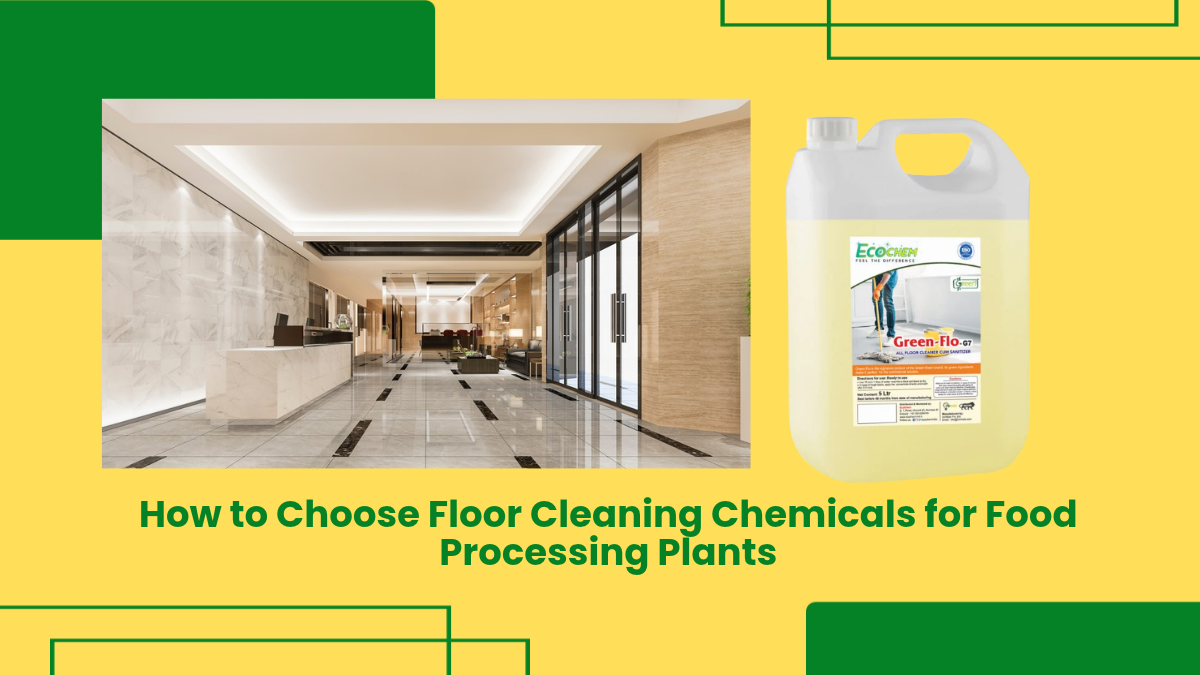
Ecochem’s Eco-Green Flo is listed on its official website as a floor-cleaning solution for industrial and commercial environments.
The product page identifies applications involving ceramic floors, floor tiles, lacquered surfaces and marble. It also mentions water and rust stains and lists a dilution ratio of 10 ml per litre of water.
Food processing facilities may evaluate Eco-Green Flo for compatible floor-cleaning tasks covered by its product instructions. Before use, confirm that the specific floor material and application are suitable.
The published product information does not establish approval for food-contact surfaces or confirm that the product can replace a facility’s required disinfection procedure. Check the current product label and contact Ecochem for application-specific guidance.
Explore Eco-Green Flo Floor Cleaner for product details.
Common Floor Cleaning Mistakes to Avoid
- Using the same chemical on every type of flooring.
- Applying a product without checking surface compatibility.
- Preparing cleaning solutions without measuring dilution.
- Allowing dirty water to spread into already-cleaned areas.
- Leaving standing water on production floors.
- Using the same cleaning tools across different hygiene zones.
- Assuming a floor cleaner also disinfects the area.
- Storing cleaning chemicals near food or packaging materials.
FAQ’S
Which floor cleaning chemicals are suitable for food processing plants?
Choose a cleaner according to floor material, contamination, product instructions and the facility’s hygiene procedures.
Can regular floor cleaner remove heavy oil and grease?
Not always. Heavy oil and grease may require a specialised industrial degreaser suitable for the surface.
How often should food factory floors be cleaned?
Set cleaning frequency according to production activity, spills, foot traffic and the facility’s documented hygiene schedule.
What is the listed dilution ratio for Eco-Green Flo?
Ecochem lists 10 ml per litre of water. Confirm the current product label before preparing the solution.
Is a floor cleaner the same as a floor disinfectant?
No. Cleaning removes dirt and soil, while disinfection is a separate process using an appropriately approved product.
Written By: Vinny Jain