
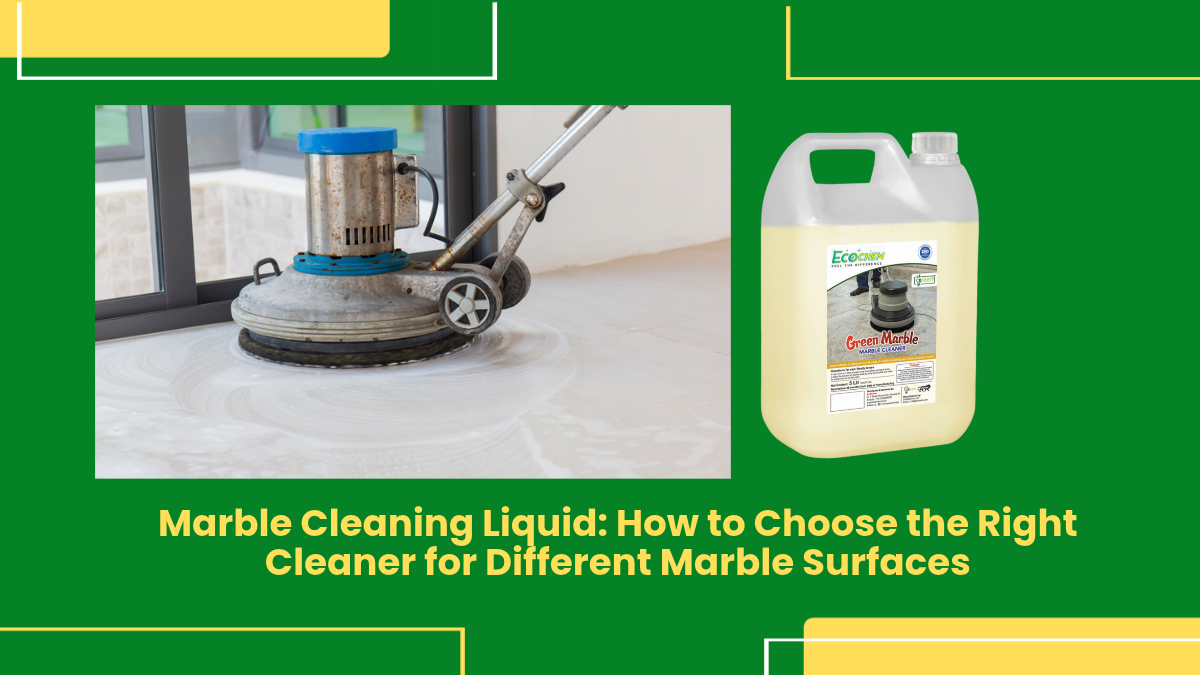
Marble is widely used in homes, hotels, offices, commercial buildings, temples, reception areas, staircases, and other high-traffic spaces. Its natural appearance makes it suitable for floors, walls, countertops, tables, and decorative surfaces. However, marble requires the right cleaning method because unsuitable chemicals can affect its appearance, finish, and surface condition.
Choosing the right marble cleaning liquid depends on the marble type, surface finish, dirt or stain, and how often you clean it. A suitable marble cleaner should remove everyday dirt without unnecessarily affecting the marble surface.
This guide explains common marble cleaning problems, how to select suitable marble cleaning chemicals, and practical prevention tips for maintaining marble surfaces.
Why Choosing the Right Marble Cleaning Liquid Matters
Marble is a natural stone containing minerals that can react to certain acidic or abrasive substances. A cleaner that works well on one type of surface may not be suitable for another.
For example, regular floor cleaning may only require a suitable marble floor cleaner, while an oil stain may require a different cleaning approach. Using the wrong chemical repeatedly can contribute to dullness, residue, staining, or changes in the surface finish.
Before selecting a product, consider:
- Marble type and finish
- Location of the marble surface
- Type of dirt or stain
- Cleaning frequency
- Whether the surface is polished, honed, or textured
- Recommended dilution and application method
Common Problems When Cleaning Marble
1. Dull or Cloudy Appearance
A polished marble floor can lose its shine when unsuitable chemicals leave residues on the surface. Repeated use of strong cleaners can also affect the appearance of some finishes.
2. Oil and Grease Stains
Marble used in kitchens, restaurants, dining areas, commercial spaces, and industrial environments may come into contact with oil and grease.
These stains can penetrate porous areas and may require a suitable cleaning product rather than ordinary floor cleaning liquid.
3. Water Marks and Mineral Deposits
Bathrooms, entrances, wash areas, and other locations exposed to water can develop deposits or marks. The cleaning method needs to consider both the deposit and the sensitivity of marble to certain chemicals.
4. Dirt in High-Traffic Areas
Marble floors in offices, shopping areas, hotels, educational institutions, and commercial buildings collect dust, soil, footwear marks, and other surface contamination.
Regular cleaning with a suitable liquid marble cleaner can help prevent dirt from building up.
5. Scratches From Abrasive Cleaning
Using abrasive powders, rough brushes, or unsuitable cleaning equipment can scratch certain marble finishes.
Cleaning should remove contamination without unnecessarily damaging the surface.
How to Choose the Right Marble Cleaning Liquid
1. Identify the Marble Surface
The first step is to identify where the cleaner will be used.
Different surfaces may include:
- Polished marble floors
- Honed marble
- Marble walls
- Staircases
- Countertops
- Tables
- Decorative marble
- Marble used in commercial entrances
A product intended for routine floor cleaning may not be the right choice for every marble application.
2. Select a Cleaner for the Specific Cleaning Problem
A general marble cleaner can be suitable for routine dirt and surface cleaning when it is designed for marble.
For specific stains, the cleaning method may need to change.
For everyday dirt
Use a marble-compatible cleaner according to the manufacturer’s recommended dilution.
For oil and grease
Identify the type of contamination first. A suitable degreasing formulation may be required, but it should be checked for compatibility with the marble surface before use.
For stains
A marble stain remover should be selected according to the type of stain rather than applying an aggressive chemical without testing.
3. Check Surface Compatibility
Before applying any marble cleaning chemicals across a large area, test the product on a small, less visible section when appropriate.
Check for:
- Colour changes
- Loss of shine
- Residue
- Surface marks
- Changes in texture
If the product causes an unwanted change, stop using it and select a more suitable formulation.
4. Follow the Recommended Dilution
Using too much cleaning chemical can leave residue and increase consumption.
A professional cleaning program should specify:
- Product quantity
- Water quantity
- Application method
- Cleaning equipment
- Rinsing requirements, where applicable
- Frequency of use
Cleaning staff should follow the manufacturer’s instructions rather than increasing the concentration to try to obtain faster results.
5. Consider the Surface Finish
Polished marble has a different appearance and maintenance requirement from honed or textured marble.
For polished surfaces, residue and scratches can be more noticeable. A cleaner selected for routine maintenance should therefore be compatible with the surface finish.
Marble Floor Cleaner for Commercial Facilities
Large commercial facilities often have significant marble flooring in entrances, corridors, reception areas, staircases, and common spaces.
A suitable marble floor cleaner should support routine cleaning without leaving unnecessary residue.
A practical marble floor cleaning process can include:
- Remove loose dust and debris.
- Prepare the cleaning solution according to the recommended dilution.
- Apply the solution using suitable cleaning equipment.
- Clean the surface evenly.
- Follow product-specific rinsing instructions where required.
- Allow the surface to dry properly.
- Inspect high-traffic areas for remaining soil or stains.
The exact method should be adjusted according to the marble type, facility conditions, and cleaning product instructions.
Solutions for Better Marble Maintenance
Use the Right Cleaning Chemical
Do not use one chemical for every surface simply for convenience. Match the product with the surface and cleaning problem.
Use Suitable Cleaning Equipment
Soft microfiber materials, appropriate mops, and non-abrasive cleaning tools can help reduce unnecessary scratching.
Clean Spills Quickly
Oil, coloured liquids, food residues, and other contaminants should be cleaned as soon as practical. Allowing stains to remain on porous stone can make cleaning more difficult.
Maintain a Regular Cleaning Schedule
Routine cleaning prevents dirt from accumulating and reduces the need for aggressive cleaning later.
High-traffic commercial areas may require more frequent cleaning than lightly used marble surfaces.
Prevention Tips for Marble Surfaces
1. Avoid Unverified Acidic Cleaners
Do not assume that a strong cleaner is suitable for marble. Certain acidic substances can affect calcium-based natural stone.
2. Avoid Abrasive Products
Scouring powders and rough cleaning tools can affect the appearance of polished marble.
3. Do Not Overuse Cleaning Chemicals
Follow the recommended dilution. More chemical does not necessarily mean better cleaning.
4. Train Housekeeping Staff
Cleaning personnel should know:
- Which cleaner is used for marble
- Correct dilution
- Suitable equipment
- Areas where the product can be used
- Required safety precautions
- When to report unusual stains or surface changes
5. Test New Products
When introducing a new liquid marble cleaner, conduct a small-area compatibility test before using it throughout the facility.
Ecochem Marble Cleaning Solutions
Ecochem provides cleaning chemical solutions for commercial and industrial cleaning requirements, including products developed for marble and hard-surface maintenance.
Ecochem’s marble cleaning solution can be evaluated for applications where regular marble surface cleaning is required. The correct product and usage method should be selected according to the marble surface, contamination, and manufacturer’s instructions.
For commercial facilities managing marble floors, entrances, reception areas, staircases, and other stone surfaces, using a suitable marble cleaning liquid can make routine maintenance easier while reducing the need for unnecessarily aggressive cleaning.
Quick Checklist Before Buying Marble Cleaning Chemicals
Before purchasing a marble cleaner, check:
- Is it suitable for marble?
- What type of surface is it designed for?
- Is it suitable for polished or honed marble?
- What type of dirt does it remove?
- What is the recommended dilution?
- Does the manufacturer provide usage instructions?
- Is a small-area compatibility test recommended?
- Is it suitable for routine commercial cleaning?
- What equipment should be used with the product?
The right marble cleaning liquid should be selected according to the marble surface and the type of contamination. Routine dirt, oil, stains, and mineral deposits may require different cleaning approaches. Correct dilution, suitable equipment, regular maintenance, and staff training are also important for protecting marble surfaces.
For commercial and institutional facilities, selecting suitable marble cleaning chemicals and following a consistent cleaning procedure can help maintain clean and presentable marble surfaces without relying on unnecessarily harsh cleaning methods.
FAQ’S
What is marble cleaning liquid?
Marble cleaning liquid is specially formulated to remove dirt, stains, and surface grime while maintaining the marble’s appearance and finish.
Can marble cleaning liquid be used on marble floors?
Yes, suitable marble cleaning liquid can clean marble floors when used according to recommended dilution and surface compatibility instructions.
Is marble cleaner safe for polished marble?
A suitable marble cleaner can be used on polished marble, but always check compatibility and test a small area first.
How often should marble floors be cleaned?
Marble floors should be cleaned regularly based on foot traffic, contamination levels, facility requirements, and the recommended cleaning procedure.
Can marble cleaning chemicals remove stains?
Some marble cleaning chemicals can remove specific stains, but the correct product depends on the stain type and marble surface.
Written By: Vinny Jain