Choosing a multipurpose cleaner for food processing facilities requires more than checking whether it removes dirt and grease. Food plants need cleaning products that suit the surface, type of soil, cleaning procedure and hygiene requirements of each area. A cleaner used on office floors may not be appropriate for processing equipment or food-contact surfaces.
A suitable selection process starts by identifying the cleaning task, checking product instructions and confirming whether rinsing is required. This guide explains how food plant managers and housekeeping teams can evaluate cleaning chemicals and where a multipurpose cleaner such as Ecochem’s Eco-Greener may fit.
Why Food Factory Cleaning Requires Careful Product Selection
Food processing facilities may have different cleaning needs across production floors, packaging areas, storage spaces, staff facilities and equipment zones. Common cleaning challenges include:
- Food residue: Ingredients, spills and deposits may remain on surfaces after production.
- Oil and grease: Some work areas accumulate oily soils that require a suitable cleaning method.
- Frequent cleaning: Repeated cleaning can affect surfaces if the chemical or procedure is unsuitable.
- Residue management: Cleaning product residues must be controlled, particularly where food-contact surfaces are involved.
- Cross-contamination risks: Cleaning tools and procedures should prevent soil or contaminants from moving between areas.
A multipurpose cleaner can support routine cleaning of suitable surfaces, but it should not replace a dedicated cleaning or sanitising process where one is required.
How to Choose a Multipurpose Cleaner for Food Processing Facilities
1. Identify the surface and cleaning task
List the surfaces that need cleaning, such as washable floors, walls, external equipment surfaces, work tables or non-production areas. Identify whether the surface contacts food directly or indirectly.
Do not assume that a product suitable for general surfaces is also suitable for food-contact equipment. Confirm the intended application with the manufacturer.
2. Match the cleaner to the type of soil
Different soils may need different cleaning approaches. Dust and light everyday dirt may be manageable with routine cleaning, while heavy grease or dried food deposits may require a more specific product or process.
| Cleaning requirement | Selection consideration |
|---|---|
| Routine dirt on washable surfaces | Consider a multipurpose cleaner approved for that surface |
| Heavy oil or grease | Check whether a dedicated degreaser is more suitable |
| Food-contact surfaces | Verify product approval and required rinsing procedure |
| Equipment and machinery | Confirm material compatibility and application method |
| Floors and walls | Check surface type, dilution and residue instructions |
3. Check the product instructions
Before use, review the product label and technical or safety documentation. Confirm:
- Approved applications and surface types
- Correct dilution and preparation method
- Application and wiping or rinsing instructions
- Required personal protective equipment
- Storage and handling precautions
Never create a dilution ratio or contact time based on guesswork. Use the manufacturer’s current instructions.
4. Confirm food-contact suitability
A general-purpose cleaner should not be assumed to be food-grade or suitable for food-contact surfaces. Where a surface may contact food, confirm the product’s intended use and the required cleaning and rinsing steps with the supplier.
Cleaning and sanitising are also different tasks. A cleaner removes soil; it should not be treated as a sanitiser or disinfectant unless its verified product information supports that use.
Practical Cleaning Procedure for Food Plant Teams
A documented procedure can help teams perform routine cleaning consistently.
- Prepare the area: Follow the facility’s approved shutdown, food protection and cleaning requirements.
- Remove loose soil: Collect food debris and other visible deposits using the approved method.
- Prepare the cleaner: Use the specified dilution and suitable cleaning tools.
- Clean the surface: Apply the product as directed, avoiding unapproved surfaces and equipment.
- Rinse or wipe as instructed: Follow product guidance, particularly for food-contact areas.
- Inspect the result: Check for visible soil and residues. Complete any required sanitising step separately.
- Record the task: Document cleaning completion and report any issues with the surface or process.
Cleaning tools should be maintained and assigned according to the facility’s hygiene procedures to reduce the risk of cross-contamination.
Safety and Surface Compatibility Considerations
Before introducing a new food factory cleaning chemical, test it only as permitted by the manufacturer and facility procedure. Confirm compatibility with materials such as stainless steel, plastics, coatings, rubber and flooring.
Do not mix cleaning chemicals unless the product instructions specifically allow it. Staff should follow the relevant safety documentation, use required protective equipment and store chemicals in designated areas away from food and packaging.
How Eco-Greener May Fit Routine Cleaning Needs
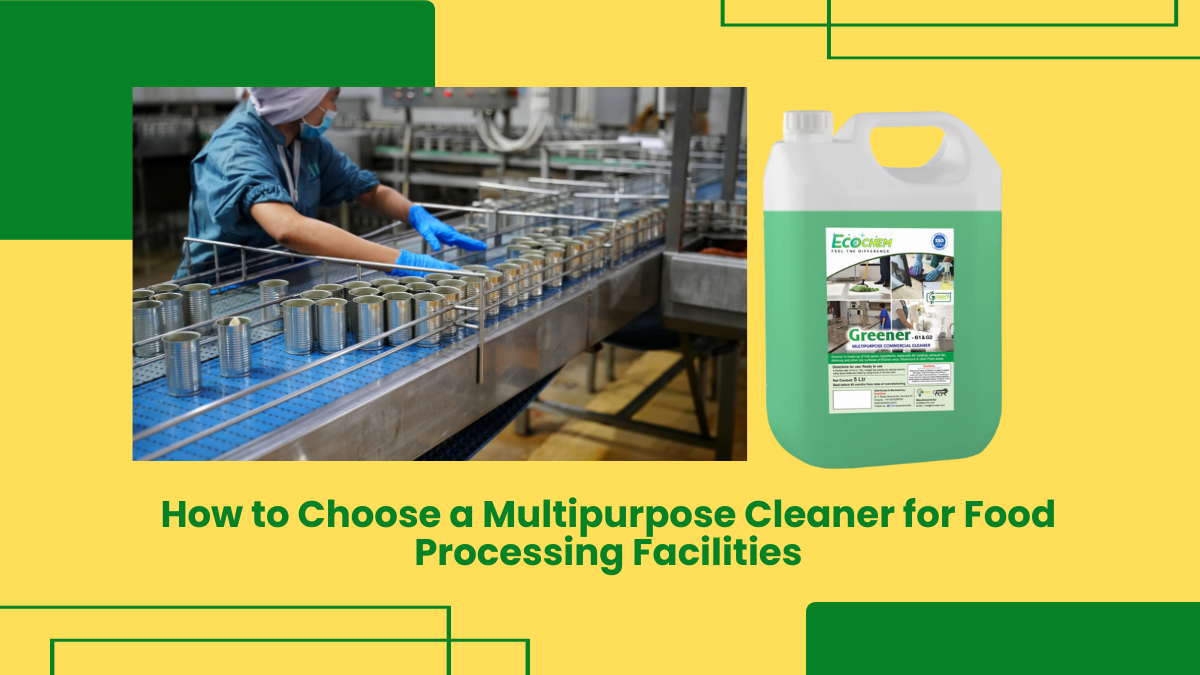
Ecochem’s Eco-Greener is described on its official product page as a water-based, acid-free multipurpose cleaner for different areas and spaces. The page lists a dilution ratio of 10 ml in 1 litre of water. These details describe the product page’s stated information; they do not establish suitability for every food processing application. Explore Eco-Greener.
Food processing facilities should confirm with Ecochem whether Eco-Greener is suitable for the specific surface and cleaning task, particularly if food-contact surfaces are involved. Verify the current product instructions, rinsing requirements and handling precautions before use.
Common Mistakes to Avoid
- Selecting a cleaner only because it is labelled “multipurpose.”
- Using the same product and procedure for every area.
- Assuming a cleaner also sanitises or disinfects.
- Ignoring dilution, rinsing or surface compatibility instructions.
- Using unverified products on food-contact surfaces.
- Failing to train staff or document cleaning activities.
Conclusion
Choosing a multipurpose cleaner for food processing facilities starts with understanding the cleaning task, surface material and hygiene requirements. Product instructions, surface compatibility, residue management and staff procedures should guide the decision—not the “multipurpose” label alone.
Ecochem’s Eco-Greener is listed as a water-based, acid-free multipurpose cleaner. Food processing teams can explore the product page and contact Ecochem to confirm whether it fits their specific cleaning application.
FAQ’S
What is a multipurpose cleaner for food processing facilities?
It is a cleaner selected for routine cleaning of suitable surfaces in food plants, based on product instructions and facility hygiene procedures.
Can multipurpose cleaners be used on food-contact surfaces?
Only when the product is confirmed suitable for that use, and the facility follows its required application and rinsing procedure.
Is a multipurpose cleaner the same as a food plant disinfectant?
No. Cleaning removes soil; disinfection or sanitising requires a product specifically supported for that purpose.
How should food factory cleaning chemicals be selected?
Assess the surface, soil type, intended use, dilution, residue management, safety instructions and any food-contact requirements.
Is Eco-Greener suitable for food processing facilities?
Its suitability depends on the application. Confirm the intended surface, food-contact status and usage instructions with Ecochem before use.
Written By: Vinny Jain