Toilet cleaning chemicals for manufacturing plants should be selected according to the type of stains, toilet surface, cleaning frequency and facility hygiene requirements. A suitable industrial toilet cleaner helps remove routine dirt, water marks and deposits from compatible surfaces when used according to its instructions.
Factory toilets experience regular use across multiple shifts. Without a consistent cleaning schedule, stains, unpleasant odours and deposits can accumulate around toilet bowls, washbasins, taps and floors. Choosing appropriate commercial toilet cleaning chemicals and training housekeeping staff helps facilities maintain cleaner washrooms.
Common Toilet Hygiene Challenges in Manufacturing Plants
Factory washrooms may experience several cleaning problems:
- Hard-water marks and mineral deposits around toilet bowls and taps.
- Stains and dirt caused by frequent use.
- Unpleasant odours associated with poor cleaning or drainage issues.
- Soap residue around washbasins.
- Wet floors that create slip hazards.
- Inconsistent cleaning between shifts.
Problem: Irregular cleaning allows deposits and dirt to accumulate.
Solution: Use a written cleaning schedule, appropriate products and routine inspections.
Prevention tip: Assign responsibilities to each shift and record completed cleaning tasks.
How to Choose Toilet Cleaning Chemicals for Manufacturing Plants
1. Identify the Stain or Deposit
Different contaminants require different cleaning approaches. Routine dirt, hard-water deposits and stubborn stains may need different products.
Identify the deposit before selecting a chemical. Do not assume that a general washroom cleaner can remove every type of stain.
2. Check Surface Compatibility
Toilets and washrooms contain ceramic bowls, glazed tiles, chrome taps, stainless-steel fittings, plastic components and sometimes natural stone.
Choose a cleaner specifically intended for the surface being treated. Check the manufacturer’s instructions before applying it to sensitive materials, particularly marble and decorative finishes.
3. Review Dilution and Application Instructions
Some cleaning chemicals require dilution before use. Others may have different application methods.
Check the recommended dilution, contact time, rinsing instructions and protective equipment requirements. Accurate measurement helps housekeeping teams maintain consistent procedures across shifts.
4. Understand the Difference Between Cleaning and Disinfection
Routine cleaning removes dirt, stains and deposits. Disinfection is a separate process intended to inactivate specified microorganisms when an appropriate product is used according to its instructions.
Do not assume that every toilet cleaner is a disinfectant. Where disinfection is required by the facility’s hygiene procedure, select a product with verified claims for the intended use.
Step-by-Step Toilet Cleaning Procedure for Factories
A standard procedure helps housekeeping teams maintain consistent washroom conditions.
- Prepare the area: Display warning signs and restrict access where necessary.
- Wear suitable protective equipment: Follow the product label and safety data sheet.
- Remove visible waste: Clear waste bins and remove loose debris.
- Apply the appropriate cleaner: Use the product according to its intended application and dilution instructions.
- Clean toilet bowls and fixtures: Use suitable tools and avoid transferring contamination between surfaces.
- Clean washbasins and touchpoints: Follow the site’s cleaning procedure for taps, handles and other frequently touched surfaces.
- Clean the floor: Use a suitable floor cleaner and manage wet-floor risks.
- Rinse where required: Follow the product’s instructions to remove loosened dirt and cleaning residues.
- Inspect and record: Check the washroom, replenish necessary supplies and complete the cleaning log.
Never mix cleaning chemicals. In particular, mixing bleach with acidic toilet cleaners can release dangerous chlorine gas.
How Eco-Green Shine Fits into Factory Toilet Cleaning
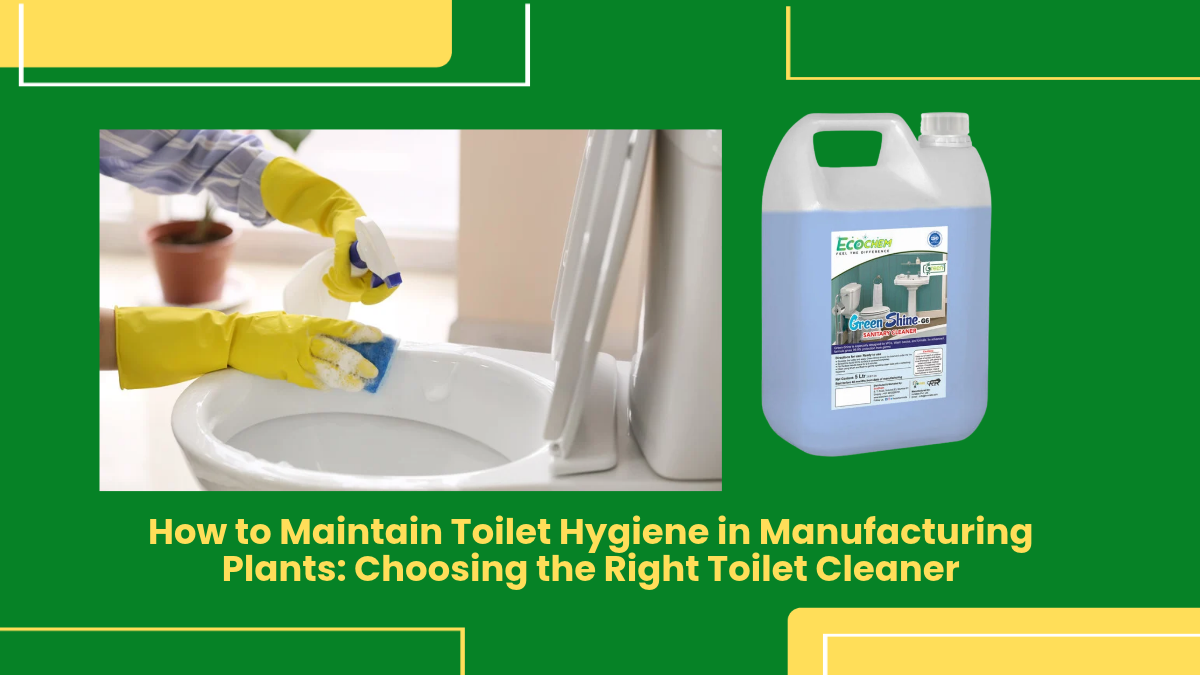
Ecochem Eco-Green Shine is listed on its official product page as a toilet cleaner intended for toilets and ceramic surfaces. The page describes applications involving tough stains and hard-water or lime deposits, and lists a dilution ratio of 10 ml per litre of water.
For manufacturing facilities, Eco-Green Shine may be considered for compatible toilet-cleaning applications covered by its product instructions. Confirm the current label, surface compatibility and required handling procedures before use.
Do not rely on promotional statements alone to establish disinfectant performance. If the factory requires a verified disinfection process, check the product documentation for evidence supporting the specific claim and intended use.
Explore the Eco-Green Shine toilet cleaner for the published product information.
Safety and Prevention Tips
- Keep cleaning products in labelled containers.
- Store chemicals away from unauthorised access.
- Train staff on dilution, application and safe handling.
- Use separate tools for toilet bowls, washbasins and floors.
- Investigate recurring odours rather than relying only on fragrance.
- Repair leaking taps and blocked drains promptly.
- Maintain cleaning records across shifts.
- Keep people away from wet floors until they are safe to use.
Common Mistakes to Avoid
Avoid using the same chemical on every washroom surface without checking compatibility. Do not exceed the recommended concentration, mix cleaning products or assume that fragrance indicates effective cleaning.
Another common mistake is cleaning only when stains become visible. Scheduled cleaning and regular inspection help teams identify problems earlier.
Conclusion
Maintaining toilet hygiene in manufacturing plants requires suitable cleaning products, consistent schedules, trained housekeeping staff and safe chemical handling. Choosing toilet cleaning chemicals according to the stain, surface and hygiene requirements helps facilities maintain cleaner washrooms across shifts.
Ecochem’s Eco-Green Shine is an option to assess for compatible toilet-cleaning applications. Review the official product page or contact Ecochem to confirm product suitability and application instructions for your facility.
FAQ’S
Which toilet cleaning chemicals are suitable for manufacturing plants?
Choose products according to the stain, surface material, cleaning frequency and the facility’s hygiene requirements.
How often should factory toilets be cleaned?
Set cleaning frequency according to usage, contamination and shift patterns. Inspect high-traffic washrooms throughout operating hours.
Can toilet cleaner remove hard-water deposits?
Some toilet cleaners are designed for compatible mineral deposits. Check the product instructions and surface restrictions before use.
What is the listed dilution ratio for Eco-Green Shine?
Ecochem lists 10 ml per litre of water. Confirm the current product label before preparing the solution.
Does toilet cleaner automatically disinfect surfaces?
No. Cleaning and disinfection are different processes. Verify the product’s documented claims and follow the required procedure.
Written By: Vinny Jain