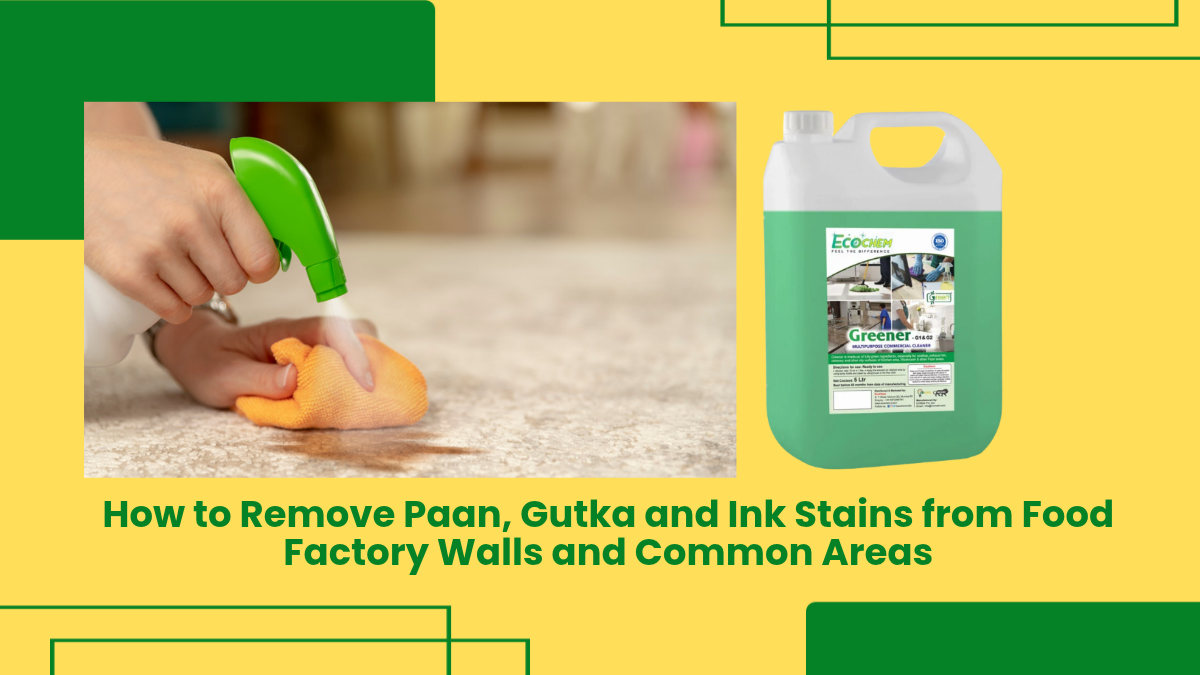
A suitable stain remover for food processing facilities can help housekeeping teams remove paan, gutka and ink marks from factory walls, corridors, entrance areas and other non-production surfaces. The correct approach depends on the stain, wall material and paint finish. Staff should test the product on a small hidden area, follow the manufacturer’s instructions and keep cleaning chemicals away from food, packaging and production equipment.
Food factories need clean production areas as well as well-maintained common spaces. Stained walls near staff entrances, visitor corridors, staircases and shared facilities can affect the appearance of the premises. A planned stain-removal procedure helps teams manage these marks without damaging surfaces or creating unnecessary hygiene risks.
Why Stains on Food Factory Walls Need Attention
Paan and gutka stains can leave visible red or brown marks on walls, corners and other shared surfaces. Ink stains may appear around notice boards, office areas, desks and administrative spaces.
Common causes include:
- Paan and gutka spitting: Marks may appear near entrances, staircases, washrooms and outdoor walls.
- Ink transfer: Pen marks, marker stains and accidental spills can affect painted surfaces.
- Repeated staining: Old marks may become harder to remove when cleaning is delayed.
- Unsuitable cleaning methods: Abrasive scrubbing or incompatible chemicals can damage paint and wall coatings.
- High-traffic areas: Shared corridors and staff spaces may need more frequent inspection.
In food processing facilities, these common areas should be maintained separately from food production and handling zones. Cleaning a wall stain does not replace the facility’s required food-safety cleaning and sanitation procedures.
How to Choose a Stain Remover for Food Processing Facilities
1. Identify the type of stain
Start by identifying what caused the mark. Paan and gutka stains, ink marks and paint stains may require different cleaning approaches.
Do not assume that a product suitable for one stain will work equally well on every mark. Check the product’s stated applications before use.
2. Check the wall surface and coating
Before selecting a food factory stain remover, identify whether the wall is painted, tiled, concrete, metal or another material.
Painted walls need particular care because some chemicals may soften, discolour or remove the coating. Test the product on an inconspicuous area and check the result before treating a larger section.
3. Review the product instructions
Check the current product label and technical documentation for:
- Recommended dilution or application method
- Suitable stain types and surfaces
- Required waiting or contact time
- Rinsing or wiping instructions
- Personal protective equipment
- Storage and handling precautions
Avoid increasing the concentration or extending the application time to remove stubborn stains unless the manufacturer specifically instructs you to do so.
Step-by-Step Method to Remove Wall Stains
Use a controlled cleaning procedure for common-area walls and other approved surfaces.
- Restrict the cleaning area: Keep employees away from the immediate work area while cleaning.
- Identify the surface: Check the wall material and finish before applying any chemical.
- Remove loose dirt: Gently remove dust and loose deposits without spreading the stain.
- Prepare the product: Follow the current label for dilution and application.
- Test a small area: Check for colour changes, paint damage or other unwanted effects.
- Apply as directed: Use the specified application method and waiting time.
- Wipe or rinse: Follow the manufacturer’s instructions to remove the product and loosened stain.
- Inspect the surface: Check whether the stain has been removed and the wall finish remains intact.
- Record recurring issues: Note locations where stains repeatedly appear so the facility can address the cause.
For ink marks, avoid vigorous rubbing at the start. Aggressive scrubbing may spread the ink or damage the wall coating.
Food Factory Cleaning: Hygiene and Chemical Handling Precautions
Stain removal in a food facility requires attention to chemical storage and the surrounding environment.
- Schedule wall cleaning when the area is not being used for food handling.
- Protect nearby food, packaging and equipment from splashes.
- Keep stain removers in labelled containers in a designated chemical storage area.
- Use the protective equipment specified by the product documentation.
- Do not mix cleaning chemicals.
- Use separate cleaning tools for production areas and common areas.
- Follow the facility’s approved procedure for disposing of used cleaning materials and wastewater.
FSSAI’s food safety guidance emphasises planned cleaning and sanitation programmes and keeping chemicals away from food, food storage areas and equipment that may contact food. <Cite refs={[“turn806918search23″,”turn806918search25”]} />
How Eco-Green Kleen Eraser Fits into Food Factory Stain Removal
Ecochem’s Eco-Green Kleen Eraser is listed as a paan, gutka, ink and paint stain remover. Its product page identifies applications on industrial walls, grills and corners.
The published product information lists a dilution ratio of 10 ml in 1 litre of water and describes spraying the product onto a stain, waiting 5–10 minutes, then washing with water. It also advises users to wear rubber gloves because direct handling may cause itching.
For food processing facilities, the product may be considered for the stain types and non-production surfaces described on its product page, subject to surface compatibility checks. Do not assume it is approved for food-contact surfaces or use it on production equipment without confirmation from Ecochem.
Explore Eco-Green Kleen Eraser
Prevention Tips for Facility Managers
Removing stains is only one part of maintaining clean factory common areas. Prevention can reduce repeated housekeeping work.
- Display and enforce workplace rules against spitting in factory premises.
- Inspect entrances, staircases, corridors and shared facilities regularly.
- Clean fresh stains promptly using an approved method.
- Provide suitable waste bins and maintain common areas.
- Include wall and corner inspections in housekeeping checklists.
- Train staff to report recurring stains and avoid using unapproved chemicals.
Common Mistakes to Avoid
- Applying a stain remover without identifying the wall material.
- Using concentrated chemicals without checking instructions.
- Scrubbing painted walls with abrasive pads.
- Mixing different cleaning products.
- Allowing cleaning chemicals to contact food or packaging.
- Assuming a stain remover is suitable for food-contact surfaces.
- Repeating applications without checking whether the surface is being damaged.
FAQ’S
How do you remove paan stains from food factory walls?
Use a stain remover approved for the wall material, test a hidden area and follow the manufacturer’s application and rinsing instructions.
Which cleaner removes gutka stains from industrial walls?
Choose a product specifically listed for gutka stains and confirm compatibility with the wall coating before application.
Can ink stain remover damage painted walls?
Yes. Some products may affect paint or coatings. Test an inconspicuous area before cleaning the full surface.
Is Eco-Green Kleen Eraser suitable for food factories?
It is listed for industrial wall and common-area stain removal. Confirm the specific surface and application with Ecochem.
How can food factories prevent recurring paan stains?
Enforce workplace rules, inspect common areas regularly, provide waste facilities and clean new stains promptly.