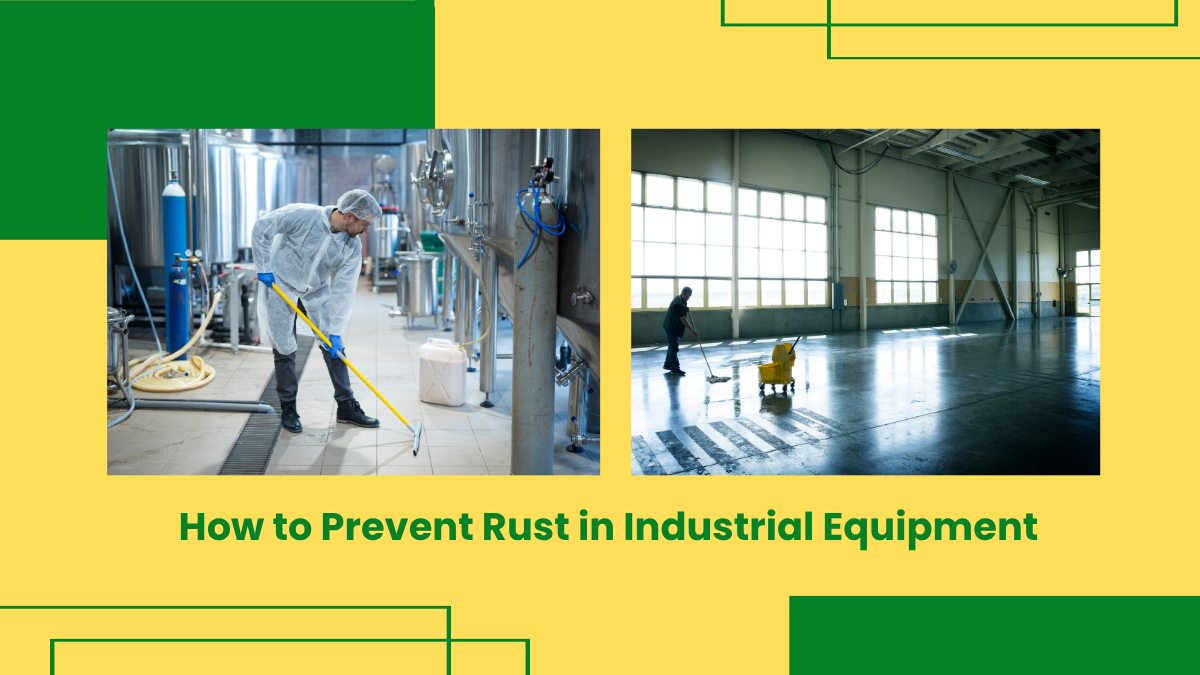
Rust is a common maintenance problem wherever iron and steel equipment are exposed to moisture, oxygen, chemicals, condensation or contaminated water. In manufacturing plants, workshops, warehouses and processing facilities, even small areas of corrosion can become a recurring maintenance issue if the underlying cause is not addressed.
Rust can affect machine surfaces, tools, fasteners, structural components and other metal parts. It may also make equipment harder to clean, affect surface appearance and, when corrosion becomes severe, contribute to equipment deterioration.
Effective industrial rust prevention therefore involves more than finding a rust remover after corrosion appears. It requires regular inspection, appropriate industrial equipment cleaning, moisture control and the correct treatment for the affected metal surface.
Why Does Industrial Equipment Develop Rust?
Rust forms when iron or steel reacts with oxygen and moisture. Industrial environments can accelerate this process because equipment may be exposed to water, humidity, chemicals, salts, cleaning residues and condensation.
Common sources of moisture include:
- Rainwater entering production or storage areas
- High humidity
- Condensation around machinery
- Water used during cleaning
- Leaking pipes or equipment
- Standing water on floors
- Poor drainage
- Wet tools stored without drying
- Moisture trapped in joints and corners
Certain industrial processes can create additional corrosion risks. Metal equipment may also be exposed to chemicals or contaminants that affect the surface or protective coating.
This is why rust prevention should be incorporated into routine equipment maintenance rather than treated only when visible corrosion becomes severe.
Which Industries Need Industrial Rust Prevention?
Rust control matters across industries, but the sources of corrosion and the cleaning requirements can differ.
Manufacturing Plants
Factories often have steel machinery, tools, conveyors, frames, fixtures and production equipment.
Oil, dust and moisture can accumulate on these surfaces. When equipment is cleaned with water and not dried properly, residual moisture can contribute to corrosion.
Regular inspection and appropriate metal cleaning can help maintenance teams identify early rust before it becomes more difficult to manage.
Engineering and Workshop Facilities
Workshops commonly store tools, components and metal parts in environments where water and humidity can affect exposed surfaces.
Tool storage areas should be kept dry, while metal parts should be cleaned and dried before storage when required.
Food Processing Facilities
Food-processing plants frequently use stainless steel and other metal equipment. Cleaning and sanitation procedures introduce water and cleaning solutions into the environment.
Although stainless steel has good corrosion resistance, it is not immune to corrosion under all conditions. Equipment should therefore be maintained according to the manufacturer’s recommendations and the facility’s hygiene procedures.
Pharmaceutical Manufacturing
Pharmaceutical facilities rely on controlled cleaning processes and equipment maintenance. Metal surfaces should be inspected for corrosion, deposits and damage that could interfere with equipment condition or cleaning.
Warehouses and Storage Areas
Metal racks, tools, machinery components and stored parts can be affected by humidity and water ingress.
Good ventilation, leak control and appropriate storage practices are important parts of corrosion prevention.
How to Prevent Rust in Industrial Equipment
A practical prevention programme starts with controlling the conditions that allow corrosion to develop.
1. Control Moisture
Moisture is one of the main contributors to rust.
Inspect the facility regularly for:
- Water leaks
- Condensation
- Standing water
- Wet storage areas
- Damaged roofs
- Poor drainage
- Water accumulation around equipment
Where possible, remove standing water and correct the source rather than repeatedly cleaning the same affected area.
2. Keep Metal Surfaces Clean
Dirt, oil, grease, salts and chemical residues can remain on metal surfaces and make maintenance more difficult.
Regular industrial equipment cleaning helps remove contaminants before they build up.
The cleaning chemical should be selected according to the type of contamination and the metal being treated.
For example, heavy grease may require a suitable industrial degreaser, while rust or mineral deposits may require a dedicated metal-cleaning product.
3. Dry Equipment After Wet Cleaning
Wet cleaning does not end when the surface has been washed.
Water can remain in:
- Joints
- Threads
- Corners
- Machine bases
- Gaps
- Tool surfaces
- Around fasteners
Where the equipment and cleaning procedure permit, surfaces should be dried after rinsing. Compressed air, suitable wiping methods or controlled air drying may be used depending on the equipment and facility procedure.
4. Inspect for Early Rust
Small rust spots are easier to address than extensive corrosion.
During routine maintenance, inspect:
- Welded joints
- Bolts and fasteners
- Machine frames
- Tool surfaces
- Metal storage racks
- Equipment bases
- Exposed steel components
- Areas near water sources
Create a record of recurring corrosion points. If the same location repeatedly develops rust, investigate the source of moisture or contamination.
5. Maintain Protective Coatings
Paints, coatings and other protective systems separate metal from the surrounding environment.
If a coating becomes scratched, chipped or damaged, the exposed metal can become more vulnerable to corrosion.
Inspect coated surfaces periodically and repair damaged areas using a compatible system recommended for the equipment.
When Should You Use a Rust Remover for Machinery?
A rust remover for machinery is generally used when corrosion has already developed and needs to be treated.
Rust removal and rust prevention are related but different tasks.
Rust removal: removes existing corrosion.
Rust prevention: reduces the conditions or surface vulnerability that allow corrosion to return.
For light surface rust, a suitable rust-removal product may help restore the metal surface. Heavier corrosion may require mechanical preparation, specialist treatment or assessment by a maintenance professional.
Ecochem’s Eco-Rust O Kleener is positioned for removing tenacious rust stains and is also described by Ecochem as providing a protective layer intended to help reduce further rusting.
The product should be applied according to its instructions and tested for compatibility with the specific metal and finish.
Which Cleaning Chemicals Help With Rust Prevention?
There is no single chemical for every corrosion problem. Product selection should depend on the condition of the metal, type of contamination and required outcome.
Rust Removers
Rust removers are designed primarily to address existing oxidation.
Ecochem offers Eco-TNT Bar Rust Remover, which its product information describes as a rust-removal formulation for metal surfaces.
A rust remover is most useful when visible corrosion is already present.
Metal Cleaners
Metal cleaners can help remove rust stains, hard-water deposits and other surface contamination.
Ecochem’s Eco-Met Tap Shinner is a water-based metal cleaning product positioned for heavy metals and tools. Ecochem states that it is intended to clean rust and hard-water stains and help postpone further corrosion. The listed dilution is ready to use.
Multipurpose Industrial Cleaners
Some industrial cleaning products combine cleaning and rust-related treatment.
Ecochem’s Eco-All In One is described as providing degreasing, rust removal and rust protection, including a phosphate layer intended to protect the treated surface.
This type of product can be useful where machinery has both oily contamination and rust-related surface problems.
Degreasers
Oil and grease can make metal maintenance more difficult. A suitable industrial degreaser can be used to remove these contaminants before a metal treatment is applied.
Ecochem’s industrial cleaning range includes Eco-Green Kleen for applications involving oil, grease and industrial staining.
The correct sequence depends on the product instructions and the condition of the equipment.
How to Apply Rust Removal and Metal Cleaning Chemicals
Correct application matters as much as product selection.
Step 1: Inspect the Surface
Determine:
- Type of metal
- Extent of rust
- Presence of oil or grease
- Existing coating
- Water or mineral deposits
- Whether the surface is sensitive
If the metal is structurally damaged, chemical cleaning should not be treated as a substitute for repair.
Step 2: Remove Loose Dirt
Brush or wipe away loose dust, debris and contamination.
Removing loose material allows the cleaning product to contact the affected surface more effectively.
Step 3: Use the Correct Product
Select a product according to the contamination.
Oil and grease → suitable degreaser
Existing rust → appropriate rust remover
Rust and hard-water stains → suitable metal cleaner
Mixed industrial contamination → appropriate multipurpose industrial cleaner
Step 4: Follow Dilution and Contact-Time Instructions
Do not increase the concentration simply because the rust appears difficult to remove.
Follow the manufacturer’s recommended dilution, contact time and application method.
Ecochem’s published information for Eco-Met Tap Shinner specifies a ready-to-use dilution.
Step 5: Rinse or Remove Residue as Required
After treatment, remove chemical residue according to the product instructions.
Leaving moisture or cleaning residue on a metal surface can undermine the maintenance process.
Step 6: Dry the Surface
Drying is a key part of rust prevention.
A clean metal surface that remains wet can still be exposed to the conditions that cause corrosion.
How Often Should Industrial Equipment Be Checked for Rust?
There is no universal inspection interval for every facility.
The frequency should reflect:
- Humidity
- Exposure to water
- Equipment location
- Metal type
- Production process
- Cleaning frequency
- Outdoor exposure
- Previous corrosion history
High-risk equipment may need more frequent inspection than machinery located in a controlled, dry environment.
A simple maintenance schedule can include:
Daily: check for standing water, leaks and obvious rust.
Weekly: inspect machine bases, tools, fasteners and moisture-prone areas.
Monthly: record recurring corrosion points and review cleaning and drying procedures.
During planned maintenance: inspect hidden areas, coatings, joints and components where corrosion may not be visible during routine cleaning.
Common Mistakes That Increase Rust Risk
Leaving Equipment Wet
Cleaning equipment and leaving water around joints, corners or machine bases can increase corrosion risk.
Using the Same Chemical for Every Surface
A cleaner suitable for one metal may not be suitable for another. Always check compatibility.
Ignoring Small Rust Spots
Small corrosion areas can indicate an underlying moisture or coating problem.
Storing Wet Tools
Tools should be cleaned and dried before storage where the application requires it.
Using Excessive Chemical Concentration
More chemical does not necessarily mean better cleaning. Follow the recommended dilution.
Treating Rust Without Finding the Cause
If a machine repeatedly develops rust after cleaning, investigate moisture, drainage, condensation, coating damage or storage conditions.
How to Choose the Right Rust Prevention Chemical
Before purchasing an industrial rust treatment, ask the supplier the following questions:
What Type of Metal Will Be Treated?
Confirm whether the product is appropriate for steel, iron, stainless steel, aluminium, copper, brass or other materials.
Is the Product for Rust Removal or Prevention?
Some products focus on removing existing corrosion, while others are designed to provide additional surface protection.
What Other Contamination Is Present?
If the equipment contains oil, grease, dirt or mineral deposits, you may need a cleaning process before rust treatment.
What Is the Application Method?
Check whether the product is designed for wiping, spraying, immersion or another application.
What Is the Required Dilution?
Compare products based on their recommended dilution and coverage rather than container price alone.
Does the Product Suit the Existing Surface?
If the equipment has paint, plating, coatings or sensitive components, compatibility should be confirmed before large-scale use.
What Safety Information Is Provided?
Review the product label, safety information, storage requirements and PPE instructions before use.
Why Choose Ecochem for Industrial Metal Cleaning?
Ecochem manufactures cleaning chemicals for industrial and manufacturing environments and offers products across metal cleaning, rust removal, degreasing and multipurpose industrial cleaning categories.
Its range includes Eco-Met Tap Shinner for heavy metals and tools, Eco-Rust O Kleener for rust treatment, Eco-TNT Bar Rust Remover and Eco-All In One for multipurpose industrial cleaning involving rust and grease.
For businesses, the practical advantage is being able to select a product based on the actual maintenance problem rather than treating every metal surface in the same way.
Before purchasing in bulk, discuss the metal type, contamination, corrosion level, cleaning method and operating conditions with the supplier.
Industrial Rust Prevention Checklist
- Inspect equipment for early rust
- Identify recurring moisture sources
- Repair water leaks and drainage problems
- Remove oil, grease and dirt from metal surfaces
- Dry equipment after wet cleaning
- Check protective coatings
- Select a compatible rust remover where corrosion is present
- Use a suitable metal cleaner for surface deposits
- Follow the manufacturer’s dilution instructions
- Keep tools dry during storage
- Record recurring corrosion areas
- Review the maintenance schedule based on corrosion risk
Final Takeaway
Effective industrial rust prevention starts before visible corrosion becomes a serious maintenance problem.
Factories should control moisture, keep equipment clean, dry metal surfaces after wet cleaning, inspect corrosion-prone areas and maintain protective coatings. When rust does appear, the treatment should match the metal, contamination and severity of corrosion.
A rust remover for machinery can address existing corrosion, while suitable metal cleaners and protective treatments can support ongoing maintenance. The most practical programme combines the right chemical with good cleaning, drying, inspection and storage practices.
Ecochem offers products for industrial metal cleaning, rust removal, degreasing and surface treatment, including Eco-Met Tap Shinner, Eco-Rust O Kleener, Eco-TNT Bar Rust Remover and Eco-All In One. Businesses can select the appropriate solution based on their equipment, metal type and cleaning requirements.
FAQ’S
How can I prevent rust on industrial equipment?
Control moisture, keep metal surfaces clean and dry, maintain protective coatings, inspect equipment regularly and treat early corrosion before it spreads. The cleaning chemical should be selected according to the metal and type of contamination.
What is the best rust remover for machinery?
There is no single rust remover that is best for every machine. The appropriate product depends on the metal type, severity of rust, surface coating and application method. A product should be tested for compatibility before large-scale use.
Does cleaning industrial equipment help prevent corrosion?
Yes. Removing moisture, dirt, oil, salts and other contaminants can support corrosion control. However, cleaning alone does not eliminate every corrosion risk. Moisture control, coating maintenance and equipment design also matter.
Can rust be permanently prevented?
No cleaning chemical can guarantee that metal will never rust. Rust prevention depends on controlling exposure to moisture and corrosive conditions, maintaining protective systems and performing regular inspection and maintenance.
How often should machinery be treated for rust?
Treatment frequency depends on the equipment, environment and corrosion risk. High-humidity, water-exposed and outdoor equipment may require more frequent inspection and treatment than equipment kept in dry, controlled conditions.
Written By: Vinny Jain