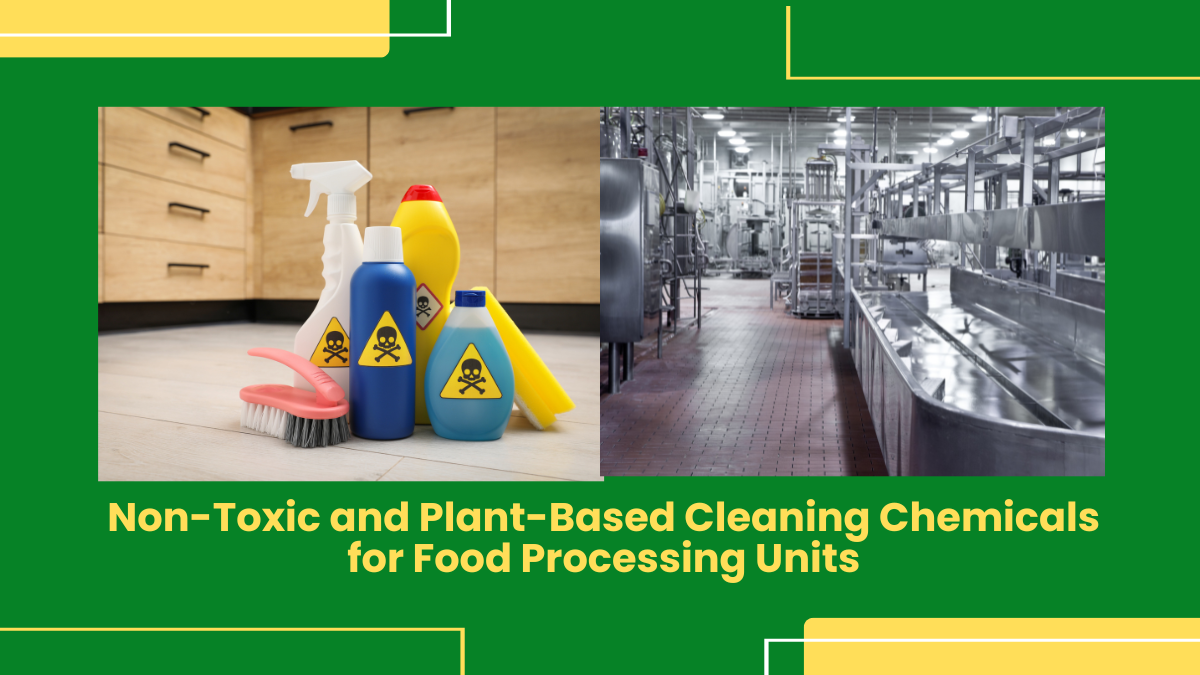
Food processing units require high hygiene standards to maintain product safety, prevent contamination, and comply with industry regulations. Cleaning plays a major role in food manufacturing environments because even small amounts of dirt, grease, bacteria, or chemical residue can affect food quality and workplace safety.
Traditional industrial cleaners often contain harsh ingredients that may leave strong odours, chemical residue, or surface damage. Because of this, many food processing facilities are shifting toward non-toxic and plant-based cleaning chemicals for daily sanitation and maintenance.
Eco-friendly cleaning products help food processing units maintain cleanliness while reducing chemical exposure for workers and protecting sensitive production environments.
This guide explains the importance of plant-based cleaning chemicals in food processing units, common cleaning challenges, effective solutions, and prevention tips for maintaining safer and cleaner industrial facilities.
Why Food Processing Units Need Safer Cleaning Chemicals
Food manufacturing areas must remain clean throughout production cycles. Processing equipment, storage rooms, floors, drains, and work surfaces require regular cleaning to prevent contamination.
Poor cleaning practices may lead to:
- Bacterial growth
- Cross-contamination
- Product spoilage
- Bad odors
- Grease buildup
- Slippery floors
- Safety concerns
Using non-toxic and plant-based cleaning chemicals helps food processing facilities maintain hygiene standards while reducing the risks associated with harsh industrial chemicals.
Problems with Traditional Industrial Cleaning Chemicals
Strong Chemical Residue
Some industrial cleaners leave chemical residue on surfaces and equipment. In food processing environments, residue control is important because cleaning agents should not affect food safety.
Harsh Odours in Production Areas
Strong fumes from aggressive chemicals may affect workers and indoor air quality in enclosed production spaces.
Surface Damage
Heavy-duty chemicals may damage:
- Stainless steel equipment
- Conveyor systems
- Food preparation surfaces
- Floor coatings
- Drainage systems
Worker Safety Concerns
Employees handling strong chemicals regularly may experience:
- Skin irritation
- Breathing discomfort
- Eye irritation
This is why many facilities are moving toward non-toxic and non-harsh chemicals.
What Are Plant-Based Cleaning Chemicals?
Plant-based cleaning chemicals use ingredients derived from natural sources instead of relying heavily on aggressive solvents and synthetic compounds.
These products are commonly:
- Non-toxic
- Eco-friendly
- Biodegradable
- Low odor
- Safer for routine use
Plant-based industrial cleaning products are becoming popular in:
- Food processing units
- Beverage manufacturing plants
- Commercial kitchens
- Dairy facilities
- Packaging units
Benefits of Non-Toxic Cleaning Chemicals in Food Processing
Safer Workplace Hygiene
Food industry employees work closely with processing equipment and surfaces every day. Non-toxic cleaning products help reduce unnecessary chemical exposure.
This supports:
- Employee safety
- Cleaner work environments
- Better indoor comfort
Reduced Chemical Residue
Plant-based cleaning chemicals help reduce residue buildup on food-contact surfaces and equipment.
This helps maintain safer production conditions.
Better Air Quality
Traditional cleaners often release strong fumes during cleaning operations.
Plant-based and eco-friendly chemicals improve air quality inside:
- Processing rooms
- Packaging units
- Storage facilities
Surface Protection
Non-harsh chemicals help protect:
- Stainless steel
- Tiles
- Conveyor belts
- Floor coatings
- Food preparation equipment
This reduces maintenance costs and equipment wear.
Environmentally Responsible Cleaning
Biodegradable products break down naturally and reduce pollution caused by industrial wastewater.
Many food manufacturers now include sustainable cleaning practices as part of environmental management programs.
Common Cleaning Problems in Food Processing Units
1. Grease and Oil Buildup
Problem
Food processing equipment and floors often collect grease, oils, and food residue during daily operations.
Solution
Plant-based degreasers help remove grease without producing strong fumes or leaving harmful residue.
Bio enzyme cleaners are also useful for breaking down organic waste naturally.
Prevention Tips
- Clean production equipment regularly
- Use proper floor drainage systems
- Avoid grease accumulation near machinery
2. Drain and Waste Odours
Problem
Drains in food processing facilities may develop unpleasant odours because of organic waste buildup.
Solution
Bio enzyme drain cleaners help break down food particles and grease naturally.
These biodegradable products help maintain cleaner drainage systems.
Prevention Tips
- Clean drains daily
- Avoid dumping large food waste into drainage systems
- Use enzyme treatments regularly
3. Bacterial Growth on Surfaces
Problem
Food preparation areas and equipment may become contaminated if surfaces are not cleaned properly.
Solution
Non-toxic disinfectants help reduce bacteria while supporting safer cleaning practices in food production areas.
Prevention Tips
- Sanitise high-contact surfaces frequently
- Use food-safe cleaning products
- Follow cleaning schedules consistently
4. Slippery Industrial Floors
Problem
Food processing floors often become slippery due to spills, oils, and moisture.
Solution
Eco-friendly floor cleaners remove residue while maintaining safer walking surfaces.
Prevention Tips
- Clean spills immediately
- Use anti-slip flooring where possible
- Maintain routine floor cleaning schedules
Types of Plant-Based Cleaning Chemicals Used in Food Industries
Plant-Based Degreasers
Used for:
- Machinery cleaning
- Kitchen surfaces
- Food processing equipment
- Industrial floors
These products remove oil and grease while reducing strong solvent fumes.
Bio Enzyme Cleaners
Used for:
- Drain cleaning
- Odor control
- Organic waste breakdown
- Floor maintenance
These biodegradable products support sustainable industrial cleaning.
Eco-Friendly Surface Cleaners
Used for:
- Stainless steel cleaning
- Worktables
- Packaging areas
- Food-contact surfaces
Non-toxic cleaners help maintain hygiene without harsh residue.
Organic Floor Cleaners
Industrial floor cleaners remove:
- Food stains
- Dirt
- Grease
- Moisture buildup
Plant-based floor cleaners also help reduce strong odours in enclosed facilities.
Why Sustainable Cleaning Matters in Food Processing
Food manufacturing industries are paying more attention to:
- Worker safety
- Environmental regulations
- Hygiene standards
- Sustainable operations
Sustainable cleaning products help facilities reduce environmental impact while maintaining cleanliness.
Many food processing companies now prefer:
- Eco-friendly chemicals
- Biodegradable products
- Plant-based cleaners
- Low-odour formulations
- Non-toxic disinfectants
Prevention Tips for Safer Industrial Cleaning
Train Cleaning Staff Properly
Employees should understand:
- Product dilution methods
- Surface compatibility
- Equipment-safe cleaning practices
- Chemical handling procedures
Use Surface-Specific Products
Different processing equipment requires different cleaning solutions.
Using incorrect chemicals may damage machinery or affect production quality.
Maintain Cleaning Schedules
Routine cleaning helps prevent:
- Heavy grease buildup
- Bacterial growth
- Equipment contamination
- Drain blockages
Improve Ventilation
Proper airflow reduces moisture buildup and improves indoor comfort during cleaning operations.
Choose Biodegradable Products
Biodegradable cleaning chemicals support safer wastewater management and reduce environmental concerns.
Importance of Non-Toxic Cleaning for Workplace Safety
Food industry workers are exposed to cleaning products daily. Using safer industrial cleaners helps reduce:
- Skin irritation
- Breathing discomfort
- Chemical exposure
- Workplace accidents
This helps create cleaner and healthier production environments.
How Ecochem Supports Sustainable Industrial Cleaning
Ecochem provides industrial cleaning solutions designed for commercial facilities, food processing units, and workplace hygiene requirements.
From plant-based degreasers and eco-friendly floor cleaners to biodegradable cleaning products, Ecochem focuses on helping businesses maintain cleaner and safer industrial environments.
Food processing facilities looking for sustainable industrial cleaning solutions can explore products suitable for daily maintenance and hygiene management.
Future of Cleaning in Food Processing Industries
Industrial cleaning practices are changing as food manufacturers focus more on:
- Sustainable operations
- Safer cleaning methods
- Reduced chemical exposure
- Eco-friendly maintenance
- Workplace hygiene
The demand for plant-based cleaning chemicals and non-toxic industrial cleaning products is increasing across food production industries.
Facilities adopting sustainable cleaning practices can improve hygiene standards while supporting environmental responsibility.
Final Thoughts
Non-toxic and plant-based cleaning chemicals are helping food processing units maintain hygiene, workplace safety, and sustainable operations.
Using biodegradable, eco-friendly, and non-harsh chemicals helps reduce chemical exposure while supporting safer food manufacturing environments.
With proper cleaning schedules, trained staff, and sustainable cleaning practices, food processing facilities can maintain cleaner production areas and support long-term workplace hygiene standards.
FAQ’s
What are plant-based cleaning chemicals?
Plant-based cleaning chemicals use naturally derived ingredients to clean industrial surfaces safely without harsh chemical fumes or residue.
Why are non-toxic cleaners important in food processing units?
Non-toxic cleaners reduce contamination risks, improve worker safety, and maintain hygienic food processing environments without harmful chemical exposure.
Are biodegradable cleaning products suitable for industrial cleaning?
Yes, biodegradable cleaning products effectively remove grease, dirt, and organic waste while supporting sustainable industrial cleaning practices.
How do eco-friendly cleaning chemicals improve workplace hygiene?
Eco-friendly cleaning chemicals reduce harmful residue, improve air quality, and support cleaner, safer industrial and commercial workspaces.
What cleaning products are commonly used in food processing industries?
Food processing industries commonly use plant-based degreasers, bio enzyme cleaners, eco-friendly disinfectants, and biodegradable floor cleaning chemicals.
Written By: Vinny Jain