Introduction
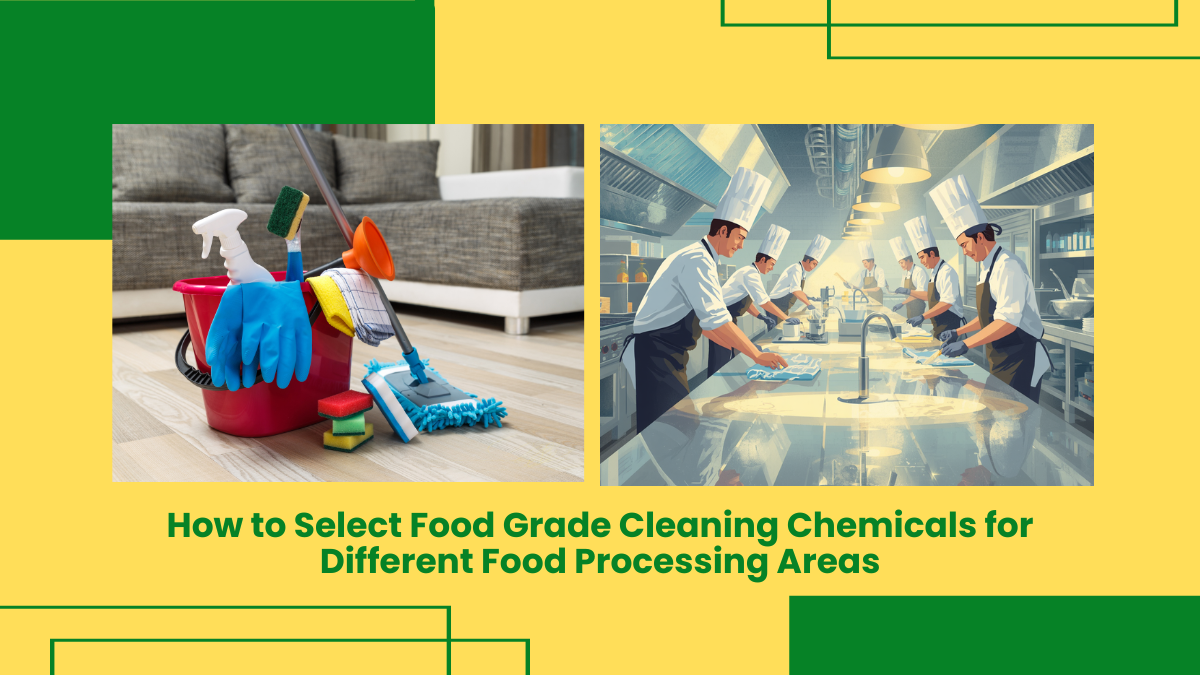
Maintaining cleanliness in a food processing facility is not simply about appearance. It directly impacts product quality, food safety, regulatory compliance, and customer trust. Every section of a food processing plant faces different contamination risks, making it essential to choose the right Food Grade Cleaning Chemicals for each area.
From raw material receiving zones to processing lines, packaging sections, cold storage rooms, and employee hygiene stations, every area requires a different cleaning approach. Using unsuitable chemicals can leave residues, damage equipment, increase maintenance costs, and create food safety risks.
This guide explains how to select the right cleaning products for different food processing areas, the problems commonly faced by food manufacturers, practical solutions, and prevention tips that help maintain high hygiene standards.
Understanding Food Grade Cleaning Chemicals
Food grade cleaning chemicals are specially formulated products designed for use in environments where food is manufactured, processed, packaged, or stored. These chemicals help remove dirt, grease, fats, proteins, sugars, mineral deposits, and microbial contamination while supporting food safety requirements.
Common categories include:
- Alkaline cleaners
- Acid cleaners
- Food-safe degreasers
- Sanitizers
- Disinfectants
- Equipment cleaners
- Floor cleaning solutions
- Descaling chemicals
Choosing the right product depends on the contamination type, surface material, cleaning frequency, and processing area.
Why Selecting the Right Cleaning Chemical Matters
Many food processing facilities use a single cleaning product across multiple areas. While this may seem convenient, it often creates operational and hygiene challenges.
Benefits of proper chemical selection include:
- Improved food safety
- Reduced contamination risks
- Better equipment performance
- Longer equipment lifespan
- Easier regulatory compliance
- Lower maintenance costs
- Reduced downtime
Properly selected food plant sanitation chemicals can significantly improve the effectiveness of cleaning programs throughout a facility.
Different Food Processing Areas and Their Cleaning Requirements
1. Raw Material Receiving and Storage Areas
Common Problems
Raw material zones are often exposed to:
- Soil and dirt from transportation
- Dust accumulation
- Packaging debris
- Organic waste
- Moisture buildup
These contaminants can introduce bacteria and pests into the facility.
Recommended Solutions
Use:
- Neutral cleaners for routine cleaning
- Floor cleaners for warehouse areas
- Food-safe degreasers where oils and fats are present
For high-traffic areas, regular sanitation should be combined with scheduled deep cleaning.
Prevention Tips
- Clean receiving areas daily.
- Remove spills immediately.
- Establish designated waste collection points.
- Inspect storage zones regularly.
2. Food Preparation and Processing Areas
Common Problems
Processing areas face the highest contamination risks due to:
- Protein buildup
- Fat deposits
- Sugar residues
- Food particles
- Moisture accumulation
These contaminants can become breeding grounds for bacteria if not removed properly.
Recommended Solutions
Use:
- Alkaline cleaning chemicals for fats and proteins
- Food-safe cleaners designed for processing equipment
- Sanitisers approved for food-contact surfaces
For facilities handling meat, dairy, or oil-based products, stronger degreasing solutions may be necessary.
Prevention Tips
- Implement scheduled cleaning between production shifts.
- Train employees on proper chemical usage.
- Follow manufacturer dilution guidelines.
- Verify cleaning effectiveness through inspections.
3. Equipment and Machinery Cleaning
Common Problems
Food processing equipment often develops:
- Grease accumulation
- Burnt food residues
- Protein films
- Mineral scale deposits
Improper cleaning may reduce production efficiency and create contamination risks.
Recommended Solutions
Depending on equipment type, use:
- Food manufacturing cleaning products formulated for stainless steel
- Alkaline cleaners for grease removal
- Acid cleaners for mineral scale removal
- CIP cleaning chemicals for automated cleaning systems
Facilities using automated processing lines benefit from dedicated cleaning programs tailored to equipment specifications.
Prevention Tips
- Follow preventive maintenance schedules.
- Inspect equipment after every cleaning cycle.
- Replace worn seals and gaskets promptly.
- Monitor hard water buildup regularly.
4. Packaging Areas
Common Problems
Although packaging areas handle finished products, contamination can still occur through:
- Dust accumulation
- Employee contact
- Equipment surfaces
- Packaging material debris
Recommended Solutions
Use:
- Surface sanitizers
- Low-residue cleaning products
- Food-safe disinfectants
Packaging equipment should be cleaned without leaving chemical residues that may affect finished products.
Prevention Tips
- Restrict unnecessary traffic.
- Clean packaging lines frequently.
- Maintain proper air filtration systems.
- Monitor hygiene compliance among staff.
5. Cold Storage and Refrigeration Areas
Common Problems
Cold environments often experience:
- Condensation
- Mold growth
- Slippery floors
- Microbial contamination
Low temperatures can slow cleaning effectiveness if incorrect products are used.
Recommended Solutions
Use:
- Specialised floor cleaners
- Mold-control products
- Sanitisers suitable for refrigerated environments
Regular sanitation programs help maintain hygienic storage conditions.
Prevention Tips
- Control humidity levels.
- Remove standing water immediately.
- Schedule routine inspections.
- Clean drains regularly.
6. Employee Welfare and Hygiene Areas
Common Problems
Washrooms, locker rooms, and handwashing stations can contribute to contamination if neglected.
Issues include:
- Bacterial growth
- Surface contamination
- Poor hand hygiene practices
Recommended Solutions
Use:
- Washroom cleaners
- Surface disinfectants
- Hand hygiene products
- Sanitizing solutions
These areas should be included in the overall facility sanitation plan.
Prevention Tips
- Maintain cleaning schedules.
- Ensure adequate handwashing supplies.
- Train employees on hygiene procedures.
- Conduct regular hygiene audits.
Choosing the Right Type of Food Grade Cleaning Chemical
Alkaline Cleaners
Best for removing:
- Fats
- Oils
- Protein residues
Commonly used in:
- Meat processing plants
- Dairy facilities
- Bakery production lines
Acid Cleaners
Best for removing:
- Mineral deposits
- Water scale
- Rust stains
Commonly used in:
- Beverage manufacturing
- Dairy equipment cleaning
- CIP systems
Sanitizers
Best for reducing microbial contamination on cleaned surfaces.
Suitable for:
- Processing equipment
- Food contact surfaces
- Packaging areas
Degreasers
Best for:
- Heavy grease removal
- Cooking oil residues
- Processing equipment cleaning
Widely used in food manufacturing operations involving oils and fats.
Problems Caused by Using the Wrong Cleaning Chemicals
Selecting inappropriate products can create several issues:
Equipment Damage
Harsh chemicals may corrode metal surfaces and damage machinery components.
Solution
Match cleaning products to equipment materials.
Prevention Tip
Always review equipment manufacturer recommendations.
Chemical Residue Risks
Improper products may leave residues that contaminate food products.
Solution
Use certified food-safe cleaners.
Prevention Tip
Follow proper rinsing procedures.
Ineffective Cleaning
Incorrect chemical selection may fail to remove contaminants completely.
Solution
Identify contamination types before selecting products.
Prevention Tip
Conduct cleaning validation checks regularly.
Building an Effective Food Processing Hygiene Program
A successful hygiene program should include:
- Risk assessments
- Area-specific cleaning schedules
- Employee training
- Product selection guidelines
- Verification procedures
- Documentation and record keeping
Strong food processing hygiene solutions combine suitable chemicals, trained personnel, and consistent procedures.
How Ecochem Supports Food Processing Facilities
Food manufacturers require cleaning solutions that balance hygiene, safety, and operational efficiency. Ecochem offers industrial cleaning products designed to support food processing environments, helping facilities maintain cleanliness across production, packaging, storage, and sanitation areas.
From degreasers and equipment cleaners to specialised sanitation products, selecting the right cleaning chemistry can help food processors improve hygiene performance while supporting food safety objectives.
Final Thoughts
Every food processing area presents unique cleaning challenges. A chemical that performs well in a processing line may not be suitable for packaging zones or refrigerated storage areas. Understanding contamination risks, selecting appropriate Food Grade Cleaning Chemicals, and following structured sanitation procedures can significantly improve food safety outcomes.
By matching cleaning products to specific operational requirements, food manufacturers can reduce contamination risks, maintain regulatory compliance, protect equipment, and create a safer environment for both employees and consumers.
FAQ’S
What are food grade cleaning chemicals?
Food grade cleaning chemicals are specially formulated products used to clean food processing areas without compromising food safety.
Why are food-safe cleaners important in food processing plants?
Food-safe cleaners help remove contaminants, reduce microbial risks, and support compliance with food safety regulations.
Which cleaning chemical is best for removing grease in food processing areas?
Alkaline cleaners are commonly used to remove grease, oils, and protein residues from food processing equipment.
How often should food processing equipment be cleaned?
Equipment should be cleaned after production cycles and sanitised regularly according to facility hygiene protocols.
Can one cleaning chemical be used throughout a food processing facility?
No, different areas require specific cleaning chemicals based on contamination type, surface material, and hygiene requirements.
Written By: Vinny Jain