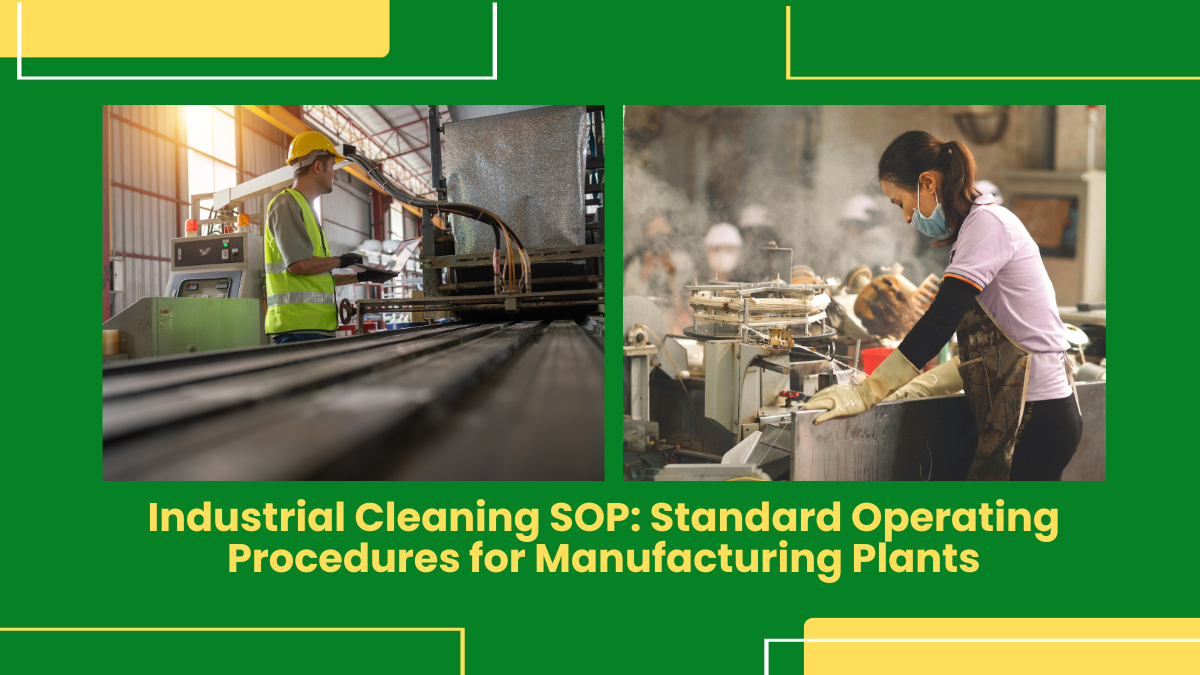
Manufacturing plants operate in demanding environments where dust, grease, oil, chemical residues, metal particles, food waste, and microbial contamination can build up quickly. Without a proper Industrial Cleaning SOP, these contaminants can reduce equipment performance, affect product quality, increase safety risks, and lead to regulatory issues.
A well-designed Industrial Cleaning SOP provides employees with clear instructions on how, when, and where cleaning should be performed. It establishes consistent cleaning methods, assigns responsibilities, defines cleaning frequencies, and specifies the right industrial cleaning chemicals and protective equipment.
Whether you manage an automotive factory, pharmaceutical facility, food processing unit, engineering workshop, packaging plant, or textile manufacturing facility, having documented cleaning procedures is essential for maintaining a safe and productive workplace.
This guide explains everything you need to know about creating an effective Industrial Cleaning SOP, including common challenges, practical solutions, preventive measures, cleaning schedules, and factory cleaning checklists.
What is an Industrial Cleaning SOP?
An Industrial Cleaning SOP (Standard Operating Procedure) is a documented process that outlines the correct method for cleaning manufacturing facilities, production equipment, workstations, floors, warehouses, storage areas, and employee facilities.
The SOP ensures every cleaning activity follows standardised procedures regardless of who performs the task.
A typical Manufacturing Plant Cleaning SOP includes:
- Cleaning responsibilities
- Cleaning frequency
- Approved cleaning chemicals
- Cleaning equipment
- PPE requirements
- Safety precautions
- Inspection procedures
- Record keeping
- Waste disposal methods
The objective is simple:
- Maintain workplace hygiene
- Improve worker safety
- Prevent contamination
- Extend equipment life
- Meet industry compliance standards
Why Every Manufacturing Plant Needs an Industrial Cleaning SOP
Many factories still rely on informal cleaning practices where employees clean only when visible dirt appears.
This approach often creates hidden problems such as:
- Oil accumulation around machinery
- Slippery floors
- Dust inside production areas
- Cross-contamination
- Corrosion
- Machine overheating
- Pest infestation
- Poor indoor air quality
A documented Industrial Cleaning Procedure eliminates guesswork by giving employees clear instructions for every cleaning task.
Benefits include:
- Improved workplace safety
- Better production efficiency
- Consistent product quality
- Reduced equipment breakdown
- Easier audits
- Lower maintenance costs
- Compliance with hygiene regulations
Common Cleaning Challenges in Manufacturing Plants
Before creating an SOP, it helps to understand the common cleaning issues faced by manufacturing facilities.
1. Oil and Grease Build-Up
Industrial machinery often leaks lubricants, hydraulic fluids, and grease.
These deposits:
- Create slip hazards
- Attract dust
- Reduce machine efficiency
- Damage flooring
2. Dust Accumulation
Manufacturing operations generate:
- Metal dust
- Wood dust
- Cement dust
- Plastic particles
- Textile fibers
Without scheduled cleaning, airborne dust affects machinery and employee health.
3. Chemical Residues
Many production processes leave behind:
- Solvents
- Adhesives
- Paint residues
- Processing chemicals
Improper cleaning may lead to corrosion or contamination.
4. Food Residues
Food processing plants face additional risks including:
- Bacterial growth
- Mold formation
- Pest attraction
- Product contamination
Strict Manufacturing Plant Hygiene procedures are necessary.
5. Inconsistent Cleaning
Different shifts often clean differently.
Without SOPs:
- Cleaning quality varies
- Areas get missed
- Chemicals are misused
- Safety risks increase
Industrial Cleaning SOP: Step-by-Step Procedure
A complete Industrial Cleaning SOP should cover every stage of the cleaning process.
Step 1: Prepare the Work Area
Before cleaning begins:
- Shut down machinery where required
- Disconnect power if necessary
- Remove production materials
- Place warning signs
- Restrict access to cleaning zones
Step 2: Wear Appropriate PPE
Proper PPE for Industrial Cleaning protects workers from chemical exposure and physical hazards.
Recommended PPE includes:
- Safety gloves
- Chemical-resistant goggles
- Face shields
- Respirators (where required)
- Safety shoes
- Protective clothing
Never begin cleaning without suitable protective equipment.
Step 3: Remove Loose Debris
Start with dry cleaning methods:
- Sweep floors
- Vacuum dust
- Collect scrap materials
- Remove packaging waste
This prevents debris from spreading during wet cleaning.
Step 4: Apply Industrial Cleaning Chemicals
Choose cleaning chemicals based on contamination type.
Examples include:
- Heavy-duty degreasers
- Neutral floor cleaners
- Food-safe cleaners
- Descalers
- Toilet cleaners
- Glass cleaners
- Multi-purpose cleaners
- Disinfectants
Avoid mixing incompatible chemicals.
Always follow recommended dilution ratios.
Step 5: Clean Equipment
Follow equipment-specific procedures.
Clean:
- Machine exteriors
- Control panels
- Conveyor systems
- Production lines
- Worktables
- Storage racks
Avoid spraying electrical components directly.
Step 6: Floor Cleaning
Industrial floors should be cleaned using:
- Mechanical scrubbers
- Wet mopping
- Pressure washing (where appropriate)
- Degreasing solutions
Pay special attention to:
- Corners
- Drainage channels
- Loading bays
- Walkways
Step 7: Sanitize High-Touch Areas
Frequently touched surfaces include:
- Door handles
- Control buttons
- Railings
- Switchboards
- Lift controls
- Shared tools
Disinfect these areas according to the cleaning schedule.
Step 8: Waste Disposal
Dispose of:
- Used wipes
- Chemical containers
- Contaminated materials
- Oil waste
Follow environmental regulations and local disposal guidelines.
Step 9: Final Inspection
Supervisors should verify:
- Equipment cleanliness
- Floor condition
- Chemical storage
- Waste removal
- Cleaning records
Document inspection findings.
Factory Cleaning Checklist
An effective Factory Cleaning Checklist helps ensure no area is overlooked.
Production Area
- Clean machinery
- Remove debris
- Wipe workstations
- Sanitize tools
- Inspect conveyors
Floors
- Sweep
- Degrease
- Scrub
- Dry floors
- Remove spills immediately
Warehouse
- Dust shelves
- Clean pallets
- Remove damaged packaging
- Organize storage
Employee Areas
- Washrooms
- Locker rooms
- Cafeteria
- Meeting rooms
Exterior
- Loading docks
- Parking areas
- Waste storage
- Entry gates
Industrial Housekeeping SOP Best Practices
An effective Industrial Housekeeping SOP should include more than routine cleaning.
Best practices include:
Assign Responsibilities
Clearly identify:
- Cleaning staff
- Production operators
- Maintenance teams
- Supervisors
Everyone should understand their cleaning duties.
Label Cleaning Chemicals
Store chemicals with:
- Product name
- Hazard symbols
- Dilution instructions
- Expiry date
Never transfer chemicals into unlabeled containers.
Standardise Cleaning Equipment
Maintain dedicated equipment for different areas.
For example:
- Food processing
- Chemical storage
- Washrooms
- Offices
This reduces cross-contamination.
Keep Cleaning Records
Document:
- Date
- Time
- Area cleaned
- Staff responsible
- Chemicals used
- Supervisor approval
These records support audits and inspections.
Choosing the Right Industrial Cleaning Chemicals
Using the wrong cleaning product can damage equipment, reduce cleaning effectiveness, and create safety risks.
Choose chemicals according to the surface and contamination type.
Examples include:
| Cleaning Requirement | Recommended Chemical |
| Oil & Grease | Heavy-Duty Degreaser |
| Factory Floors | Neutral Floor Cleaner |
| Food Contact Areas | Food-Safe Cleaner |
| Washrooms | Toilet Cleaner |
| Glass Panels | Glass Cleaner |
| General Cleaning | Multi-Purpose Cleaner |
| Hand Hygiene | Liquid Hand Wash |
| Equipment Sanitization | Industrial Disinfectant |
Using high-quality Industrial Cleaning Chemicals improves cleaning efficiency while protecting machinery and surfaces.
Preventive Tips for Better Manufacturing Plant Hygiene
Preventive cleaning reduces long-term maintenance costs and improves workplace safety.
Follow these practices:
Create Daily Cleaning Routines
Avoid waiting until dirt becomes visible.
Routine cleaning prevents heavy buildup.
Train Employees
Every employee should understand:
- Cleaning procedures
- Chemical handling
- PPE usage
- Spill response
Regular training reduces workplace accidents.
Inspect Equipment Frequently
Early detection of:
- Oil leaks
- Chemical spills
- Dust accumulation
helps prevent larger maintenance issues.
Maintain Ventilation Systems
Clean filters and ducts regularly to reduce airborne contaminants and improve indoor air quality.
Store Chemicals Safely
Use designated storage areas with proper ventilation and spill containment.
Review SOPs Regularly
Manufacturing processes change over time.
Review your Industrial Cleaning SOP periodically to ensure procedures remain relevant and effective.
How Ecochem Supports Manufacturing Plant Cleaning
An effective SOP is only as good as the cleaning products used. Ecochem manufactures industrial cleaning chemicals designed to support routine housekeeping, equipment cleaning, and hygiene management across manufacturing facilities.
Ecochem’s product range includes:
- Heavy-duty industrial degreasers
- Floor cleaning chemicals
- Multi-purpose cleaners
- Washroom cleaning solutions
- Glass cleaners
- Hand hygiene products
- Food processing cleaning solutions
- Industrial disinfectants
- Speciality cleaning chemicals for manufacturing environments
These products are suitable for industries such as manufacturing, food processing, pharmaceuticals, healthcare, commercial buildings, educational institutions, hospitality, and engineering facilities. When used as part of a documented Manufacturing Plant Cleaning SOP, they help maintain cleaner production areas, improve workplace hygiene, and support consistent cleaning practices.
Final Thoughts
A well-structured Industrial Cleaning SOP helps manufacturing plants maintain cleaner facilities, safer working conditions, and consistent operational standards. By combining clear procedures, trained personnel, appropriate PPE for Industrial Cleaning, scheduled inspections, and the right Industrial Cleaning Chemicals, businesses can reduce contamination risks, improve equipment reliability, and support long-term operational efficiency.
For manufacturing facilities seeking dependable cleaning solutions, Ecochem offers a comprehensive range of industrial cleaning chemicals that can be integrated into your cleaning procedures, helping your team maintain high standards of hygiene and housekeeping across every stage of production.
FAQ’S
What is an Industrial Cleaning SOP?
An Industrial Cleaning SOP is a documented procedure that explains how cleaning should be performed safely and consistently in a manufacturing facility.
Why is a Manufacturing Plant Cleaning SOP important?
It improves workplace safety, maintains hygiene, reduces equipment downtime, and supports compliance with industry regulations.
What should a Factory Cleaning Checklist include?
A checklist should cover production areas, machinery, floors, warehouses, washrooms, storage areas, waste disposal, and inspection records.
How often should manufacturing plants be cleaned?
Cleaning frequency depends on the production process. High-traffic and production areas generally require daily cleaning, while deep cleaning may be scheduled weekly or monthly.
Why is PPE necessary during industrial cleaning?
PPE protects workers from chemicals, dust, sharp objects, hot surfaces, and other workplace hazards encountered during cleaning.
Written By: Vinny Jain