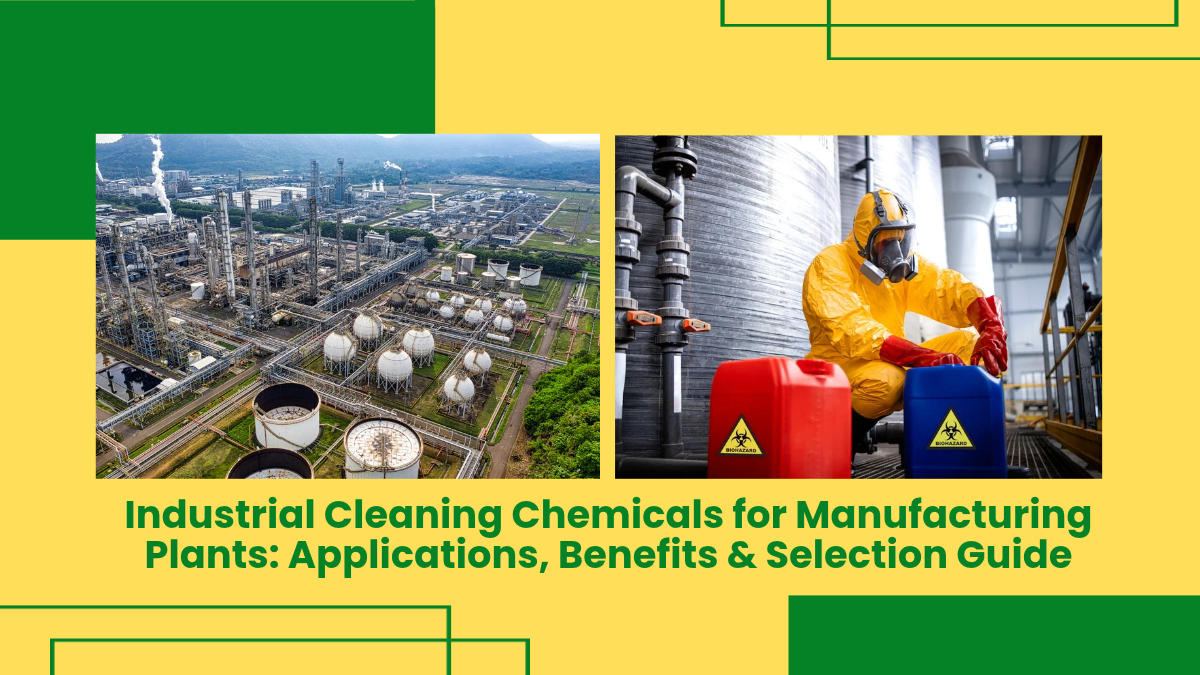
Manufacturing plants deal with oil, grease, dust, metal residues, process contamination and heavy foot traffic every day. Choosing the right industrial cleaning chemicals for manufacturing helps maintain equipment, floors, production areas and other facility surfaces.
Ecochem provides commercial and industrial cleaning solutions for manufacturing and facility-maintenance applications. This guide explains the common uses of manufacturing plant cleaning chemicals, how to select them and how businesses can maintain a safe and effective cleaning programme.
Why Manufacturing Plants Need Industrial Cleaning Chemicals
Manufacturing facilities have cleaning requirements that are different from ordinary offices or residential spaces.
Production activities can leave behind:
- Oil and grease
- Dust and dirt
- Metal particles
- Carbon deposits
- Food or process residues
- Chemical residues
- Mud and heavy soil
- Stains on industrial floors
Regular cleaning helps maintain the condition of work areas and equipment while supporting housekeeping and workplace hygiene procedures.
The right factory cleaning chemicals should be selected according to the type of contamination, surface, cleaning method and operational requirements.
Problems Caused by Poor Industrial Cleaning
1. Oil and Grease Build-Up
Machinery, production equipment and maintenance areas can accumulate oil and grease.
If these deposits are not removed regularly, they can make floors and equipment difficult to maintain.
Solution
Use an appropriate industrial degreaser designed for the specific type of oil or grease.
Before large-scale use, check the product’s surface compatibility and recommended dilution.
Ecochem offers industrial cleaning solutions such as degreasing products for applications where removal of grease and oily contamination is required.
2. Dirty and Slippery Factory Floors
Industrial floors experience regular movement of workers, vehicles and materials.
Oil, grease, dust and other residues can accumulate on the floor and affect housekeeping conditions.
Solution
Establish a regular floor-cleaning schedule based on traffic and contamination levels.
The cleaning process may include:
- Dry removal of loose dirt
- Application of an appropriate floor cleaner
- Mechanical scrubbing where required
- Removal of dirty solution
- Rinsing when required
- Drying and inspection
The product should be compatible with the flooring material.
3. Cleaning Equipment Without Considering Surface Compatibility
Manufacturing plants may contain stainless steel, painted metal, aluminium, plastic, rubber, concrete and other materials.
A chemical suitable for one surface may not be appropriate for another.
Solution
Identify the material before selecting a cleaning product.
Check the manufacturer’s instructions for:
- Surface compatibility
- Recommended concentration
- Contact time
- Application method
- Rinsing requirements
When introducing a new product, testing it on a small area can help identify compatibility issues before wider use.
4. Inconsistent Chemical Dilution
Concentrated industrial cleaning chemicals often require dilution.
Using too much product can increase consumption and may leave residues. Using too little can reduce cleaning performance.
Solution
Create a clear dilution procedure for cleaning staff.
Use measuring equipment where appropriate and provide written instructions for commonly used products.
Employees should follow the manufacturer’s recommended dilution rather than estimating the quantity.
Types of Industrial Cleaning Chemicals Used in Manufacturing
Different areas of a manufacturing plant can require different cleaning solutions.
Industrial Degreasers
Industrial degreasers are used to remove oil, grease and other heavy deposits from suitable equipment and surfaces.
They may be used around:
- Machinery
- Maintenance areas
- Workshop floors
- Mechanical equipment
- Industrial components
The correct degreaser depends on the contamination and surface.
Floor Cleaning Chemicals
Factory floors require cleaning products suitable for the flooring material and level of contamination.
Manufacturing cleaning solutions may be used for concrete, tiles or other compatible industrial flooring.
Multi-Purpose Cleaners
Multi-purpose products can be useful for routine cleaning of suitable surfaces in offices, work areas, common areas and other parts of a manufacturing facility.
Toilet and Washroom Cleaners
Manufacturing plants also require regular cleaning of washrooms and employee facilities.
Suitable toilet and washroom cleaning chemicals can help remove common deposits and maintain routine hygiene.
Metal Cleaning Chemicals
Some manufacturing operations require products designed for specific metal-cleaning applications.
The product should be selected according to the metal type, contamination and desired cleaning result.
Applications of Manufacturing Plant Cleaning Chemicals
Production Areas
Production areas can accumulate dust, process residues and other contamination.
Cleaning schedules should be based on the type of manufacturing process and the level of contamination.
Machinery and Equipment
Equipment cleaning requires careful product selection.
Before applying a chemical to machinery, check whether the formulation is compatible with the equipment material, seals, coatings and other components.
Warehouse Areas
Warehouses can accumulate dust, dirt, packaging debris and vehicle-related contamination.
Routine sweeping followed by suitable wet cleaning can support general housekeeping.
Maintenance Workshops
Workshops commonly deal with oils, lubricants and grease.
Industrial degreasers may be suitable for specific workshop surfaces and equipment when used according to manufacturer instructions.
Employee Facilities
Canteens, washrooms, changing rooms and other employee areas require their own cleaning schedules and suitable cleaning products.
How to Select Industrial Cleaning Chemicals for Manufacturing
1. Identify the Contamination
Start by identifying what needs to be removed.
Is it:
- Oil?
- Grease?
- Dust?
- Food residue?
- Mineral deposits?
- Metal contamination?
- General dirt?
The answer helps determine the appropriate chemical category.
2. Identify the Surface
Check whether the chemical will be used on:
- Concrete
- Stainless steel
- Aluminium
- Ceramic
- Plastic
- Glass
- Painted metal
- Industrial flooring
Surface compatibility should be confirmed before regular use.
3. Check Product Concentration
Concentrated products can provide flexibility for different applications, but the recommended dilution should always be followed.
Compare products based on their usable solution and actual cleaning performance rather than container price alone.
4. Review Safety Information
Before introducing a chemical, review its Safety Data Sheet and product instructions.
Cleaning staff should understand:
- Handling requirements
- PPE requirements
- Dilution
- Storage
- First-aid information
- Spill procedures
- Chemical incompatibilities
5. Consider the Cleaning Method
The cleaning method affects product selection.
A chemical may be applied using:
- Manual cleaning
- Mop cleaning
- Spray application
- Scrubbing machines
- Pressure washing
- Other suitable equipment
Confirm that the product is appropriate for the intended application method.
Benefits of Using Suitable Industrial Cleaning Chemicals
Better Cleaning Consistency
Using the correct product for a defined cleaning task can make routine cleaning more consistent.
Easier Housekeeping Management
Clearly assigned products and procedures can help cleaning teams understand which chemical should be used in different areas.
Reduced Product Wastage
Correct dilution and application can help prevent unnecessary chemical consumption.
Protection of Suitable Surfaces
Using a product designed for the intended surface can reduce the risk of chemical-related surface damage.
Support for Workplace Hygiene
Regular cleaning contributes to a cleaner manufacturing environment and supports the facility’s housekeeping programme.
How Ecochem Supports Manufacturing Cleaning Requirements
Ecochem is an Indian manufacturer of commercial and industrial cleaning chemicals with products designed for different cleaning and housekeeping applications.
Its range includes categories such as:
- Industrial degreasers
- Floor cleaners
- Multi-purpose cleaners
- Toilet cleaners
- Glass cleaners
- Metal cleaners
- Hand hygiene products
- Other housekeeping solutions
Ecochem also offers green, natural, herbal and bio-based cleaning solutions for selected applications.
Manufacturing businesses can select products based on their specific contamination, surface, cleaning method and facility requirements.
For example, an industrial plant dealing with heavy grease may require a suitable degreaser, while routine office areas may require a multi-purpose cleaner.
The objective should be to match the product with the cleaning task rather than using one chemical throughout the entire facility.
Prevention Tips for Manufacturing Plant Cleaning
1. Create Area-Specific Cleaning Schedules
Different areas require different cleaning frequencies.
Production floors, machinery, warehouses, offices and washrooms should have clearly defined cleaning schedules.
2. Train Cleaning Staff
Employees should understand:
- Which chemical to use
- How to dilute it
- Where it can be used
- Required PPE
- Storage requirements
- Spill procedures
3. Never Mix Cleaning Chemicals
Different chemicals can react with one another.
Never mix products unless the manufacturer specifically confirms that the combination is suitable.
4. Keep Containers Labelled
Do not use unidentified containers for cleaning chemicals.
Labels should remain visible and readable.
5. Store Chemicals Correctly
Follow the manufacturer’s storage instructions.
Keep incompatible chemicals separated and restrict access where required.
6. Test New Products
Before introducing a new chemical across the entire plant, test its suitability on an appropriate small area where practical.
7. Monitor Chemical Consumption
Track monthly usage of frequently used cleaning products.
Unexpected increases in consumption may indicate incorrect dilution, overuse, leakage or changes in cleaning requirements.
Common Mistakes to Avoid
Choosing Chemicals Only by Price
A cheaper container does not necessarily mean a lower cleaning cost.
Consider dilution, consumption and cleaning performance.
Using One Product for Every Application
Industrial plants often have different cleaning requirements across different areas.
Ignoring Surface Compatibility
Always check whether the product is appropriate for the intended surface.
Using Incorrect Dilution
Follow the manufacturer’s recommended concentration.
Storing Chemicals Without a System
Poor storage can create unnecessary handling and safety problems.
Skipping Employee Training
Cleaning performance and workplace safety both depend on correct product use.
Building an Effective Manufacturing Cleaning Programme
Choosing the right industrial cleaning chemicals for manufacturing is only one part of an effective factory housekeeping programme.
Businesses should identify cleaning requirements by area, select suitable products, establish dilution procedures, train employees and regularly review chemical consumption.
Ecochem provides a range of commercial and industrial cleaning products that can support different manufacturing and facility-maintenance applications.
For businesses looking for manufacturing plant cleaning chemicals, factory cleaning chemicals, industrial housekeeping chemicals or manufacturing cleaning solutions, the right starting point is to identify the contamination, surface and cleaning method.
Choose the chemical according to the cleaning problem, use the recommended dilution, train the cleaning team and maintain a consistent cleaning schedule.
FAQ’S
What are industrial cleaning chemicals?
Industrial cleaning chemicals are products formulated for cleaning machinery, floors, equipment, production areas and other industrial surfaces.
Which cleaning chemicals are commonly used in manufacturing plants?
Common categories include industrial degreasers, floor cleaners, multi-purpose cleaners, metal cleaners, washroom cleaners and specialised formulations.
How do I choose manufacturing plant cleaning chemicals?
Identify the contamination and surface, then check cleaning performance, dilution, compatibility, safety information and application method.
Can one cleaning chemical be used throughout a factory?
Not always. Different surfaces and contaminants may require different cleaning products and cleaning procedures.
How often should manufacturing plants use industrial cleaning chemicals?
Cleaning frequency depends on the manufacturing process, contamination level, traffic, equipment and facility housekeeping requirements.
Written By: Vinny Jain