An industrial remover for pharmaceutical facilities should be selected according to the type of residue, metal surface, cleaning requirement and risk of contamination. Pharmaceutical plants may need specialised products to remove rust and grease from compatible metal parts, tools and maintenance items. The selected chemical must also fit the facility’s approved cleaning procedures.
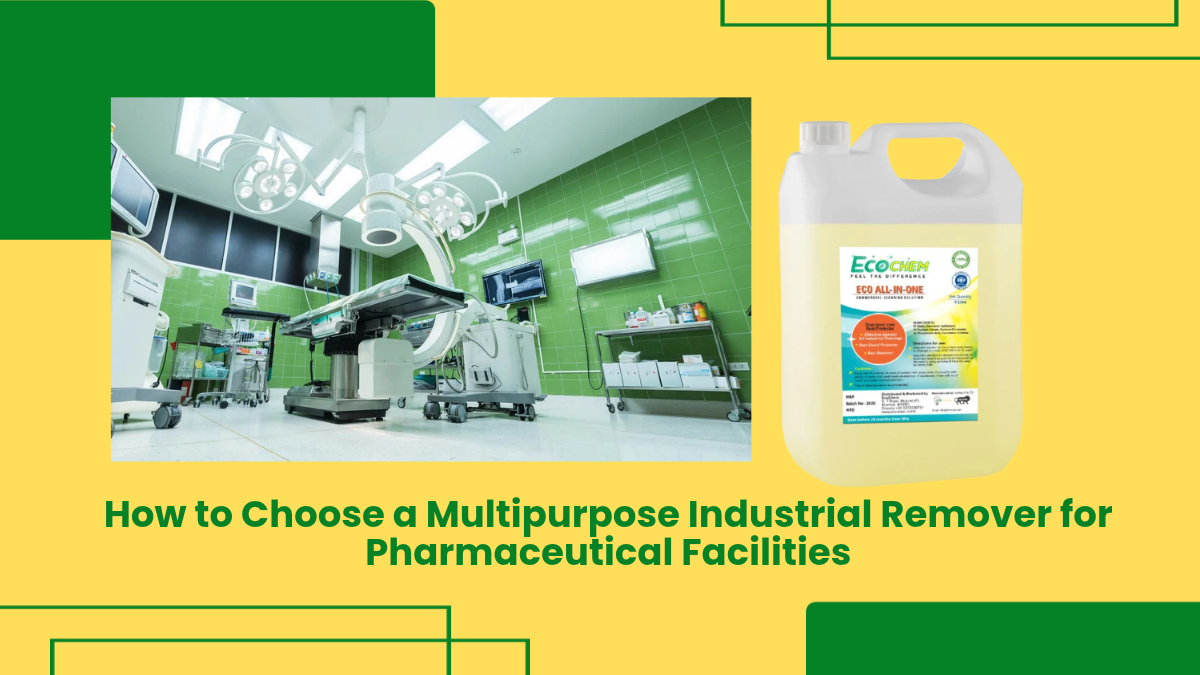
Ecochem’s Eco-All In One is a multipurpose industrial remover described on its product page as a solution for degreasing, rust removal and rust protection on specified metal surfaces. However, its suitability for pharmaceutical production areas must be assessed before use.
Why Do Pharmaceutical Facilities Need Industrial Removers?
Pharmaceutical facilities use metal tools, equipment components and maintenance items that may be exposed to moisture, oil and environmental conditions. Over time, these can develop rust, grease deposits and surface contamination.
Common challenges include:
- Rust formation: Moisture exposure can cause rust on iron and other susceptible metal surfaces.
- Grease deposits: Lubricants and maintenance oils can collect on tools and equipment parts.
- Equipment maintenance: Metal components may need cleaning before inspection or maintenance.
- Surface protection: Treated metal surfaces may require suitable protection against further rust formation.
These issues should be handled through approved maintenance and cleaning procedures, particularly in controlled manufacturing areas.
How to Choose the Right Industrial Remover
Before selecting a multipurpose industrial remover, consider the following factors.
1. Identify the residue
A rust remover and a general-purpose floor cleaner serve different purposes. Identify whether the problem involves rust, grease, oil or another type of deposit. Select a product specifically intended for the residue.
2. Check metal compatibility
Confirm that the chemical is suitable for the material being cleaned. Iron, cast iron, chrome and other metal surfaces may respond differently to cleaning products. Check the manufacturer’s instructions before applying the solution.
3. Consider residue removal
In pharmaceutical manufacturing, cleaning agents must be appropriate for their intended use and removable through the established cleaning process. Residues from both the original contaminant and the cleaning chemical may need consideration.
WHO guidance highlights the importance of selecting suitable cleaning agents and demonstrating their effectiveness and removal during cleaning validation.
4. Review application instructions
Check the recommended dilution, application method, contact time and rinsing requirements. Do not assume that a chemical suitable for general maintenance is automatically suitable for product-contact equipment.
How to Use an Industrial Remover: Practical Steps
Follow the product instructions and your facility’s approved SOP. A general maintenance approach may include:
- Identify the surface: Confirm the metal type and assess the condition of the affected area.
- Isolate the item: Remove the tool or component from the production area where required by site procedure.
- Prepare the solution: Follow the manufacturer’s stated dilution and handling instructions.
- Apply as directed: Use the approved application method for the specific metal surface.
- Inspect the result: Check whether rust or grease has been removed as intended.
- Rinse or remove residues: Follow the product instructions and the facility’s approved procedure.
- Document the activity: Record the cleaning or maintenance work wherever required by the site’s SOP.
These steps are general guidance, not a validated pharmaceutical cleaning procedure. Product-contact equipment requires a site-approved cleaning process and appropriate validation.
Safety and Pharmaceutical Facility Considerations
Chemical selection in pharmaceutical facilities involves more than cleaning performance. Consider:
- Surface compatibility: Confirm that the chemical will not damage the metal or its finish.
- Chemical handling: Follow the safety data sheet, label instructions and workplace PPE requirements.
- Cross-contamination control: Prevent cleaning chemicals and removed residues from reaching products or production materials.
- Controlled-area approval: Obtain the relevant quality or facility approval before introducing a chemical into a controlled area.
- Cleaning validation: Do not use an unapproved remover on product-contact equipment or assume that general maintenance cleaning meets GMP requirements.
WHO guidance states that cleaning agents should be appropriate for their intended use, with attention to their composition, concentration and removal.
How Eco-All In One May Fit Industrial Maintenance Requirements
Eco-All In One
Ecochem describes Eco-All In One as a multipurpose industrial remover designed for degreasing, rust removal and rust protection.
Product information: View Eco-All In One
According to the official product page, its stated applications include:
- Removing rust from tools and metal surfaces.
- Cleaning rust from cast iron and chrome parts.
- Degreasing and lifting rust from treated surfaces.
- Providing a phosphate layer intended to help protect the metal against rust.
The listed dilution ratio is 10 ml in 1 litre of water. The product page also describes the formulation as biodegradable and non-toxic. Refer to the current product label and safety documentation for handling and application requirements.
For pharmaceutical facilities, Eco-All In One may be considered for suitable metal maintenance applications outside product-contact operations, subject to surface compatibility and site approval. Its use on product-contact equipment, critical production surfaces or in controlled areas should not be assumed without the facility’s quality approval and relevant validation.
Common Mistakes to Avoid
- Using a rust remover as a substitute for a pharmaceutical disinfectant.
- Applying the same chemical to every metal or surface.
- Ignoring the manufacturer’s dilution instructions.
- Using a maintenance chemical on product-contact equipment without approval.
- Skipping residue removal and post-cleaning inspection.
- Introducing chemicals into controlled areas without reviewing site procedures.
Conclusion
Choosing an industrial remover for pharmaceutical facilities requires attention to residue type, metal compatibility, chemical handling and contamination control. A product intended for rust removal and degreasing should be used only for applications supported by its specifications and the facility’s procedures.
Ecochem’s Eco-All In One is designed for rust removal, degreasing and rust protection on stated metal surfaces. Pharmaceutical facility teams can review its product details and confirm suitability for their specific maintenance requirements before use.
FAQ’S
What is an industrial remover used for in pharmaceutical facilities?
It can help remove rust and grease from compatible metal tools and maintenance components.
Can Eco-All In One remove rust from metal surfaces?
Yes. Ecochem describes it for rust removal from tools, metal, cast iron and chrome parts.
What is the dilution ratio of Eco-All In One?
The Ecochem product page lists 10 ml of Eco-All In One in 1 litre of water.
Can an industrial remover be used on pharmaceutical production equipment?
Only after confirming material compatibility, site approval and compliance with the equipment’s validated cleaning procedure.
Is a rust remover the same as a disinfectant?
No. Rust removers address metal deposits and corrosion; disinfectants are intended for microbial control.
Written By: Vinny Jain