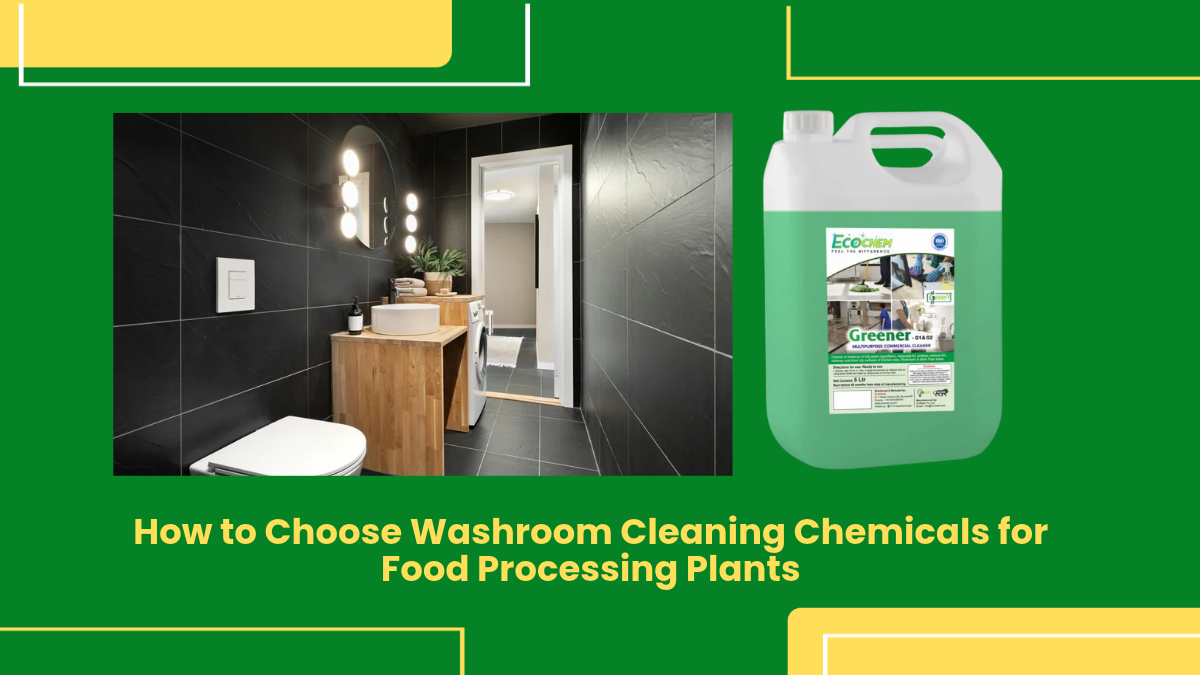
Choosing the right washroom cleaning chemicals for food processing plants involves more than removing stains and unpleasant odours. Food facilities need a consistent washroom cleaning routine that supports employee hygiene and helps prevent contamination risks near production areas. The right products should match the surface, type of soil and cleaning requirements, with clear instructions for dilution, handling and use.
Employee toilets, washbasins, taps, floors and frequently touched surfaces require regular attention. Facility managers should select suitable cleaners, follow a documented schedule and keep washroom cleaning equipment separate from production-area cleaning tools.
Why Washroom Hygiene Matters in Food Processing Plants
Employees use washrooms throughout their shifts and return to food handling or production activities afterwards. Poorly maintained facilities can create hygiene concerns, particularly when handwashing facilities are unavailable or cleaning routines are inconsistent.
The Food Safety and Standards Authority of India (FSSAI) specifies that food businesses should provide adequate toilets and handwashing facilities. Toilets should be maintained in a clean condition and should not open directly into rooms where food is handled. <Cite refs={[“turn244301search24″,”turn244301search1”]} />
Common washroom cleaning challenges include:
- Urine and mineral deposits: These can accumulate around toilet bowls, urinals and fittings.
- Soap residue: Washbasins and surrounding surfaces may develop visible deposits.
- Floor contamination: Water, dirt and footwear can leave floors soiled and slippery.
- Frequent touchpoints: Door handles, taps and flush controls need regular attention.
- Odour problems: Inadequate cleaning and poorly maintained drains may contribute to unpleasant smells.
- High employee usage: Multiple shifts require a cleaning schedule that matches actual usage.
How to Select Washroom Cleaning Chemicals for Food Processing Plants
1. Identify the surface that needs cleaning
Different washroom surfaces require different cleaning approaches. Before choosing an industrial bathroom cleaner, identify whether the task involves toilet bowls, ceramic surfaces, washbasins, floors, taps or other fittings.
Check the product instructions for approved applications. Do not assume that a cleaner suitable for ceramic surfaces is also suitable for marble, natural stone or every metal finish.
2. Match the product to the cleaning problem
A washroom may require more than one cleaning product or process.
| Cleaning requirement | What to consider |
|---|---|
| Toilet bowls and urinals | A suitable toilet or washroom cleaner |
| Washbasins and ceramic surfaces | A product approved for the material |
| Floor dirt and deposits | A compatible floor-cleaning solution |
| Taps and metal fittings | Check chemical and material compatibility |
| Frequently touched surfaces | Follow the facility’s approved cleaning and disinfection procedure |
A general washroom cleaner should not automatically be treated as a disinfectant. If a separate disinfection step is required, select a product specifically supported for that purpose.
3. Check dilution and application instructions
Commercial washroom cleaning chemicals may be supplied as concentrates or ready-to-use products. Check the label before preparing a solution.
Confirm:
- Recommended dilution ratio
- Suitable surfaces and applications
- Application and rinsing instructions
- Required protective equipment
- Storage and handling precautions
Correct dilution helps staff follow a consistent procedure. Never estimate the quantity or mix different cleaning products unless the manufacturer specifically permits it.
4. Consider the cleaning schedule
The cleaning frequency should reflect employee numbers, shift patterns and washroom usage. A facility with several production shifts may need inspections and cleaning at multiple points during the day.
FSSAI guidance for food businesses also emphasises maintaining clean toilets and appropriate handwashing facilities. Facilities should establish their own documented schedule based on applicable requirements and actual usage.
Practical Washroom Cleaning Procedure
A structured procedure helps housekeeping teams maintain consistent standards.
- Prepare the area: Display wet-floor signs and ensure the washroom can be cleaned safely.
- Wear appropriate PPE: Follow the product label and safety documentation.
- Remove visible soil: Collect waste and remove loose dirt before applying cleaning chemicals.
- Prepare the cleaning solution: Follow the specified dilution and application instructions.
- Clean fixtures and surfaces: Work systematically across toilets, washbasins, fittings and floors.
- Rinse or wipe as directed: Follow the product instructions to manage chemical residues.
- Complete any required disinfection: Use a separately approved disinfectant when required by the facility’s hygiene programme.
- Inspect and record: Check cleanliness, replenish washroom supplies and record the completed task.
Keep washroom cleaning tools separate from tools used in food production and handling areas. Clean and store them according to the facility’s hygiene procedures.
Safety and Chemical Handling Considerations
Washroom cleaners may have different chemical properties. Staff should understand the product instructions before use, especially when handling concentrated or acidic products.
Follow these precautions:
- Never mix acidic cleaners with bleach or other incompatible chemicals.
- Use the protective equipment specified by the product documentation.
- Maintain ventilation where required.
- Store chemicals in labelled, designated areas away from food and packaging materials.
- Check surface compatibility before application.
- Train housekeeping staff in safe dilution, handling and spill response.
The UK Health and Safety Executive also highlights the importance of staff training, suitable precautions and access to safety information when handling cleaning and disinfecting chemicals. <Cite refs={[“turn244301search6”]} />
How Eco-Green Kleenly Fits into Food Plant Washroom Cleaning
Ecochem’s Eco-Green Kleenly is listed as a washroom and bathroom cleaner. Its official product page describes it as an acid-based cleaning product and lists a dilution ratio of 10 ml in 1 litre of water. The page identifies cleaning applications involving stubborn stains, oil and grease.
For food processing facilities, Eco-Green Kleenly may be considered for washroom cleaning tasks that match its stated applications and approved surfaces. However, its suitability should be confirmed for the specific fixture or material before use.
The product page also makes sanitising and germ-reduction claims, but the published information alone does not establish the test method, applicable standards or approval for a particular food facility. Do not rely on those claims as a substitute for a verified disinfection requirement. Confirm the current product label and technical documentation with Ecochem.
Explore Eco-Green Kleenly – Washroom and Bathroom Cleaner
Common Mistakes to Avoid
- Using the same cleaning product on every washroom surface without checking compatibility.
- Ignoring the recommended dilution ratio.
- Mixing acidic cleaners with bleach or other chemicals.
- Treating a general washroom cleaner as a confirmed disinfectant.
- Using the same mops and cloths in washrooms and production areas.
- Cleaning only when visible dirt or odour appears.
- Failing to maintain cleaning records and replenish handwashing supplies.
FAQ’S
Which washroom cleaning chemicals are suitable for food processing plants?
Choose products according to surface compatibility, cleaning requirements, label instructions and the facility’s hygiene procedures.
How often should food factory washrooms be cleaned?
Set cleaning and inspection frequency according to employee usage, shift patterns, facility procedures and applicable hygiene requirements.
Can a washroom cleaner also disinfect surfaces?
Not automatically. Use a product with verified disinfection claims and follow its specified concentration and contact time.
Why should washroom cleaning tools be kept separate?
Separate tools help prevent soil and potential contaminants from being transferred between washrooms and food production areas.
What is Eco-Green Kleenly used for?
Ecochem lists Eco-Green Kleenly as a washroom and bathroom cleaner for applications described on its official product page.
Written By: Vinny Jain