Introduction
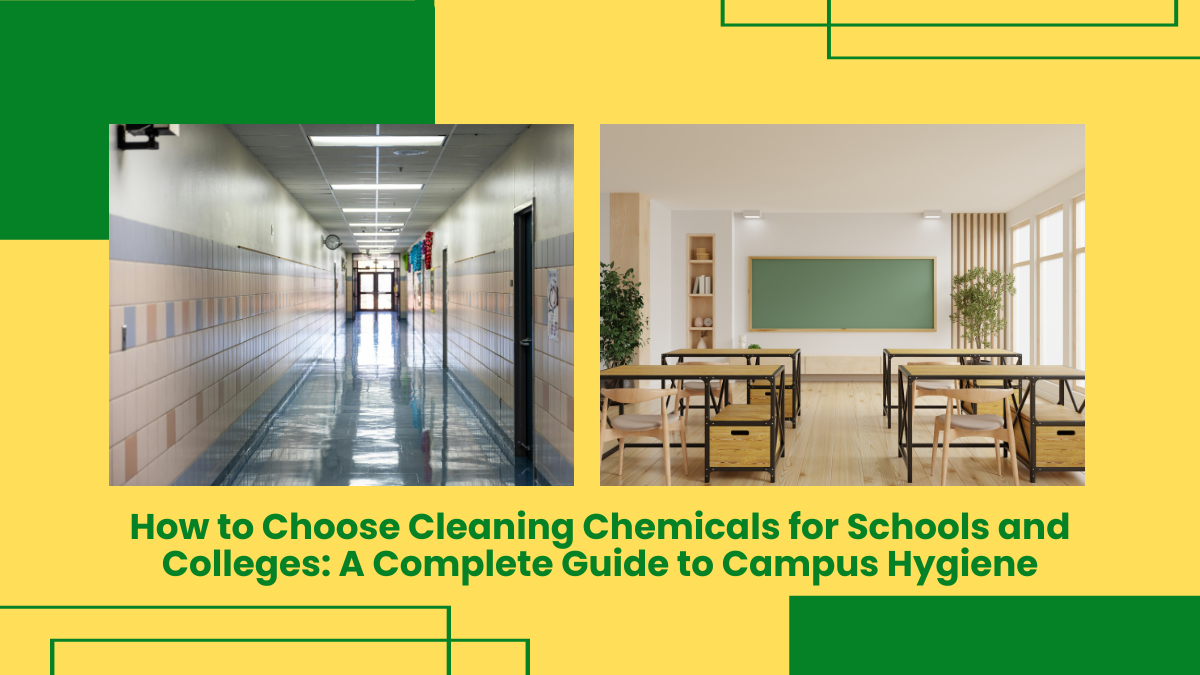
Schools and colleges are high-traffic environments where hundreds or even thousands of students, teachers, staff members, and visitors interact daily. Classrooms, laboratories, libraries, cafeterias, hostels, washrooms, and sports facilities all require consistent cleaning to maintain a safe and healthy learning environment.
Poor hygiene can contribute to the spread of germs, unpleasant odours, stained surfaces, and an unhealthy atmosphere, affecting both students and staff. Selecting the right Cleaning Chemicals for Schools and Colleges is essential for maintaining cleanliness while ensuring safety for occupants.
Educational institutions require cleaning products that are effective, easy to use, and suitable for different areas across the campus. This guide explains how schools and colleges can choose appropriate cleaning chemicals, common hygiene challenges they face, practical solutions, and prevention tips that support long-term campus cleanliness.
Why Campus Hygiene Matters
A clean educational environment supports:
- Student health and well-being
- Reduced absenteeism
- Better learning conditions
- Improved facility appearance
- Safer classrooms and common areas
- Positive impressions for parents and visitors
Maintaining campus hygiene involves more than routine sweeping and mopping. Different areas require specialised cleaning products to address unique cleaning challenges.
Using suitable school cleaning chemicals helps educational institutions maintain cleanliness while protecting building infrastructure and facilities.
Common Areas That Require Specialised Cleaning
Schools and colleges contain multiple environments, including:
- Classrooms
- Laboratories
- Libraries
- Washrooms
- Cafeterias
- Staff rooms
- Hostels
- Corridors
- Sports facilities
- Administrative offices
Each area has different cleaning requirements and contamination risks.
Problem 1: Germ Build-Up in Classrooms
Classrooms are among the most frequently used spaces on campus.
Students regularly touch:
- Desks
- Chairs
- Whiteboards
- Door handles
- Computer equipment
- Shared learning tools
These surfaces can accumulate bacteria, viruses, dust, and dirt throughout the day.
Solution
Use appropriate classroom cleaning chemicals designed for daily cleaning and disinfection.
Effective classroom cleaning programs should include:
- Surface cleaning
- Desk sanitization
- Dust removal
- Floor cleaning
- High-touch surface disinfection
Cleaning should be scheduled after school hours or during designated maintenance periods.
Prevention Tips
- Encourage proper hand hygiene among students.
- Clean frequently touched surfaces daily.
- Ensure classrooms have adequate ventilation.
- Establish regular cleaning schedules.
Problem 2: Washroom Hygiene Challenges
School and college washrooms experience heavy daily usage.
Common issues include:
- Unpleasant odors
- Stained surfaces
- Bacterial growth
- Water scale deposits
- Blocked drains
Washrooms often become one of the first areas visitors evaluate when assessing facility cleanliness.
Solution
Use specialised school washroom cleaners that effectively remove stains, mineral deposits, soap residues, and odours.
Washroom cleaning programs should include:
- Toilet cleaning
- Urinal cleaning
- Sink sanitization
- Floor cleaning
- Odor control
Disinfectants should be used regularly to maintain hygienic conditions.
Prevention Tips
- Inspect washrooms multiple times each day.
- Refill hygiene supplies regularly.
- Address leaks immediately.
- Maintain proper ventilation systems.
Problem 3: Cafeteria and Dining Area Contamination
School cafeterias and dining halls are areas where food preparation and consumption occur.
Common contaminants include:
- Food spills
- Grease deposits
- Beverage stains
- Food waste
- Surface contamination
Without proper cleaning, these areas may attract pests and create hygiene concerns.
Solution
Use suitable cleaning products designed for food-service environments.
Recommended cleaning products include:
- Floor cleaners
- Surface sanitizers
- Degreasers
- Glass cleaners
Food-contact surfaces should be cleaned using products appropriate for educational food service environments.
Prevention Tips
- Clean spills immediately.
- Empty waste bins regularly.
- Sanitise tables after meal periods.
- Conduct routine deep cleaning sessions.
Problem 4: Dirty Floors and Common Areas
Hallways, staircases, entrances, and common areas receive constant foot traffic.
These areas often accumulate:
- Dust
- Mud
- Debris
- Scuff marks
- Moisture
Dirty floors can affect campus appearance and increase slip hazards.
Solution
Use institutional floor cleaning products suitable for educational facilities.
Cleaning procedures should include:
- Sweeping
- Mopping
- Spot cleaning
- Periodic deep cleaning
Selecting suitable floor cleaning chemicals helps maintain both cleanliness and floor longevity.
Prevention Tips
- Install entrance mats.
- Clean high-traffic areas more frequently.
- Remove spills promptly.
- Inspect floors for damage.
Problem 5: Maintaining Hygiene in Laboratories
Science laboratories contain specialised equipment and work surfaces that require regular cleaning.
Potential contamination sources include:
- Chemical residues
- Dust accumulation
- Biological materials
- Shared equipment
Solution
Use cleaning products suitable for laboratory environments.
Cleaning programs should focus on:
- Workstations
- Equipment surfaces
- Storage cabinets
- Laboratory floors
Cleaning procedures should follow laboratory safety requirements.
Prevention Tips
- Train staff on laboratory cleaning protocols.
- Clean equipment after use.
- Store chemicals properly.
- Conduct routine inspections.
Choosing the Right Cleaning Chemicals for Schools and Colleges
Selecting cleaning products requires evaluating several factors.
Safety for Students and Staff
Educational institutions should prioritise cleaning products that can be used safely when applied according to instructions.
Many schools are increasingly adopting eco-friendly cleaning chemicals for schools to reduce environmental impact and support healthier indoor environments.
Benefits include:
- Reduced chemical exposure
- Improved indoor air quality
- Lower environmental impact
- Suitable for daily cleaning programs
Surface Compatibility
Campuses contain a variety of surfaces, including:
- Tile flooring
- Vinyl flooring
- Glass
- Wood furniture
- Metal fixtures
- Plastic equipment
Cleaning products should be compatible with these materials to prevent damage.
Cleaning Performance
Different contaminants require different cleaning approaches.
Examples include:
| Cleaning Need | Recommended Product |
| Classroom desks | Surface cleaner |
| Washrooms | Washroom cleaner |
| Cafeterias | Degreaser |
| Floors | Floor cleaner |
| Glass surfaces | Glass cleaner |
Selecting the right product improves cleaning efficiency and reduces labour requirements.
Benefits of Eco-Friendly Cleaning Chemicals for Schools
Many educational institutions are adopting sustainable cleaning practices.
Eco-friendly cleaning solutions offer several advantages:
- Lower environmental impact
- Improved indoor air quality
- Reduced harsh chemical odours
- Support for sustainability initiatives
These products can contribute to a healthier campus environment while maintaining cleaning performance.
Creating an Effective Campus Cleaning Program
Successful campus hygiene depends on more than selecting cleaning chemicals.
Educational institutions should establish structured cleaning programs that include:
Cleaning Schedules
Define cleaning frequencies for:
- Classrooms
- Washrooms
- Cafeterias
- Libraries
- Laboratories
- Hostels
High-use areas may require multiple cleaning sessions each day.
Staff Training
Cleaning personnel should receive training on:
- Product usage
- Dilution procedures
- Safety practices
- Cleaning techniques
Proper training helps achieve consistent results across the campus.
Routine Inspections
Regular inspections help identify issues before they become larger problems.
Inspections should focus on:
- Cleanliness standards
- Supply availability
- Equipment condition
- Maintenance needs
How Ecochem Supports Educational Institutions
Maintaining hygiene across schools and colleges requires dependable cleaning products that address a wide range of cleaning challenges.
Ecochem provides cleaning solutions suitable for educational facilities, including classroom cleaning, washroom maintenance, floor care, surface sanitation, and general facility hygiene. By selecting the appropriate cleaning products for each campus area, institutions can create cleaner, healthier environments for students, teachers, and staff.
A well-planned cleaning program supported by quality cleaning products helps educational institutions maintain hygiene standards while improving the overall campus experience.
Final Thoughts
Educational institutions face unique cleaning challenges due to high occupancy levels and diverse facility requirements. Classrooms, washrooms, cafeterias, laboratories, and common areas all require specific cleaning approaches to maintain cleanliness and support health and safety goals.
Choosing the right Cleaning Chemicals for Schools and Colleges helps institutions address contamination risks, maintain facility appearance, and create healthier learning environments. Combined with routine inspections, employee training, and preventive cleaning practices, the right cleaning solutions contribute significantly to long-term campus hygiene and operational efficiency.
FAQ’S
What are the best cleaning chemicals for schools and colleges?
Floor cleaners, surface disinfectants, washroom cleaners, glass cleaners, and sanitisers are commonly used in educational institutions.
Why are classroom cleaning chemicals important?
Classroom cleaning chemicals help remove germs, dust, and contaminants from frequently touched surfaces and shared learning spaces.
How often should school washrooms be cleaned?
School washrooms should be inspected and cleaned multiple times daily based on usage and hygiene requirements.
Are eco-friendly cleaning chemicals suitable for schools?
Yes, eco-friendly cleaning chemicals help maintain hygiene while supporting healthier indoor environments and sustainability goals.
What areas require regular cleaning in colleges and schools? here
Classrooms, washrooms, cafeterias, libraries, laboratories, hostels, corridors, and common areas require regular cleaning and maintenance.
Written By: Vinny Jain