Industrial cleaning plays a major role in maintaining hygiene, equipment safety, workplace cleanliness, and operational efficiency. Factories, warehouses, hospitals, food processing units, offices, hotels, and manufacturing plants rely on industrial cleaning chemicals to remove grease, stains, dirt, bacteria, and production residue.
For many years, industries depended heavily on traditional chemical cleaners containing strong solvents and aggressive ingredients. While these products offer quick cleaning results, they often create concerns related to worker safety, indoor air quality, chemical exposure, and environmental impact.
Because of these issues, many industries are now shifting toward plant-based industrial cleaning chemicals and eco-friendly cleaning solutions.
Businesses today are comparing traditional and plant-based cleaning chemicals based on:
- Cost
- Cleaning performance
- Safety
- Sustainability
- Long-term maintenance
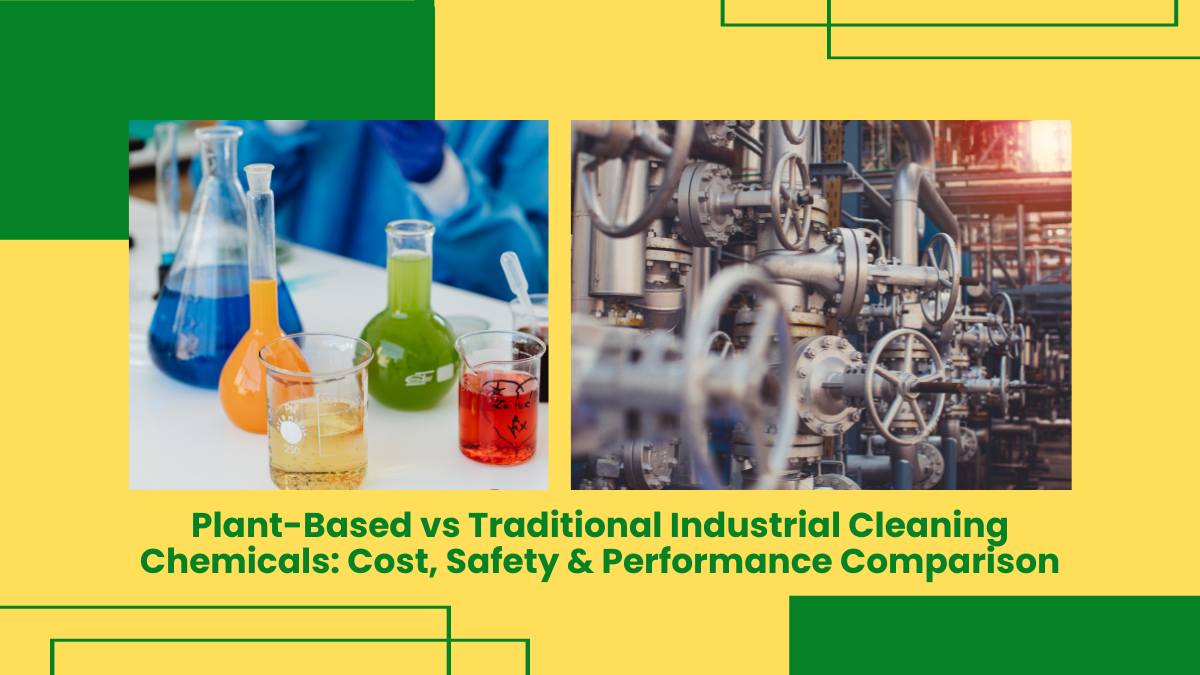
This guide explains the differences between plant-based and traditional industrial cleaning chemicals, common cleaning problems, solutions, and prevention tips for safer industrial cleaning operations.
What Are Traditional Industrial Cleaning Chemicals?
Traditional industrial cleaning chemicals are strong chemical-based products designed for:
- Heavy grease removal
- Industrial floor cleaning
- Equipment maintenance
- Surface disinfection
- Drain cleaning
These products often contain:
- Solvents
- Acids
- Synthetic fragrances
- Corrosive ingredients
Traditional cleaners are widely used in:
- Factories
- Workshops
- Warehouses
- Manufacturing plants
While effective for tough cleaning applications, long-term use may create operational and safety challenges.
What Are Plant-Based Industrial Cleaning Chemicals?
Plant-based industrial cleaning chemicals use naturally derived ingredients instead of relying heavily on aggressive solvents.
These products are commonly:
- Non-toxic
- Eco-friendly
- Biodegradable
- Low odor
- Safer for regular use
Plant-based cleaners are increasingly used in:
- Food processing units
- Offices
- Hospitals
- Educational institutions
- Commercial facilities
- Sustainable manufacturing plants
Common Problems with Traditional Industrial Cleaning Chemicals
Strong Chemical Fumes
Problem
Many traditional cleaning chemicals release strong fumes during use, especially in enclosed industrial spaces.
This may affect:
- Worker comfort
- Indoor air quality
- Breathing conditions
Solution
Plant-based cleaning chemicals produce fewer strong odours and improve workplace environments.
Prevention Tips
- Improve ventilation systems
- Use low-odour cleaning products
- Train employees on safe chemical handling
Surface Damage and Corrosion
Problem
Aggressive industrial chemicals may damage:
- Stainless steel
- Flooring
- Machinery
- Paint coatings
- Rubber seals
Repeated exposure can increase maintenance costs.
Solution
Plant-based and non-harsh chemicals help clean industrial surfaces while reducing long-term wear.
Prevention Tips
- Use surface-specific products
- Avoid excessive chemical concentration
- Follow recommended dilution methods
Worker Safety Concerns
Problem
Cleaning staff and industrial workers handling harsh chemicals daily may experience:
- Skin irritation
- Eye discomfort
- Respiratory issues
Solution
Non-toxic industrial cleaning chemicals reduce direct exposure to harmful ingredients.
Prevention Tips
- Use protective equipment
- Train housekeeping staff regularly
- Store chemicals properly
Environmental Impact
Problem
Traditional industrial cleaners may contribute to:
- Water pollution
- Chemical waste
- Air contamination
Solution
Biodegradable and eco-friendly cleaning chemicals help reduce environmental impact.
Prevention Tips
- Use sustainable cleaning products
- Follow waste disposal guidelines
- Reduce unnecessary chemical usage
Cost Comparison: Plant-Based vs Traditional Industrial Cleaning Chemicals
Initial Product Cost
Traditional industrial cleaners are often cheaper initially because they are mass-produced using synthetic ingredients.
Plant-based industrial cleaning chemicals may have slightly higher upfront costs because of:
- Natural ingredients
- Biodegradable formulations
- Safer production methods
Long-Term Cost Benefits
While plant-based cleaners may cost more initially, they often reduce:
- Surface damage
- Equipment maintenance
- Workplace safety issues
- Chemical handling risks
This may help businesses lower long-term operational costs.
Reduced Maintenance Expenses
Non-harsh chemicals are gentler on industrial equipment and flooring.
This helps reduce:
- Corrosion
- Surface replacement costs
- Machine wear
Safety Comparison
Traditional Industrial Cleaning Chemicals
Common Risks
- Strong fumes
- Skin irritation
- Chemical burns
- Breathing discomfort
- Slippery residue
Industrial workers handling harsh products daily may face higher exposure risks.
Plant-Based Industrial Cleaning Chemicals
Safety Benefits
- Reduced chemical exposure
- Better indoor air quality
- Lower odour levels
- Safer daily cleaning
- Reduced residue buildup
These products are especially useful in:
- Food industries
- Healthcare facilities
- Offices
- Commercial spaces
Performance Comparison
Grease Removal
Traditional industrial cleaners are known for strong grease-cutting performance.
However, modern plant-based degreasers are also effective for:
- Machinery cleaning
- Industrial floors
- Workshop surfaces
- Kitchen equipment
Bio-enzyme cleaning products help break down organic residue naturally.
Surface Cleaning
Plant-based cleaners are effective for:
- Stainless steel
- Glass
- Tiles
- Floors
- Office surfaces
Non-harsh chemicals help protect sensitive materials from damage.
Odor Control
Traditional chemicals often mask odours with synthetic fragrances.
Plant-based and biodegradable products help remove odour-causing residue instead of simply covering smells.
Why Industries Are Choosing Sustainable Cleaning
Businesses are increasingly adopting eco-friendly industrial cleaning because of:
- Workplace safety goals
- Environmental regulations
- Employee wellness initiatives
- Sustainable operations
- Improved indoor hygiene
Modern industries are focusing more on reducing chemical exposure while maintaining cleaning performance.
Common Industries Using Plant-Based Cleaning Chemicals
Food Processing Units
Food manufacturers prefer non-toxic cleaning products to reduce contamination risks.
Healthcare Facilities
Hospitals and clinics use safer cleaning products to improve hygiene and indoor safety.
Offices and Commercial Buildings
Low-odour and eco-friendly cleaning chemicals improve workplace comfort.
Educational Institutions
Schools and colleges increasingly use biodegradable and plant-based cleaning products.
Prevention Tips for Industrial Cleaning Operations
Use Proper Chemical Dilution
Overusing chemicals may leave residue and damage surfaces.
Follow Routine Cleaning Schedules
Regular maintenance reduces heavy dirt and grease buildup.
Train Cleaning Staff
Employees should understand:
- Product usage
- Surface compatibility
- Safety procedures
- Storage requirements
Improve Workplace Ventilation
Proper airflow helps reduce chemical odour buildup during cleaning operations.
Choose Surface-Safe Products
Different surfaces require different cleaning formulations.
Using incorrect products may increase repair costs.
How Sustainable Cleaning Supports Business Operations
Eco-friendly industrial cleaning supports:
- Safer work environments
- Better employee comfort
- Reduced maintenance costs
- Environmental responsibility
- Improved facility hygiene
Many businesses now include sustainable cleaning policies as part of long-term operational planning.
Future of Industrial Cleaning Chemicals
Industrial cleaning is gradually shifting toward:
- Plant-based cleaning products
- Biodegradable formulations
- Non-toxic disinfectants
- Eco-friendly maintenance
- Sustainable facility management
Businesses are becoming more aware of how cleaning products affect workplace safety, maintenance costs, and environmental performance.
How Ecochem Supports Sustainable Industrial Cleaning
Ecochem provides industrial cleaning solutions designed for commercial facilities, manufacturing units, workplaces, and industrial operations.
From plant-based cleaning chemicals and eco-friendly floor cleaners to biodegradable industrial cleaning products, Ecochem focuses on helping businesses maintain cleaner and safer environments.
Organisations looking for sustainable industrial cleaning solutions can explore products suitable for factories, offices, food processing units, healthcare facilities, and commercial spaces.
Final Thoughts
Both plant-based and traditional industrial cleaning chemicals offer advantages depending on cleaning requirements. Traditional chemicals may provide fast cleaning for heavy industrial applications, while plant-based products support safer and more sustainable cleaning practices.
Businesses focusing on workplace hygiene, employee safety, environmental responsibility, and long-term maintenance are increasingly choosing plant-based industrial cleaning chemicals. Using eco-friendly, biodegradable, and non-toxic cleaning products helps industries maintain cleaner facilities while reducing harmful chemical exposure and supporting sustainable operations.
FAQ’S
What are plant-based industrial cleaning chemicals?
Plant-based industrial cleaning chemicals use naturally derived ingredients to clean industrial surfaces safely without strong chemical fumes or residue.
Are plant-based cleaning chemicals effective for heavy industrial cleaning?
Yes, modern plant-based cleaners effectively remove grease, dirt, stains, and residue from industrial equipment and commercial workspaces.
Why are industries switching to eco-friendly cleaning chemicals?
Industries prefer eco-friendly cleaning chemicals to improve workplace safety, reduce pollution, and support sustainable industrial cleaning practices.
What are the benefits of biodegradable industrial cleaning products?
Biodegradable products reduce environmental impact, improve workplace hygiene, and help maintain safer industrial cleaning operations and wastewater management.
How do non-toxic cleaning chemicals improve workplace safety?
Non-toxic cleaning chemicals reduce harmful fumes, skin irritation, chemical exposure, and indoor air quality issues for industrial workers.
Written By: Vinny Jain