Introduction
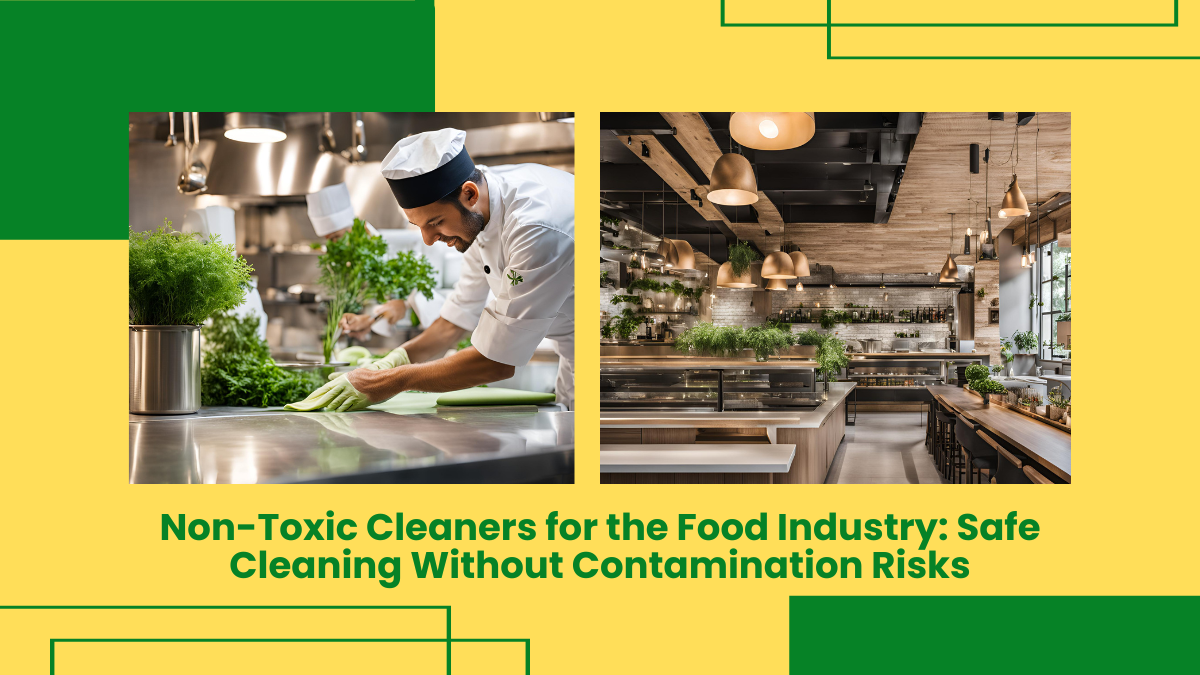
In the food industry, cleanliness is directly linked to safety and product quality. Any contamination,whether from bacteria, residues, or harmful chemicals, can lead to serious consequences, including product recalls and regulatory action.
Traditional cleaning chemicals often pose risks due to toxic residues and strong formulations. This has increased the demand for non-toxic cleaners for food industry applications.
These cleaners provide effective cleaning while reducing contamination risks, ensuring both hygiene and safety. Businesses are now shifting toward safer cleaning solutions that support compliance and protect consumers.
What Are Non-Toxic Cleaners for the Food Industry?
Non-toxic cleaners for the food industry are specially formulated cleaning products designed to remove grease, residues, and microorganisms without leaving harmful chemical traces.
Key Features
- Food-safe formulations
- Low or no toxic residues
- Biodegradable and environmentally safe
- Compatible with food processing equipment
Common Types
- Food-safe degreasers
- Surface sanitizers
- Equipment cleaners
- Floor cleaning solutions
These cleaners are suitable for use in food processing plants, commercial kitchens, and storage facilities.
Problems with Traditional Cleaning Chemicals in the Food Industry
Using conventional cleaning products in food environments can lead to multiple challenges.
1. Risk of Chemical Contamination
- Residues from harsh chemicals can contaminate food products
- Affects product safety and quality
2. Health Risks for Workers
- Exposure to toxic fumes can cause respiratory issues
- Skin contact may lead to irritation
3. Compliance Challenges
- Food safety regulations restrict the use of certain chemicals
- Non-compliance can lead to penalties or shutdowns
4. Equipment Damage
- Strong chemicals can corrode machinery
- Leads to higher maintenance costs
5. Inefficient Cleaning
- Some chemicals only clean surface-level dirt
- Residue buildup requires repeated cleaning
Solutions: Why Non-Toxic Cleaners Are Essential for the Food Industry
Switching to non-toxic cleaners for the food industry helps businesses address these challenges effectively.
1. Safe Cleaning Without Residue
- Leaves minimal or no harmful traces
- Reduces risk of contamination
2. Improved Worker Safety
- Low-toxicity formulations reduce exposure risks
- Safer handling and application
3. Compliance with Food Safety Standards
- Meets regulatory requirements
- Supports audits and inspections
4. Equipment Protection
- Non-corrosive formulations protect machinery
- Extend equipment lifespan
5. Effective Cleaning Performance
- Removes grease, food residue, and bacteria
- Suitable for daily use
Benefits of Non-Toxic Cleaners for the Food Industry
1. Enhanced Food Safety
Reduces contamination risks and ensures product quality.
2. Regulatory Compliance
Supports adherence to food safety standards and guidelines.
3. Cost Efficiency
- Lower maintenance costs
- Reduced need for repeated cleaning
4. Sustainable Operations
Environment-friendly formulations reduce pollution.
5. Improved Brand Reputation
Safe cleaning practices build trust with customers and stakeholders.
Applications in the Food Industry
1. Food Processing Plants
- Cleaning production lines and equipment
- Removing grease and residues
2. Commercial Kitchens
- Cleaning cooking surfaces and utensils
- Maintaining hygiene standards
3. Storage and Warehousing
- Cleaning storage areas
- Preventing contamination
4. Packaging Units
- Maintaining cleanliness in packaging processes
- Ensuring product safety
Best Practices for Using Non-Toxic Cleaners
1. Follow Cleaning Schedules
- Maintain regular cleaning routines
- Prevent the buildup of residues
2. Use Correct Dilution Ratios
- Ensures effective cleaning
- Avoids product wastage
3. Train Staff Properly
- Educate workers on safe usage
- Improve cleaning efficiency
4. Monitor Cleaning Effectiveness
- Conduct regular inspections
- Ensure hygiene standards are met
5. Maintain Proper Storage
- Store cleaning products safely
- Prevent contamination
Prevention Tips to Avoid Contamination Risks
To maintain consistent hygiene using non-toxic cleaners for the food industry, follow these preventive measures:
1. Avoid Mixing Cleaning Products
Mixing chemicals can reduce effectiveness and create safety risks.
2. Use Dedicated Cleaning Tools
Separate tools for different areas prevent cross-contamination.
3. Clean Equipment Regularly
Frequent cleaning prevents residue buildup.
4. Conduct Regular Audits
Ensure compliance with hygiene and safety standards.
5. Choose Certified Products
Use cleaning solutions approved for food industry use.
Buying Guide: How to Choose the Right Non-Toxic Cleaners
1. Check Certifications
Ensure products meet food safety and regulatory standards.
2. Evaluate Product Performance
Choose cleaners effective for grease, residues, and bacteria.
3. Consider Safety Features
Look for non-toxic and low-residue formulations.
4. Assess Supplier Reliability
Choose suppliers with consistent quality and support.
5. Focus on Long-Term Value
Consider durability, safety, and efficiency over cost alone.
How Ecochem Supports Food Industry Cleaning Management
Using non-toxic cleaners for food industry ensures safety, but managing cleaning operations across large facilities requires coordination.
Ecochem helps businesses streamline cleaning processes through its digital signage platform.
Key Benefits of Ecochem
- Display cleaning schedules across production areas
- Share hygiene protocols and safety instructions in real time
- Integrate with over 100 applications for centralized communication
This ensures that cleaning standards are consistently followed, improving compliance and operational efficiency.
Future Trends in Food Industry Cleaning
The food industry is evolving with a focus on:
- Non-toxic and eco-friendly cleaning solutions
- Automation in cleaning processes
- Digital monitoring and reporting systems
- Stricter hygiene regulations
Businesses are adopting solutions that improve both safety and efficiency.
Conclusion
Non-toxic cleaners for food industry provide a safe and effective way to maintain hygiene without contamination risks. They support compliance, protect workers, and ensure product safety.
Businesses that adopt non-toxic cleaning solutions and follow best practices can maintain high hygiene standards while building long-term trust and efficiency.
FAQ’S
What are non-toxic cleaners for the food industry?
Non-toxic cleaners for the food industry are safe cleaning products that remove grease, residues, and bacteria without leaving harmful chemical contaminants.
Are non-toxic cleaners safe for food processing environments?
Yes, they are designed to be food-safe, leaving minimal residue and ensuring hygiene without contaminating food products or surfaces during cleaning.
Why are non-toxic cleaners important in the food industry?
They prevent chemical contamination, ensure food safety, support compliance with regulations, and maintain hygiene standards in food processing and handling environments.
How to choose the right non-toxic cleaners for the food industry?
Choose certified, effective, low-residue cleaners suitable for food environments, ensuring safety, compliance, and compatibility with equipment and surfaces used daily.
Do non-toxic cleaners help with regulatory compliance?
Yes, they support compliance by meeting food safety standards, reducing contamination risks, and ensuring proper hygiene practices during audits and inspections.
Written by: Vinny Jain