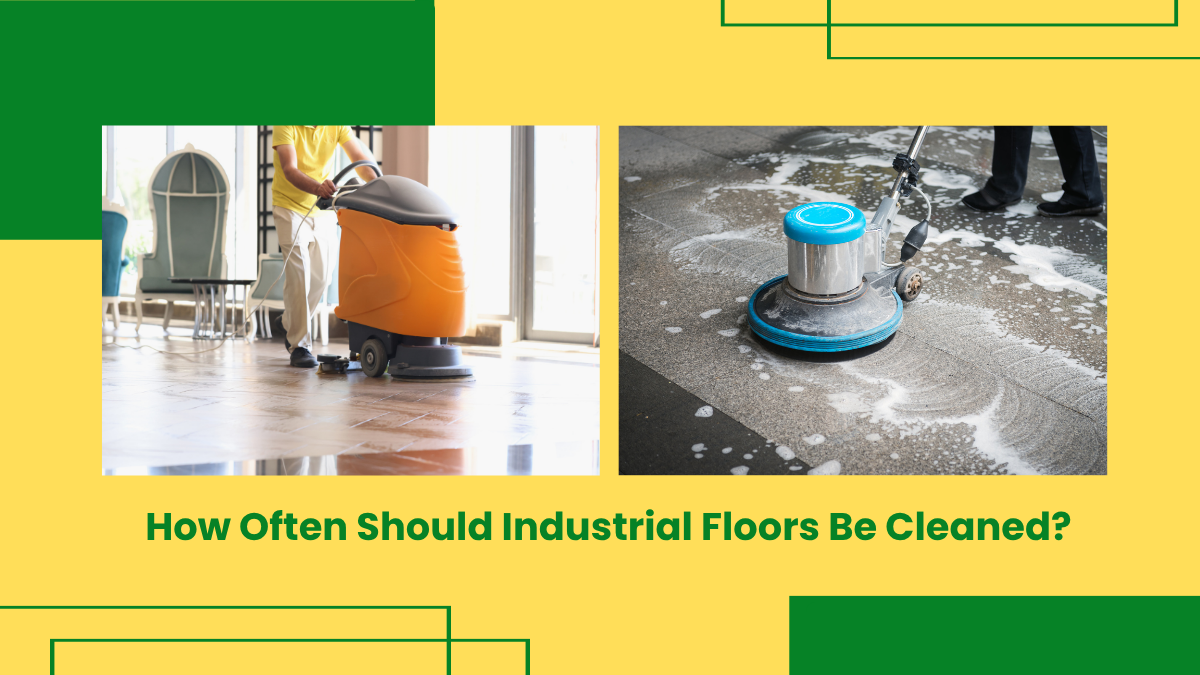
Industrial floors deal with more than ordinary dust. Manufacturing plants, warehouses, food-processing facilities, workshops and commercial buildings can expose floors to oil, grease, food residue, mud, chemicals, metal particles, water and heavy foot or vehicle traffic.
Because of this, there is no single answer to industrial floor cleaning frequency.
A low-traffic warehouse may need routine cleaning once a day, while a food-processing production area or busy manufacturing floor may need cleaning several times during a shift. Areas exposed to oil, grease, water or heavy vehicle movement may also need additional spot cleaning.
The right frequency depends on the industry, floor condition, type of contamination, traffic level and facility maintenance programme.
Why Industrial Floor Cleaning Frequency Matters
Dirty industrial floors are not only an appearance issue. Accumulated contamination can affect workplace hygiene, floor condition and employee safety.
Common industrial floor problems include:
- Oil and grease accumulation
- Dust and metal particles
- Food and organic residues
- Mud and outdoor dirt
- Water and chemical spills
- Sticky deposits
- Hard-water stains
- Debris around machinery
- Dirt in corners and drainage areas
Oil, grease and water can also make floors slippery. In a production environment, this can create a workplace hazard.
Regular factory floor cleaning helps remove contamination before it becomes difficult to manage.
However, cleaning too frequently without considering the actual contamination can also waste water, labour and cleaning chemicals.
The goal should be a cleaning schedule based on the facility’s actual operating conditions.
How Often Should Industrial Floors Be Cleaned?
A practical starting point is to divide floor cleaning into different levels.
Daily Cleaning
Most active industrial and commercial facilities should have some form of daily floor cleaning in areas where dirt accumulates regularly.
Daily cleaning may include:
- Sweeping or vacuuming
- Removing loose debris
- Spot cleaning spills
- Mopping suitable surfaces
- Cleaning high-traffic walkways
- Removing oil or food residues
This is particularly relevant for production floors, entrances, corridors, warehouses and other areas with regular movement.
Several Times Per Shift
Some areas may need cleaning more than once a day.
This can apply to:
- Food-processing production areas
- Commercial kitchens
- High-traffic manufacturing zones
- Loading areas
- Areas with frequent oil or grease contamination
- Wet processing environments
- Areas where spills occur regularly
The frequency should be based on actual conditions rather than a fixed number.
Weekly Deep Cleaning
Daily cleaning does not necessarily remove all accumulated contamination.
A weekly or scheduled deep-cleaning programme can address:
- Machine bases
- Corners
- Edges
- Hard-to-reach areas
- Heavy floor deposits
- Areas underneath movable equipment
The exact frequency depends on the facility.
Monthly or Periodic Maintenance
Some industrial floors need periodic maintenance beyond routine cleaning.
This may include:
- Detailed floor inspection
- Deep cleaning
- Stain treatment
- Machine-assisted scrubbing
- Cleaning around fixed equipment
- Review of recurring contamination
- Assessment of floor condition
A facility with high contamination may need these tasks more frequently.
Industrial Floor Cleaning Frequency by Industry
Different industries create different types of floor contamination.
Manufacturing Plants
Manufacturing floors may accumulate:
- Machine oil
- Grease
- Dust
- Metal particles
- Packaging debris
- Mud
- Water
For many manufacturing environments, daily cleaning is a sensible baseline, with immediate spot cleaning for oil or chemical spills.
Heavy production areas may require cleaning at the end of each shift or more frequently where contamination builds quickly.
Recommended Approach
Daily: remove dust, debris and visible contamination.
During shifts: clean spills and high-risk areas as needed.
Weekly: perform deeper floor cleaning.
Periodically: inspect floor condition and clean difficult areas.
Food Processing Plants
Food manufacturing requires a more controlled cleaning schedule because food residues can accumulate quickly.
Floors may be exposed to:
- Food particles
- Fats
- Oils
- Proteins
- Starch
- Sugar
- Water
The appropriate cleaning frequency should be part of the plant’s documented sanitation programme.
Production areas may require cleaning after production runs, between product changes or at other defined intervals based on the facility’s food-safety procedures.
Cleaning schedules should also account for drains, wet areas and locations where food residue can accumulate.
Warehouses
Warehouse floors are often affected by dust, packaging materials, vehicle traffic and outdoor dirt.
The cleaning frequency depends on:
- Forklift traffic
- Employee movement
- Outdoor exposure
- Storage activity
- Dust levels
- Product handling
Daily sweeping or mechanical cleaning may be sufficient for some warehouses, while high-traffic facilities may require more frequent cleaning.
Workshops and Engineering Facilities
Workshops commonly experience oil, grease, metal dust and mechanical debris.
A practical programme can combine routine sweeping with targeted cleaning of oily areas.
If oil or grease is allowed to accumulate, the floor may become difficult to clean and potentially slippery.
Commercial and Corporate Facilities
Office and commercial floors generally experience lower levels of industrial contamination.
High-traffic areas such as entrances, reception spaces and corridors may need daily cleaning, while lower-traffic areas can follow a different schedule.
The floor material should also influence the choice of floor cleaning chemicals.
What Factors Determine Industrial Floor Cleaning Frequency?
There is no universal schedule because each facility operates differently.
1. Foot Traffic
More people generally mean more dirt entering the facility.
Entrances, corridors and employee movement areas may require more frequent cleaning than restricted areas.
2. Vehicle Traffic
Forklifts, trucks and other industrial vehicles can bring dust, mud and debris into warehouses and factories.
High vehicle traffic usually increases cleaning requirements.
3. Type of Contamination
Dust is generally easier to manage than oil, grease or sticky food residue.
If the floor regularly receives heavy contamination, the cleaning frequency should reflect that.
4. Production Process
A dry manufacturing process may create dust and particles, while wet processing can introduce water, organic residues and cleaning challenges.
The cleaning programme should match the process.
5. Floor Material
Industrial floors can include:
- Concrete
- Epoxy
- Ceramic tiles
- Marble
- Granite
- Vinyl
- Other coated surfaces
The cleaning method and chemical should be compatible with the floor.
6. Workplace Safety Requirements
If contamination can create a slip, trip or hygiene hazard, cleaning may need to occur immediately rather than waiting for the scheduled cleaning time.
7. Seasonal Conditions
Rainy periods can increase mud and moisture entering factories and warehouses.
In such conditions, entrance areas and loading zones may require more frequent cleaning.
Choosing the Right Floor Cleaning Chemicals
Cleaning frequency alone does not determine cleaning performance. The chemical and application method also matter.
General Dirt
For everyday dust and dirt, a suitable floor cleaner can be used according to the floor type and manufacturer’s instructions.
Oil and Grease
If machinery or vehicles regularly deposit oil and grease, a suitable industrial degreaser may be required.
Food Residues
Food-processing floors require products selected according to the residue, surface and plant sanitation procedure.
Hard-Water Deposits
Wet processing areas may develop mineral deposits. A suitable descaling product may be considered when compatible with the floor material.
Sensitive or Decorative Floors
Marble and other sensitive flooring require products designed for that surface.
The strongest chemical is not automatically the best floor cleaner. The correct product is the one that removes the target contamination while remaining suitable for the surface and cleaning process.
How to Apply Floor Cleaning Chemicals
A good factory floor cleaning process generally follows a logical sequence.
Step 1: Remove Loose Debris
Sweep, vacuum or mechanically remove loose dust and particles.
This reduces the amount of contamination that the cleaning solution needs to handle.
Step 2: Identify the Soil
Determine whether the floor contains:
- Dust
- Oil
- Grease
- Food residue
- Mud
- Mineral deposits
- Chemical residue
Step 3: Select the Appropriate Product
Use a floor cleaner for general floor soil or a suitable specialised cleaner for specific contamination.
Step 4: Follow the Recommended Dilution
Concentrated chemicals should be diluted according to the manufacturer’s instructions.
Using more chemical than required does not automatically improve the result.
Step 5: Allow Appropriate Contact Time
Some cleaning products need time to loosen soil before mechanical action or rinsing.
Follow the product instructions.
Step 6: Scrub or Use Suitable Equipment
Depending on the floor and facility, cleaning may be performed manually or with:
- Floor scrubbers
- Rotary machines
- Wet-and-dry vacuums
- Automatic scrubber-dryers
- Suitable brushes
Step 7: Remove Residue and Dry Where Required
After cleaning, remove excess water and chemical residue according to the cleaning procedure.
Wet floors should be managed appropriately to reduce slip risks.
Ecochem Floor Cleaning Solutions
Ecochem provides floor and industrial cleaning products for commercial and industrial applications.
Its Eco-Green Flo is positioned as a floor-cleaning product for industrial and commercial environments, with listed applications including ceramic floors, tiles and marble.
For heavier industrial contamination, Ecochem’s Eco-Green Kleen HDD is positioned as a water-based heavy-duty cleaner for oil, grease and stubborn grime on compatible industrial floors and equipment surfaces.
The appropriate product depends on the floor material, contamination and cleaning process.
How to Know If Your Floor Is Being Cleaned Often Enough
A cleaning schedule may need adjustment if you regularly observe:
- Visible dirt before the next scheduled cleaning
- Recurring oil or grease deposits
- Slippery areas
- Persistent odours
- Food residue after cleaning
- Dirt accumulating around equipment
- Excessive chemical consumption
- Complaints from workers
- Frequent emergency cleaning
If contamination appears shortly after cleaning, the solution may not simply be “clean more often.”
The facility may need to investigate the source of contamination, cleaning method, chemical selection, dilution, equipment or workflow.
How to Choose Floor Cleaning Chemicals for Your Facility
Before purchasing floor cleaning chemicals, consider the following.
Surface Compatibility
Confirm that the product is suitable for the actual flooring material.
Type of Soil
Choose according to the contamination rather than buying a general-purpose chemical for every application.
Dilution
Compare products based on their recommended dilution and coverage.
Cleaning Equipment
If your facility uses an automatic scrubber or floor machine, confirm that the product is suitable for that application.
Safety
Review the label, SDS and required PPE before introducing a product into the facility.
Environmental Requirements
Facilities may consider bio-based or environmentally preferable formulations where they meet the required cleaning performance.
Cost Per Cleaning
Calculate:
Product cost + dilution + coverage + labour + cleaning frequency
This provides a more useful purchasing comparison than price per litre alone.
Common Floor Cleaning Mistakes
Cleaning Only When the Floor Looks Dirty
Some contamination may create safety or hygiene concerns before it becomes visually obvious.
Using Too Much Chemical
Higher concentration does not necessarily mean better cleaning.
Using One Product for Every Floor
Different surfaces and contaminants require different approaches.
Ignoring Spills Until Scheduled Cleaning
Oil, grease, chemicals and other hazardous spills should be addressed according to the facility’s spill procedure rather than waiting for routine cleaning.
Not Maintaining Cleaning Equipment
Dirty or poorly maintained scrubbers, brushes and vacuums can reduce cleaning performance.
Final Takeaway
The right industrial floor cleaning frequency depends on how a facility operates.
A busy manufacturing floor may need daily or per-shift cleaning. A food-processing area may require cleaning according to a documented sanitation programme. A warehouse may need daily cleaning based on forklift and employee traffic, while low-traffic storage areas may need less frequent attention.
The important point is to match the frequency to the contamination, traffic, floor type and operational risk.
Use appropriate floor cleaning chemicals for general dirt, specialised degreasers for oil and grease, and surface-specific products where required. Combine chemical cleaning with suitable equipment, correct dilution, spill response and routine inspection.
For businesses managing industrial and commercial facilities, Ecochem provides floor and industrial cleaning solutions that can be selected according to the surface, contamination and cleaning application.
FAQ’S
How often should industrial floors be cleaned?
Many active facilities need some form of daily cleaning, while high-traffic or high-contamination areas may need cleaning several times per shift. Food-processing and other hygiene-sensitive areas should follow their documented sanitation programme.
How often should a factory floor be cleaned?
A factory floor may need daily or per-shift cleaning depending on production activity, traffic and contamination. Oil, grease, dust and spills may require additional spot cleaning.
What factors affect industrial floor cleaning frequency?
Traffic, production process, contamination type, floor material, vehicle movement, workplace safety requirements, seasonal conditions and facility hygiene requirements all affect cleaning frequency.
Which chemicals are used for industrial floor cleaning?
Floor cleaners are commonly used for general dirt, while specialised degreasers may be needed for oil and grease. The appropriate chemical depends on the floor material and type of contamination.
Can industrial floors be cleaned every day?
Yes. Daily cleaning is common in active industrial facilities where dirt, dust, oil or other contamination accumulates regularly. The cleaning method and chemical should be appropriate for the floor.
Written By: Vinny Jain