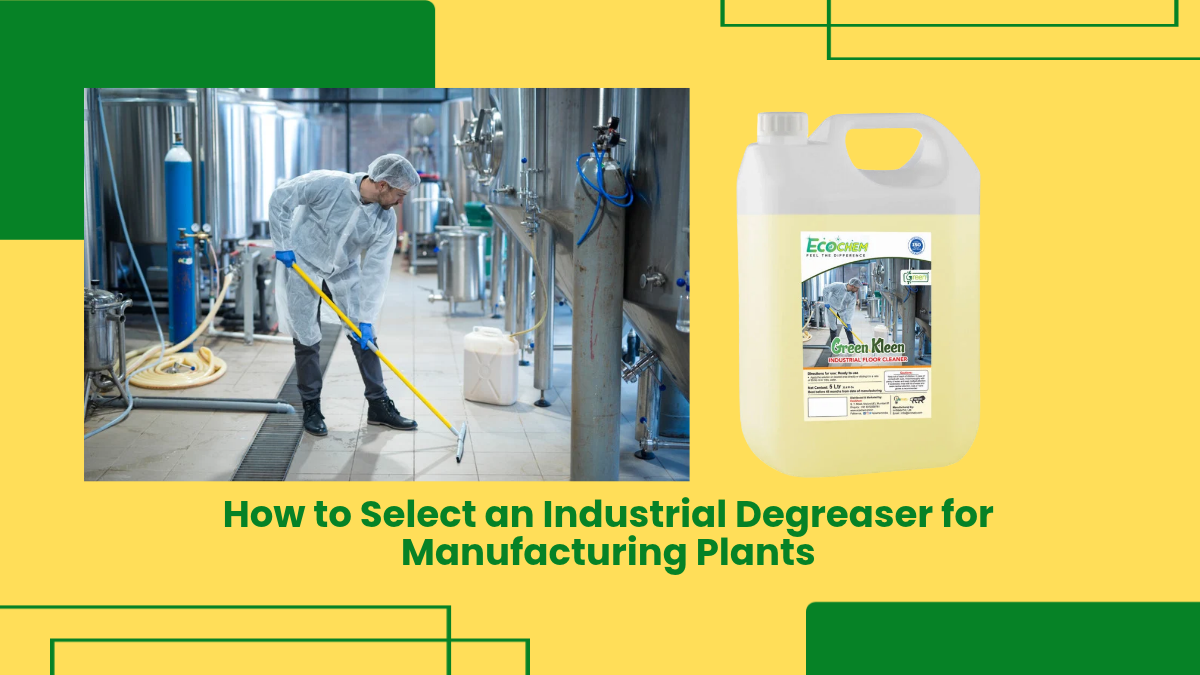
An industrial degreaser for manufacturing plants is a cleaning chemical designed to remove oil, grease and related residues from suitable industrial surfaces. Selecting the right product depends on the type of contamination, the material being cleaned, the level of grease buildup and the facility’s cleaning procedure.
Manufacturing plants often experience grease accumulation around machinery, tools, maintenance stations, equipment housings and industrial floors. Using an appropriate degreaser can help maintenance teams remove these deposits and maintain cleaner working areas without relying on unsuitable chemicals or cleaning methods.
Why Do Manufacturing Plants Need Industrial Degreasers?
Oil and grease can accumulate during equipment operation, lubrication, component handling and routine maintenance. If these deposits are not removed appropriately, they can attract dirt, make surfaces difficult to maintain and contribute to slippery floor conditions.
Common industrial cleaning challenges include:
- Grease buildup around machinery and mechanical components.
- Oil stains on compatible workshop floors.
- Lubricant residue on tools and equipment exteriors.
- Dirt mixed with oil around maintenance stations.
- Persistent deposits that ordinary surface cleaners may not remove effectively.
Problem: Grease can accumulate faster than routine housekeeping removes it.
Solution: Identify the contamination and select a degreaser suitable for the specific surface and cleaning task.
Prevention tip: Inspect machinery and maintenance areas regularly, clean spills promptly and follow equipment manufacturers’ maintenance instructions.
How to Choose an Industrial Degreaser for Manufacturing Plants
1. Identify the Type of Contamination
Not every industrial stain requires the same cleaner. Light oil residue, thick grease, dried lubricant and paint contamination may need different cleaning approaches.
Before selecting a product, determine the type of deposit and whether it is fresh, hardened or mixed with dust and other materials.
2. Check Surface Compatibility
Manufacturing facilities may contain stainless steel, aluminium, painted metal, plastic components, concrete and coated floors. A chemical suitable for one material may damage another.
Review the product instructions and equipment manufacturer’s recommendations. Test the cleaner on a small, inconspicuous area when compatibility is uncertain.
3. Assess the Level of Grease Buildup
Light contamination may require a different cleaning procedure from thick, persistent grease.
| Cleaning requirement | What to consider |
|---|---|
| Light oil residue | A cleaner approved for the surface and contamination |
| Routine machinery cleaning | Compatibility with equipment materials and cleaning procedures |
| Heavy grease buildup | A product specifically intended for the contamination level |
| Oil-stained industrial floors | Surface compatibility and slip prevention during cleaning |
| Paint or chemical stains | Confirm that the selected product is suitable for that particular stain |
For heavy contamination, do not automatically increase the concentration of a standard degreaser. Select an appropriate product and follow its instructions.
4. Review Dilution and Application Instructions
Some industrial degreasers are diluted with water before use. Others may have different application requirements.
Check the manufacturer’s recommended dilution, contact time, rinsing instructions and protective equipment requirements. Accurate measurement helps cleaning teams maintain consistent procedures.
5. Consider Operational Requirements
Choose a cleaning procedure that fits the facility’s maintenance schedule and equipment requirements. Consider access to water, waste collection, ventilation, cleaning equipment and the time needed to return the area to service.
For machinery, follow the equipment manufacturer’s instructions before cleaning. Isolate equipment and follow the site’s lockout procedures wherever required.
Best Practices for Machinery Degreasing Chemicals
A consistent process helps reduce cleaning errors and avoid unnecessary surface damage.
- Prepare the area: Restrict access where necessary and address nearby electrical or mechanical hazards.
- Identify the surface: Confirm the material and any restrictions imposed by the equipment manufacturer.
- Remove loose debris: Collect dust and loose dirt before applying the cleaning solution.
- Prepare the solution: Measure the product and water according to the current label.
- Test compatibility: Check a small area if the product’s suitability is uncertain.
- Apply the degreaser: Follow the specified application method and contact time.
- Remove the contamination: Wipe, rinse or collect loosened grease as directed by the product instructions.
- Inspect the area: Check for remaining deposits, residue and potential slip hazards.
- Document the cleaning: Record the task and report persistent contamination or equipment concerns.
Safety Considerations When Using Industrial Degreasers
Industrial cleaning chemicals must be selected and handled according to their actual properties and intended uses.
- Read the product label and safety data sheet before use.
- Wear the protective equipment specified by the manufacturer.
- Never mix cleaning chemicals unless the manufacturers explicitly permit it.
- Keep products in correctly labelled containers.
- Prevent cleaning solutions from entering drains unless disposal is permitted under the relevant instructions and local requirements.
- Follow site procedures for spills, chemical exposure and waste management.
- Ensure floors are safe and sufficiently dry before reopening areas to traffic.
Water-based formulations should not automatically be assumed harmless or compatible with every surface. Proper handling and application remain essential.
How Eco-Green Kleen Fits into Industrial Degreasing
Ecochem’s Eco-Green Kleen is listed on its official product page as a water-based industrial degreaser intended for cleaning oil, grease, paint and other industrial stains associated with heavy machinery.
The published page lists a dilution ratio of 10 ml per litre of water. Confirm the current product label and instructions before preparing the solution or using it on a specific surface.
For manufacturing plants, Eco-Green Kleen may be considered when evaluating degreasing options for applications covered by its product information. Facility managers should confirm compatibility with the surface, contamination and equipment requirements before use.
Explore the Eco-Green Kleen industrial degreaser for product details and application guidance.
Common Mistakes to Avoid
- Choosing a degreaser without identifying the contamination.
- Using the same product on every surface without checking compatibility.
- Increasing the concentration beyond the manufacturer’s instructions.
- Cleaning machinery without following isolation and maintenance procedures.
- Allowing oil or cleaning residue to remain on floors.
- Mixing chemicals to achieve stronger cleaning action.
- Ignoring repeated grease accumulation instead of investigating its source.
Conclusion
Selecting an industrial degreaser for manufacturing plants requires more than choosing a product labelled for heavy-duty cleaning. Identify the contamination, verify surface compatibility, follow dilution instructions and establish a consistent cleaning procedure.
Ecochem’s Eco-Green Kleen is one option to evaluate for the industrial degreasing applications described in its product information. Review the official product page or contact Ecochem to discuss suitability and application requirements for your facility.
FAQ’S
What is an industrial degreaser used for?
Industrial degreasers remove oil, grease and related deposits from compatible machinery, tools, equipment surfaces and industrial areas.
How do I choose a heavy-duty industrial degreaser?
Assess the grease level, surface material, application method, equipment requirements and manufacturer’s safety instructions.
Can industrial degreasers be used on aluminium?
Only use a product confirmed as compatible with the specific aluminium surface and its finish.
What is the listed dilution ratio for Eco-Green Kleen?
Ecochem’s product page lists 10 ml per litre of water. Always verify the current label before use.
How often should factory machinery be degreased?
Set the frequency according to equipment use, contamination levels, maintenance schedules and the manufacturer’s recommendations.
Written By: Vinny Jain