Hospital toilet hygiene depends on regular cleaning, correct chemical selection and a separate disinfection process wherever required. Toilet cleaning chemicals for hospitals should remove visible soil, hard-water stains and lime deposits without damaging toilet or ceramic surfaces. However, a toilet cleaner alone does not replace a hospital-approved disinfectant.
Hospitals must follow written housekeeping procedures based on toilet usage, patient exposure and infection-control requirements. Choosing the right cleaning product and training housekeeping staff helps maintain cleaner, more manageable washroom facilities.
Why Hospital Toilets Need a Planned Cleaning Routine
Hospital toilets are used by patients, visitors and healthcare staff. Shared facilities can experience frequent contamination, unpleasant odours, hard-water deposits and visible stains.
Common challenges include:
- Frequent use: Shared toilets may need cleaning several times during the day.
- Hard-water deposits: Mineral buildup can form around toilet bowls, taps and other wet areas.
- Lime stains: Repeated water exposure can leave stubborn deposits on ceramic surfaces.
- Odour buildup: Poor cleaning and inadequate ventilation can contribute to unpleasant smells.
- High-touch contamination: Flush handles, taps, door handles and toilet seats require attention under the hospital’s infection-control schedule.
The CDC identifies patient-area toilets as frequently contaminated, high-exposure spaces. Its guidance recommends cleaning and disinfecting private patient toilets at least daily and public or shared toilets at least twice daily, with additional cleaning when required. Actual schedules should follow the hospital’s risk assessment and local protocols. CDC+1
How to Choose Toilet Cleaning Chemicals for Hospitals
The right product should match the cleaning task, surface material and hospital procedure. Before selecting a toilet cleaner, facility managers should consider the following factors.
1. Identify the type of stain
Different deposits require different cleaning approaches.
- Hard-water stains: Mineral deposits around the bowl and waterline may need a suitable toilet-cleaning formulation.
- Lime deposits: Choose a product whose label confirms suitability for the deposit and surface.
- Routine soil: Use a cleaner intended for regular toilet and ceramic surface maintenance.
- Biological contamination: Follow the hospital’s approved cleaning and disinfection procedure. Do not rely on an ordinary toilet cleaner for this purpose.
2. Check surface compatibility
Toilet bowls are commonly ceramic, but washrooms also contain metal fittings, tiles, stone surfaces, plastic components and coated fixtures. A product suitable for ceramic may not be appropriate for every nearby material.
Check the manufacturer’s instructions and test compatibility where the procedure requires it. Avoid applying toilet cleaner to unapproved surfaces.
3. Review dilution and application instructions
Housekeeping teams should follow the product label for dilution, application, contact time, rinsing and storage. Incorrect dilution can reduce cleaning performance or create unnecessary chemical exposure.
Staff should never mix toilet cleaners with bleach, disinfectants or other chemicals unless the manufacturers explicitly permit it.
Practical Hospital Toilet Cleaning Procedure
A consistent procedure helps housekeeping teams cover frequently contaminated surfaces and avoid cross-contamination.
- Prepare the area: Display a wet-floor or cleaning-in-progress sign and use the personal protective equipment specified by the hospital.
- Remove visible waste: Clear disposable waste and inspect the toilet for visible contamination.
- Clean the toilet bowl: Apply a suitable toilet cleaner according to its label. Use the designated toilet brush and follow the specified application and rinsing instructions.
- Clean surrounding surfaces: Clean the flush handle, seat, taps, sink and door handles using products approved for those surfaces.
- Disinfect where required: Apply the hospital-approved disinfectant to the specified surfaces, following its dilution and contact-time instructions.
- Complete the floor and inspection: Clean the floor using the approved procedure, check for remaining stains or spills and replace supplies.
- Record the task: Update the cleaning checklist with the time, staff member and any maintenance issue.
Use separate or colour-coded cleaning equipment according to the hospital’s housekeeping policy. Do not use a toilet brush or cloth on sinks and other surfaces.
Cleaning and Disinfection: Why Hospitals Need Both
Cleaning and disinfection are different processes. Cleaning removes visible dirt and organic matter, while disinfection uses a product with validated antimicrobial activity to reduce or inactivate microorganisms when used as directed.
A toilet cleaner should not automatically be treated as a disinfectant. Hospitals should use approved disinfectants for high-touch and frequently contaminated surfaces according to their infection-prevention procedures. The CDC also stresses following product instructions for dilution, contact time, material compatibility and safe use. CDC+1
How Eco-Green Shine May Fit Hospital Toilet Cleaning
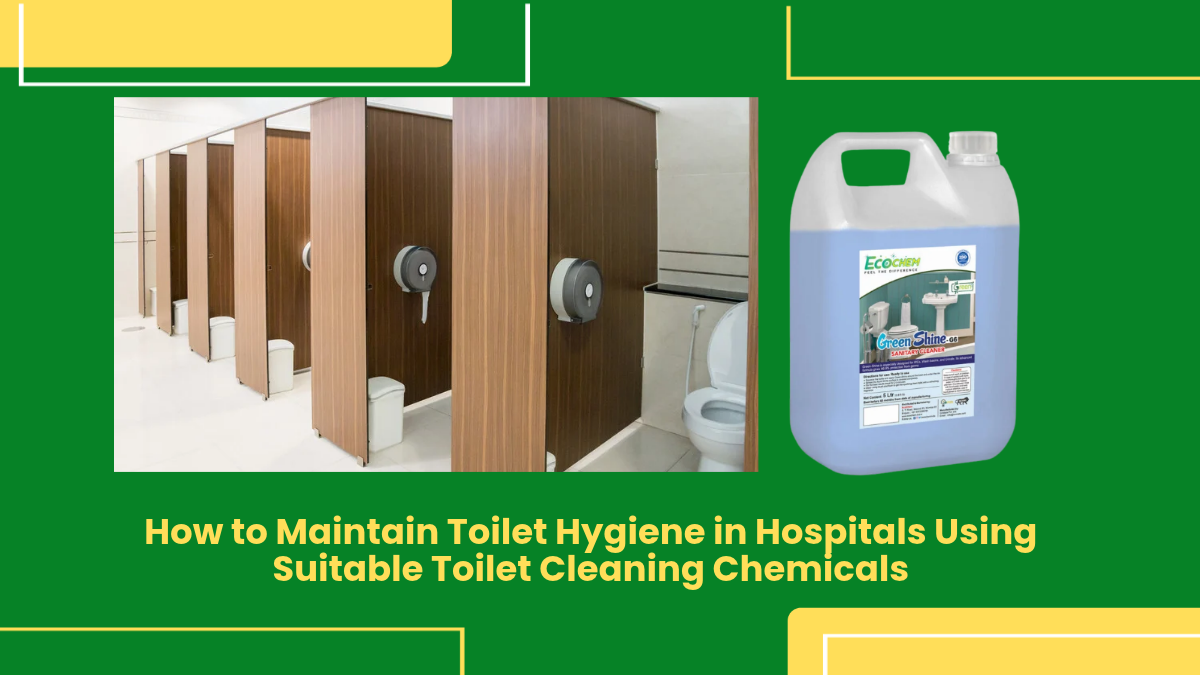
Eco-Green Shine is Ecochem’s toilet-cleaning product intended for toilet and ceramic surface cleaning. Its official product page highlights hard-water staining, lime deposits and a mild fragrance after application. The stated dilution ratio is 10 ml in 1 litre of water. Ecochem
Hospitals may assess Eco-Green Shine for suitable toilet and ceramic cleaning tasks after reviewing the product instructions and confirming surface compatibility. Its product-page claims should not be treated as proof of hospital-approved disinfectant efficacy. Where disinfection is required, use the disinfectant specified in the facility’s infection-control procedure.
See the Eco-Green Shine toilet cleaner product page for the product information.
Common Mistakes to Avoid
- Using one cleaning chemical on every washroom surface without checking compatibility.
- Treating a toilet cleaner as a replacement for an approved disinfectant.
- Mixing different cleaning chemicals.
- Ignoring flush handles, taps, toilet seats and door handles.
- Reusing contaminated cloths or brushes across different areas.
- Skipping cleaning records and scheduled inspections.
Conclusion
Maintaining hospital toilet hygiene requires suitable toilet cleaning chemicals for hospitals, trained housekeeping staff and a documented cleaning and disinfection schedule. Select products according to the stain, surface and approved procedure rather than relying on a single chemical for every task.
Ecochem’s Eco-Green Shine is intended for toilet and ceramic surface cleaning, including hard-water and lime deposits. Hospitals can review its product details and contact Ecochem to confirm suitability and usage instructions for their facilities.
Frequently Asked Questions
How often should hospital toilets be cleaned?
Private patient toilets should be cleaned and disinfected at least daily; shared toilets at least twice daily, and more often when needed.
Which chemicals are suitable for hospital toilet cleaning?
Choose a toilet cleaner compatible with the surface and stain. Use a separately approved disinfectant wherever hospital procedures require it.
Can toilet cleaner replace hospital disinfectant?
No. Toilet cleaners remove soil and deposits; disinfectants provide specified antimicrobial activity when used according to their approved instructions.
How can hospitals remove hard-water stains from toilet bowls?
Use a toilet cleaner labelled for hard-water deposits, following its dilution, application, rinsing and surface-compatibility instructions.