Choosing the right hospital floor cleaning chemicals depends on the floor material, type of dirt, location and cleaning procedure. Hospitals may have ceramic tiles, marble, lacquered surfaces and other flooring materials, each with different care requirements. Facility managers should select a compatible floor cleaner, follow its dilution instructions and maintain a separate disinfection procedure wherever infection-control protocols require it.
A floor cleaner removes everyday dirt and soil. It should not automatically be considered a disinfectant or a substitute for an approved healthcare disinfection product.
2. Why Is Floor Cleaning Important in Hospitals?
Hospital floors experience regular foot traffic from patients, visitors, doctors, nurses and housekeeping staff. Dust, footwear marks, spilled liquids and everyday dirt can accumulate quickly, particularly in busy areas.
Common floor-cleaning challenges include:
- Dust and dirt in corridors and waiting rooms.
- Watermarks around washrooms and handwashing areas.
- Stubborn stains on tiled floors.
- Rust marks and deposits on compatible surfaces.
- Loss of floor appearance due to unsuitable cleaning chemicals.
- Slippery conditions caused by spills or cleaning residue.
Different hospital areas also have different cleaning requirements. An outpatient corridor, patient room, laboratory and administrative office should not automatically follow the same cleaning procedure.
The CDC recommends regular floor cleaning and additional cleaning when surfaces are visibly soiled. Its guidance also states that routine detergent-and-water cleaning is generally sufficient for floors under normal conditions, while certain higher-risk situations may require disinfection. CDC+1
3. How to Choose Hospital Floor Cleaning Chemicals
Before purchasing a floor cleaner, evaluate these five factors.
1. Identify the Floor Material
Hospitals may use different flooring materials, including:
- Ceramic and vitrified tiles: Check whether the cleaner is suitable for tiled surfaces and their grout.
- Marble: Use a product specifically confirmed as suitable for natural stone. Avoid acidic cleaners unless the manufacturer confirms compatibility.
- Lacquered surfaces: Check whether the chemical can affect the protective coating.
- Other specialised flooring: Vinyl, rubber and other resilient floors may require specific cleaning products.
Never assume that a cleaner suitable for tiles is automatically suitable for every hospital floor.
2. Match the Cleaner to the Type of Dirt
Identify what needs to be removed before choosing a chemical.
- Dust and everyday dirt generally require routine floor cleaning.
- Watermarks may need a product designed for the particular deposit and surface.
- Rust stains require a compatible stain-removal approach.
- Heavy oil and grease may require a specialised degreaser rather than a regular floor cleaner.
3. Check Dilution and Application Instructions
Correct dilution supports consistent cleaning and reduces the risk of unnecessary chemical exposure or surface damage.
Review the manufacturer’s instructions for dilution, application, contact time, rinsing and protective equipment. Do not increase the concentration without approval.
4. Consider the Hospital Area
Patient-care areas require cleaning procedures aligned with the hospital’s infection-control policy. Administrative offices, maintenance rooms and public corridors may have different cleaning requirements.
For blood or body-fluid spills, follow the hospital’s designated spill-management procedure rather than using a routine floor cleaner alone. CDC+1
5. Check Staff Safety and Floor Finish
A floor cleaner should be used according to its handling instructions. Housekeeping teams should also ensure that cleaning does not leave slippery residue or create unnecessary exposure for patients and staff.
4. Practical Hospital Floor Cleaning Procedure
A consistent procedure helps housekeeping teams maintain clean floors across different hospital areas.
- Prepare the area: Display wet-floor signs and restrict access where necessary.
- Remove loose dirt: Use an appropriate dust-control method before wet cleaning.
- Prepare the solution: Follow the manufacturer’s recommended dilution.
- Clean systematically: Work from cleaner areas towards dirtier areas, following the hospital’s cleaning SOP.
- Use suitable equipment: Select mops and cleaning tools appropriate for the floor material and area.
- Manage the solution: Replace dirty cleaning solution according to facility policy.
- Allow the floor to dry: Prevent access until the floor is safe for normal use.
- Inspect the result: Check for remaining dirt, residue, spills and surface damage.
CDC guidance recommends cleaning general patient-area floors at least daily, generally using neutral detergent and water. Floors may need more frequent cleaning or disinfection depending on the risk level and contamination. CDC
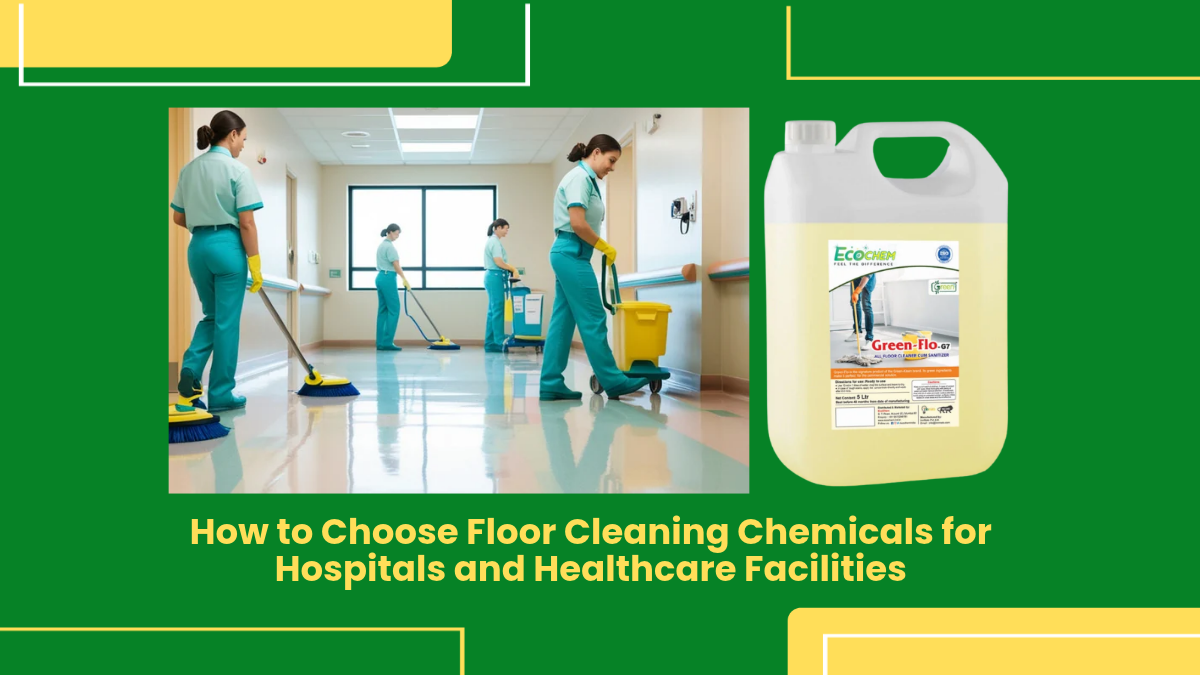
5. How Eco-Green Flo Fits Hospital Floor Cleaning Requirements
Eco-Green Flo is listed on Ecochem’s official website as a floor-cleaning solution for different surfaces.
The product page identifies the following applications and features:
- Ceramic walls and floor tiles.
- Marble floors and surfaces.
- Lacquered surfaces.
- Cleaning concerns including water and rust stains.
- Published dilution ratio of 10 ml in 1 litre of water.
- Added fragrance. Ecochem
Hospitals may evaluate Eco-Green Flo for compatible routine floor-cleaning tasks after confirming the specific floor material and application with Ecochem.
Important: The product page includes sanitising and germ-removal claims, but the information reviewed does not establish independent efficacy, hospital-grade disinfection approval or a validated antimicrobial claim. Do not use it as a replacement for a facility-approved disinfectant where disinfection is required.
6. Common Floor Cleaning Mistakes to Avoid
- Using the same chemical on marble, tiles and specialised flooring without checking compatibility.
- Applying concentrated solutions beyond the recommended dilution.
- Ignoring spills or leaving wet floors unattended.
- Reusing dirty mop water across multiple areas.
- Using routine floor cleaners for blood or body-fluid spills.
- Assuming a clean-looking floor has been disinfected.
- Allowing cleaning residue to build up on the floor.
7. Frequently Asked Questions
Which chemicals are used for hospital floor cleaning?
Hospitals commonly use compatible detergents and floor cleaners, with separately approved disinfectants where infection-control procedures require them.
How often should hospital floors be cleaned?
General patient-area floors should generally be cleaned daily, with additional cleaning based on contamination and area-specific risk.
Can the same floor cleaner be used on marble and tiles?
Only if the manufacturer confirms compatibility with both surfaces. Marble requires particular care when selecting cleaning chemicals.
What is the dilution ratio of Eco-Green Flo?
Ecochem lists 10 ml per litre of water. Confirm the current product label and instructions before application.
Does a hospital floor cleaner also disinfect the floor?
Not necessarily. Cleaning removes dirt, while disinfection requires a product with verified efficacy used according to its instructions.