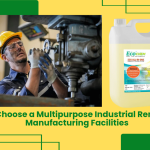
Floor cleaning chemicals for manufacturing plants should be selected according to the floor material, type of dirt, level of contamination and cleaning requirements. The right industrial floor cleaner helps remove routine dirt, maintain floors and support a consistent housekeeping process. However, floors contaminated with heavy oil or grease may require a specialised degreaser rather than a general-purpose floor cleaner.
Manufacturing facilities often experience dust, mud, water marks, oil residues and debris across production areas, warehouses, corridors and maintenance zones. Choosing suitable factory floor cleaning solutions helps maintenance teams address these challenges while reducing the risk of surface damage and slippery floors.
Why Is Floor Cleaning Important in Manufacturing Plants?
Factory floors experience different types of contamination depending on production activities, material movement and employee traffic.
Common challenges include:
- Dust and debris accumulating around machinery.
- Mud and dirt entering through loading areas.
- Oil and grease deposits near maintenance stations.
- Water marks and stains on tiled floors.
- Slippery surfaces caused by spills or cleaning residues.
Problem: Inconsistent cleaning allows dirt to accumulate and can create additional maintenance and workplace safety concerns.
Solution: Establish a cleaning schedule and choose a product designed for the floor material and type of contamination.
Prevention tip: Inspect high-traffic areas regularly and address spills promptly using the facility’s approved cleaning procedure.
How to Choose Floor Cleaning Chemicals for Manufacturing Plants
1. Identify the Floor Material
Manufacturing facilities may have ceramic tiles, sealed concrete, epoxy-coated floors, marble or other flooring materials. Each surface has different cleaning requirements.
Check the flooring manufacturer’s maintenance instructions before choosing a chemical. A cleaner suitable for ceramic tiles may not be appropriate for every coating or natural stone surface.
2. Understand the Type of Dirt
The most suitable cleaning product depends on what needs to be removed.
| Floor contamination | Cleaning approach |
|---|---|
| Dust and loose debris | Sweep or vacuum before wet cleaning |
| Everyday dirt and footprints | Use a compatible industrial floor cleaner |
| Water marks | Select a product suitable for the floor and deposit |
| Oil and grease | Evaluate a specialised degreaser |
| Rust stains | Use a treatment confirmed as suitable for the specific surface |
| Persistent or unidentified stains | Identify the contaminant before selecting a chemical |
Heavy oil and grease should not automatically be treated with a routine floor cleaner. Select a specialised product when the contamination requires it.
3. Check Dilution and Application Instructions
Some industrial floor cleaners are supplied as concentrates and require dilution before use. Always measure the recommended quantity accurately.
Review the manufacturer’s instructions for dilution, application method, contact time, rinsing and drying. Avoid increasing the concentration beyond the specified amount to tackle difficult stains.
4. Consider Workplace Safety
Cleaning products should be selected and used according to their actual properties and the facility’s safety requirements.
Check the product label and safety data sheet where available. Consider the protective equipment required, ventilation, wastewater handling and the time needed to keep the cleaning area closed.
Best Practices for Factory Floor Cleaning
A consistent procedure helps housekeeping teams clean floors efficiently and safely.
- Inspect the area: Identify contamination, floor material and potential hazards.
- Remove loose debris: Sweep or vacuum before wet cleaning to avoid spreading dust and particles.
- Prepare the cleaning solution: Follow the manufacturer’s dilution instructions.
- Test compatibility: Test an inconspicuous area if suitability is uncertain.
- Apply the cleaner: Use the recommended equipment and application method.
- Remove dirt and residue: Follow the product instructions for wiping or rinsing.
- Manage wet-floor risks: Display warning signs and restrict access where necessary.
- Inspect the results: Check for remaining dirt, slippery residues and surface changes.
- Record completed tasks: Maintain cleaning logs and report recurring contamination.
For machinery areas, follow equipment isolation procedures and prevent cleaning solutions from reaching sensitive electrical components.
How Eco-Green Flo Fits into Industrial Floor Cleaning
Ecochem’s Eco-Green Flo is presented on its official product page as a floor cleaning solution. The page lists applications involving floor tiles, ceramic surfaces, lacquered surfaces and marble, and identifies water and rust stains among the cleaning concerns it addresses.
The published dilution ratio is 10 ml per litre of water. Confirm the current product label and application instructions before use.
For manufacturing facilities, Eco-Green Flo may be considered for floor-cleaning tasks covered by its product instructions. However, facility managers should verify compatibility with their particular floor material and contamination. Heavy oil or grease deposits may require a specialised industrial degreaser instead.
Explore the Eco-Green Flo floor cleaner for product details and application guidance.
Common Floor Cleaning Mistakes to Avoid
- Using the same chemical on every floor type.
- Applying concentrated products without checking instructions.
- Wet-mopping over loose dust and debris.
- Treating heavy grease with an unsuitable routine floor cleaner.
- Ignoring warning signs around wet floors.
- Mixing different cleaning chemicals.
- Allowing spills to remain until the next scheduled cleaning.
- Assuming a cleaner is a disinfectant without verified product information.
Conclusion
Choosing floor cleaning chemicals for manufacturing plants requires attention to floor material, contamination, application instructions and workplace safety. A consistent cleaning schedule and suitable products help maintenance teams manage everyday dirt and respond appropriately to more difficult stains.
Ecochem’s Eco-Green Flo is one option to assess for compatible floor-cleaning applications. Review the official product page or contact Ecochem to discuss product suitability and cleaning requirements for your manufacturing facility.
FAQ’S
Which floor cleaning chemicals are suitable for manufacturing plants?
Choose products based on floor material, contamination, cleaning frequency and manufacturer instructions.
How often should factory floors be cleaned?
Set the frequency according to production activity, foot traffic, dirt accumulation and workplace safety requirements.
Can an industrial floor cleaner remove oil and grease?
Some products may handle light residues, but heavy oil and grease may require a specialised degreaser.
What is the listed dilution ratio for Eco-Green Flo?
Ecochem lists 10 ml per litre of water. Confirm the current product label before preparing the solution.
How can factories reduce slippery floors during cleaning?
Control access, display warning signs, remove cleaning residues as directed and reopen the area only when safe.
Written By: Vinny Jain