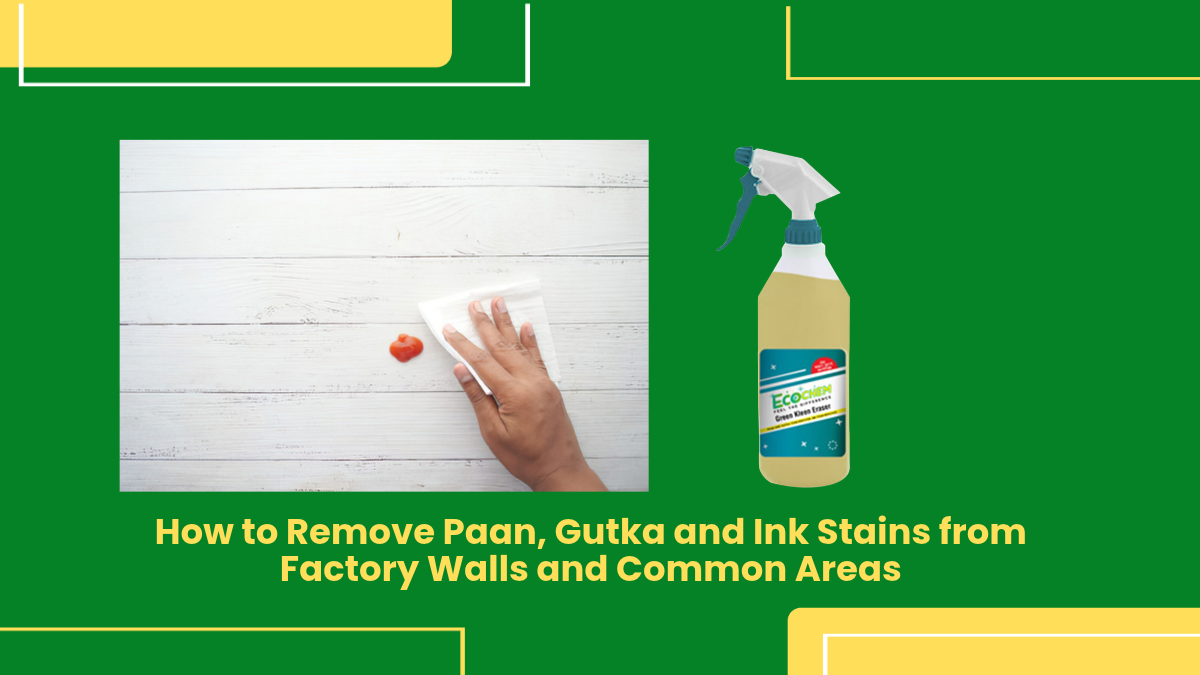
A suitable paan stain remover for industrial facilities can help remove persistent red stains from factory walls, corners and common areas. Paan and gutka stains, ink marks and paint splashes require different cleaning approaches depending on the stain, wall coating and surface material. Identifying the stain and testing a compatible cleaning product before full application helps reduce the risk of discolouration or surface damage.
In manufacturing facilities, these stains often appear near staircases, entrances, corridors, washrooms and employee common areas. A consistent cleaning schedule, suitable industrial stain remover and clear workplace rules can help maintenance teams keep these spaces presentable.
Why Are Paan, Gutka and Ink Stains Difficult to Remove?
Paan and Gutka Stains
Paan and gutka stains can leave visible red or brown marks on painted walls, concrete surfaces and corners. Older stains may become more difficult to remove, particularly when the material has penetrated a porous surface.
Problem: Repeated spitting can create stubborn stains in frequently used common areas.
Solution: Use a stain remover specifically intended for the relevant contamination and surface. Follow the manufacturer’s application instructions.
Prevention tip: Inspect common areas regularly and address fresh stains before they accumulate.
Ink Stains on Factory Walls
Ink marks may occur near office noticeboards, stores, packaging areas and administrative spaces. Some inks penetrate porous coatings, while others remain closer to the surface.
Problem: Scrubbing aggressively can spread ink or damage painted finishes.
Solution: Test an appropriate ink stain remover on a small, hidden section before treating the entire mark.
Prevention tip: Keep pens, markers and labelling materials in designated work areas.
How to Choose an Industrial Stain Remover
Before selecting a product, consider these factors:
- Stain type: Confirm whether the mark is paan, gutka, ink, paint or another substance.
- Surface material: Painted walls, concrete, metal grills and tiles may react differently to cleaning chemicals.
- Application method: Check whether the product is intended for spraying, wiping or another application method.
- Dilution and contact time: Follow the manufacturer’s specified quantities and waiting period.
- Handling requirements: Review the product label and safety data sheet, where available, and use the recommended protective equipment.
Do not assume that a cleaner suitable for an unpainted wall will also be suitable for decorative paint, laminate or delicate surfaces.
Step-by-Step Guide to Removing Paan, Gutka and Ink Stains
Step 1: Identify the Surface and Stain
Determine the wall material and finish before cleaning. Check whether the stain is fresh or dried and whether previous cleaning attempts have affected the surface.
Step 2: Prepare the Area
Keep employees away from the cleaning zone as necessary. Protect nearby equipment, signage and materials from unintended contact with the cleaning solution.
Step 3: Test a Small Area
Apply the product according to its instructions to an inconspicuous section. Check for colour changes, coating damage or other unexpected reactions before proceeding.
Step 4: Apply the Cleaning Product
Use a product suitable for the stain and surface. Follow the stated dilution, application method and contact time. Avoid excessive scrubbing, particularly on painted or porous walls.
Step 5: Remove the Residue
Follow the manufacturer’s instructions for wiping or rinsing the treated area. Collect the resulting residue appropriately and avoid spreading it onto clean surfaces.
Step 6: Inspect and Record
Check whether the stain has been removed and whether the surface remains intact. If the mark persists, avoid repeatedly increasing the chemical concentration. Consult the product supplier or a surface-cleaning professional.
How Eco-Green Kleen Eraser Fits into Factory Wall Cleaning
Ecochem’s Eco-Green Kleen Eraser is listed on its official product page as a paan, gutka, ink and paint stain remover intended for applications including industrial walls, grills and corners.
The published product information specifies a dilution ratio of 10 ml per litre of water and describes spraying the product onto stains, waiting 5–10 minutes and washing with water. Confirm the current product label before use, as the correct procedure may depend on the application and surface.
For manufacturing facilities, Eco-Green Kleen Eraser may be worth evaluating for the stain types described in its product information. Test compatibility first, particularly on painted walls, and follow the stated protective equipment requirements. Ecochem’s page specifically advises wearing rubber gloves because direct handling may cause itching.
Read more about Eco-Green Kleen Eraser.
Prevention Tips for Cleaner Factory Common Areas
- Include walls, corners, staircases and entrances in routine inspection checklists.
- Clean stains promptly using an approved method.
- Establish clear workplace rules against spitting in common areas.
- Provide suitable waste-disposal facilities where needed.
- Train housekeeping staff in stain identification and chemical handling.
- Maintain records of recurring stained areas to identify where additional preventive measures are required.
Common Cleaning Mistakes to Avoid
Avoid scrubbing painted walls with abrasive pads, mixing different cleaning chemicals or applying undiluted products without instructions. Do not assume that every ink or paan stain can be removed completely in one treatment.
Using an unsuitable product can damage paint or spread the stain. When the wall coating is already peeling or discoloured, assess whether repainting or professional treatment is more appropriate.
Conclusion
Removing paan, gutka and ink stains from factory walls requires correct stain identification, surface-compatible cleaning products and consistent maintenance. Testing the cleaning solution, following application instructions and training housekeeping staff can help reduce avoidable surface damage.
When evaluating a paan stain remover for industrial facilities, consider the type of stain, wall coating and handling requirements. Ecochem’s Eco-Green Kleen Eraser is an option to assess for the applications listed on its product page.
FAQ’S
How do you remove paan stains from factory walls?
Use a compatible stain remover according to its instructions. Test a hidden area first and avoid abrasive scrubbing.
Which cleaner removes gutka stains from industrial walls?
Choose a product specifically intended for gutka stains and compatible with the wall material and coating.
Can ink stain remover damage painted walls?
Yes. Some cleaning products may discolour or soften paint. Test an inconspicuous area before full application.
How should Eco-Green Kleen Eraser be applied?
Ecochem describes spraying the stain, waiting 5–10 minutes and washing with water. Confirm the current label before use.
How can factories prevent recurring paan stains?
Inspect common areas regularly, enforce workplace rules against spitting and clean fresh stains promptly using approved procedures.
Written by: Vinny Jain