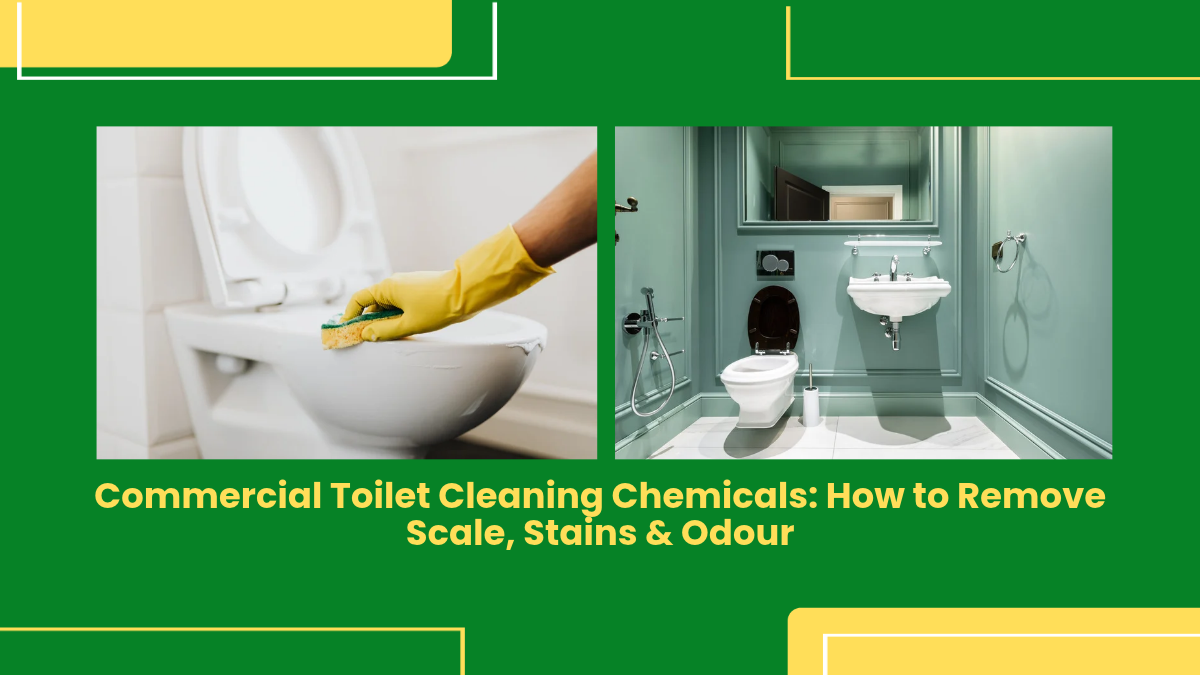
Commercial washrooms require regular cleaning to maintain hygiene, control unpleasant odours, and provide a comfortable environment for employees, customers, visitors, and staff. Offices, hospitals, schools, shopping centres, manufacturing plants, and other commercial facilities often experience heavy washroom usage, making effective cleaning procedures essential.
Choosing the right toilet cleaning chemicals helps remove common deposits, stains, and dirt while supporting routine washroom maintenance. However, not every cleaning product is suitable for every surface or type of contamination. Understanding the cause of scale, stains, and odour helps facility managers select the right products and prevent recurring problems.
This guide explains common commercial toilet cleaning challenges, practical solutions, and prevention tips for maintaining cleaner washrooms.
Why Are Commercial Washrooms Difficult to Keep Clean?
Commercial washrooms experience repeated use throughout the day. Moisture, mineral deposits, urine residues, soap residues, and insufficient ventilation can contribute to persistent cleaning problems.
Common challenges include:
- Hard-water scale around toilet bowls and taps
- Yellow or brown stains on sanitaryware
- Unpleasant odours around toilets and drains
- Dirt accumulating in corners and grout lines
- Frequent contamination in high-traffic washrooms
- Incorrect use of cleaning chemicals
- Inconsistent cleaning schedules
Selecting suitable bathroom cleaning chemicals and following a consistent cleaning procedure can help address these problems.
1. Problem: Hard-Water Scale and Mineral Deposits
Hard water contains dissolved minerals that can leave deposits on toilet bowls, taps, and other washroom surfaces. Repeated exposure to mineral-rich water can create white, yellowish, or brownish scale.
These deposits can become difficult to remove when cleaning is irregular.
Solution: Use Suitable Toilet Cleaner Chemicals
A suitable commercial toilet cleaner can help remove mineral deposits when its formulation is designed for the specific surface and type of scale.
When selecting a product, consider:
- The type and severity of mineral deposits
- Compatibility with ceramic sanitaryware
- Manufacturer-recommended contact time
- Required dilution, if applicable
- Safety precautions and ventilation requirements
Apply the product according to its instructions and use an appropriate toilet brush where recommended. Rinse the surface as directed.
Safety tip: Never mix acidic toilet cleaners with bleach or other cleaning chemicals. Dangerous gases or reactions may occur.
2. Problem: Yellow and Brown Toilet Stains
Toilet stains can result from mineral deposits, urine residues, accumulated dirt, or other contaminants. The appearance of a stain alone does not always reveal its cause.
Using an unsuitable chemical may fail to remove the stain or damage surrounding surfaces.
Solution: Identify the Stain Before Cleaning
Start by identifying the likely source of the stain.
- Mineral stains: Select a product specifically designed for compatible surfaces and mineral deposits.
- Urine residues: Use an appropriate washroom cleaner and follow the facility’s cleaning procedure.
- General dirt: Use a suitable commercial toilet cleaner or surface cleaner.
- Persistent stains: Follow the manufacturer’s guidance and seek specialist advice if the stain remains.
Do not use abrasive tools on delicate finishes. Test unfamiliar products on a small, inconspicuous area when appropriate.
3. Problem: Persistent Toilet and Washroom Odours
Unpleasant odours can make a washroom uncomfortable, even when the toilet appears clean. Common causes include urine residues, dirty drains, stagnant water, contaminated floor corners, and inadequate ventilation.
Masking odours with fragrance does not address the source of the problem.
Solution: Clean the Source of the Odour
Effective odour control starts with identifying where the smell originates.
- Clean toilet bowls, seats, and surrounding surfaces using suitable products.
- Clean floors and corners where residues may accumulate.
- Inspect drains and floor traps for blockages or contamination.
- Empty waste bins regularly.
- Check plumbing for leaks and persistent dampness.
- Maintain appropriate ventilation.
Suitable washroom cleaning chemicals can help remove residues that contribute to odours. However, persistent smells may indicate a drainage or plumbing problem that requires maintenance.
4. Problem: Frequent Cleaning in High-Traffic Washrooms
Washrooms in offices, hospitals, schools, shopping centres, and factories may require repeated cleaning throughout the day. Using the wrong chemical concentration or cleaning method can increase product consumption without improving results.
Solution: Select Commercial Toilet Cleaner Products by Application
Choose cleaning products according to the cleaning task rather than relying on one product for every surface.
| Cleaning requirement | Suitable product category |
| Toilet bowl stains and deposits | Toilet bowl cleaner |
| Washroom floors | Compatible floor cleaner |
| Washbasins and taps | Suitable bathroom surface cleaner |
| Mirrors and glass | Glass cleaner |
| Persistent mineral scale | Compatible descaling cleaner |
| General surface dirt | Multipurpose cleaner |
Always verify the product’s intended use and surface compatibility. A toilet bowl cleaner may not be suitable for taps, natural stone, metal fittings, or every type of floor.
How to Choose the Right Toilet Cleaning Chemicals
Facility managers should consider several factors before purchasing cleaning products.
1. Cleaning Performance
Choose a formulation that addresses the actual problem, whether it is mineral scale, routine dirt, stains, or organic residues.
2. Surface Compatibility
Toilet bowls, chrome fittings, stainless steel, ceramic tiles, grout, and natural stone have different cleaning requirements. Check the manufacturer’s instructions before applying any chemical.
3. Dilution and Application
Some products are ready to use, while others require dilution. Follow the recommended quantity, application method, and contact time. Using a stronger solution than instructed can create unnecessary risks.
4. Safety Information
Review the product label and safety data sheet where available. Ensure cleaning staff understand the required personal protective equipment, handling precautions, storage conditions, and first-aid measures.
5. Cost per Cleaning Task
Purchase price alone does not determine value. Consider the quantity required for each application, cleaning performance, packaging, and the frequency of use.
What Should Facilities Consider When Choosing an Industrial Toilet Cleaner?
An industrial toilet cleaner may be used in facilities where washrooms experience frequent use and require structured cleaning procedures.
Manufacturing plants, hospitals, educational institutions, and commercial buildings should assess:
- Daily washroom usage
- Number of toilets and washbasins
- Type of stains and deposits
- Frequency of cleaning
- Product storage and dispensing arrangements
- Staff training requirements
- Compatibility with existing cleaning equipment
Standardised procedures help housekeeping teams apply products consistently and reduce unnecessary chemical consumption.
Prevention Tips for Cleaner Commercial Washrooms
Removing stains is only one part of washroom maintenance. Preventive practices help reduce the recurrence of scale, odours, and visible dirt.
1. Establish a Cleaning Schedule
Set cleaning frequencies according to washroom usage. High-traffic facilities may need several inspections and cleaning rounds each day.
2. Clean Before Deposits Build Up
Regular removal of dirt and residues reduces accumulation and may prevent the need for intensive cleaning.
3. Use the Correct Chemical Concentration
Train staff to measure cleaning chemicals correctly. Avoid estimating dilution or increasing concentration without manufacturer guidance.
4. Maintain Drains and Plumbing
Inspect floor traps, drains, flushing systems, and water connections. Address leaks, blockages, and persistent moisture promptly.
5. Provide Staff Training
Housekeeping teams should understand product selection, safe application, required PPE, surface compatibility, and chemical storage.
6. Never Mix Cleaning Chemicals
Never mix toilet cleaners with bleach, acids, ammonia-containing products, or other chemicals unless the manufacturer explicitly confirms compatibility. Keep products labelled and stored according to instructions.
7. Monitor Cleaning Results
Use a checklist to record toilet cleanliness, odour complaints, supply levels, and maintenance issues. This helps supervisors identify recurring problems and adjust cleaning schedules.
Commercial Toilet Cleaning Solutions from Ecochem
Ecochem manufactures cleaning chemicals for commercial and industrial applications. Its product range includes Eco Green Shine, a toilet-cleaning product that facilities can evaluate for their washroom maintenance requirements.
When selecting a toilet cleaner, facilities should confirm the product’s intended application, instructions, surface compatibility, and safety precautions. The correct choice depends on the type of deposits, washroom conditions, and cleaning procedure.
For organisations managing offices, manufacturing facilities, healthcare environments, educational institutions, and other commercial spaces, a suitable toilet cleaning product combined with regular maintenance can support consistent washroom cleanliness.
Explore Ecochem’s cleaning solutions to identify products suited to your facility’s requirements.
Conclusion
Choosing the right toilet cleaning chemicals requires understanding the cause of scale, stains, and unpleasant odours. Mineral deposits may need a suitable descaling product, while routine dirt and organic residues require appropriate cleaning methods.
Commercial facilities can maintain cleaner washrooms by selecting compatible products, following recommended dilution and safety instructions, training housekeeping staff, and addressing drainage problems promptly.
A consistent cleaning programme, supported by suitable commercial toilet cleaner products, helps facilities maintain presentable washrooms while avoiding unnecessary chemical use and preventable surface damage.
FAQ’S
What are commercial toilet cleaning chemicals?
Commercial toilet cleaning chemicals remove stains, mineral deposits, dirt, and residues from toilet bowls and compatible washroom surfaces.
How do toilet cleaning chemicals remove hard-water scale?
Suitable toilet cleaners dissolve mineral deposits when applied according to manufacturer instructions, recommended contact time, and surface compatibility requirements.
How can commercial washrooms prevent unpleasant odours?
Clean toilets, floors, drains, and waste bins regularly, maintain ventilation, and investigate plumbing issues causing persistent unpleasant odours.
How often should commercial toilets be cleaned?
Commercial toilets should be cleaned according to usage, hygiene requirements, contamination levels, and facility cleaning schedules, with frequent inspections.
How do I choose the right industrial toilet cleaner?
Choose an industrial toilet cleaner based on stain type, surface compatibility, cleaning performance, safety information, and recommended application method.
Written By: Vinny Jain