
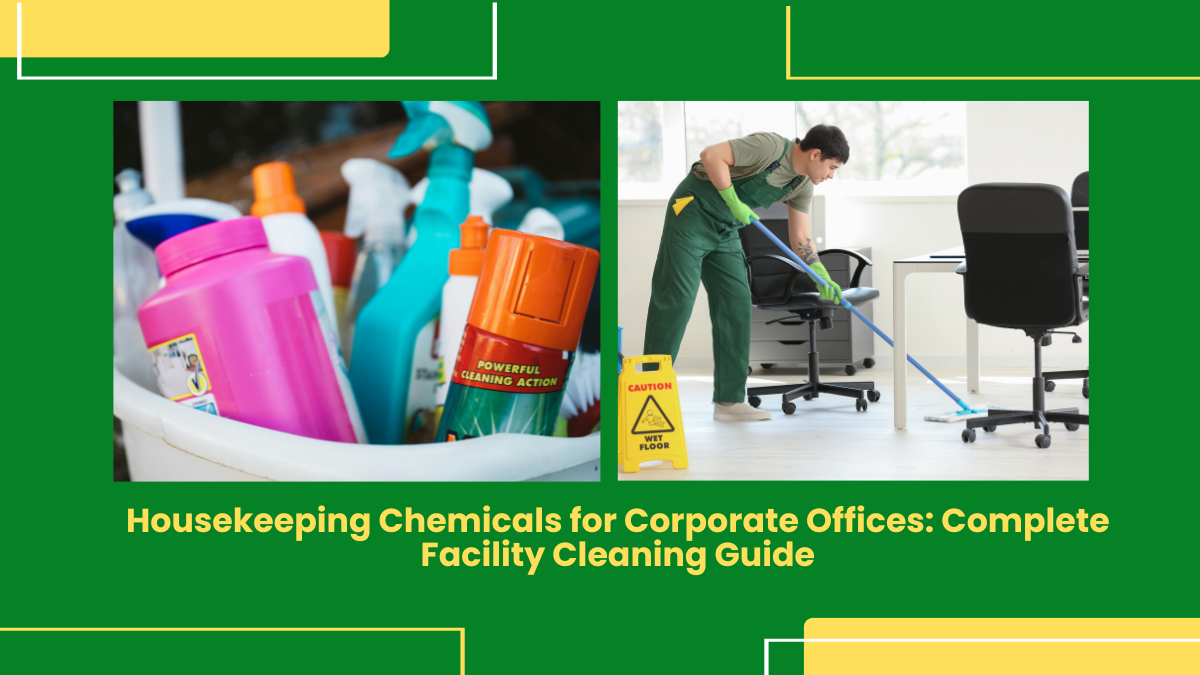
A clean corporate office supports a healthier and more comfortable workplace for employees, visitors, clients, and facility teams. From reception areas and workstations to washrooms, cafeterias, meeting rooms, and common areas, every part of an office requires a suitable cleaning routine.
Using the right housekeeping chemicals for corporate offices helps facility teams remove dust, grease, stains, unpleasant odours, and surface contamination. The chemical selected should match the cleaning task, surface material, level of soil, and frequency of use.
A well-planned office cleaning program combines suitable housekeeping chemicals, trained staff, correct dilution, regular cleaning schedules, and safe chemical handling.
Why Housekeeping Chemicals Matter in Corporate Offices
Corporate facilities contain many different surfaces and cleaning requirements. Glass partitions may need streak-free cleaning, floors require products suitable for their material, while washrooms need dedicated cleaners for toilets, sinks, and hard surfaces.
Common office cleaning requirements include:
- Floor cleaning
- Washroom sanitation
- Glass and window cleaning
- Desk and workstation cleaning
- Kitchen and cafeteria cleaning
- Surface cleaning
- Dust and stain removal
- Odour control
- Common-area cleaning
Using one product for every application can lead to poor cleaning results or surface damage. A better approach is to select products based on the specific cleaning requirement.
Problems in Corporate Office Cleaning
1. Dust and Dirt Accumulation
Office floors, desks, corners, carpets, and common areas collect dust throughout the day. High-traffic areas can become visibly dirty faster than low-use areas.
Solution
Use suitable surface and floor cleaning products according to the floor material and cleaning method. Regular sweeping or vacuuming should be followed by appropriate wet cleaning where required.
High-traffic areas such as entrances, reception areas, corridors, and pantry spaces may require more frequent cleaning than individual workstations.
2. Washroom Stains and Mineral Deposits
Corporate washrooms experience continuous use. Toilets, urinals, wash basins, taps, tiles, and floors can develop stains, scale, soap residue, and unpleasant odours.
Solution
Use dedicated washroom and toilet cleaning chemicals rather than relying on a general-purpose cleaner for every surface.
A practical washroom cleaning routine can include:
- Remove visible waste and loose dirt.
- Apply the appropriate toilet or bathroom cleaner.
- Allow the recommended contact time.
- Scrub where necessary.
- Rinse or wipe according to product instructions.
- Clean high-touch surfaces separately.
- Inspect the area before reopening it.
3. Streaks on Glass and Mirrors
Glass doors, partitions, windows, and mirrors can quickly show fingerprints, dust, and water marks. Incorrect products or excessive chemical use may leave streaks.
Solution
Use a suitable glass cleaner with the correct dilution and application method. Apply the product using a clean microfiber cloth or suitable glass-cleaning equipment.
Cleaning in sections also helps staff identify missed areas and reduce repeated wiping.
4. Kitchen and Cafeteria Grease
Corporate cafeterias, pantries, and employee kitchens can develop grease, food residue, oil deposits, and stains around sinks, counters, floors, and equipment.
Solution
Use suitable housekeeping chemicals for corporate offices based on the type of residue and surface.
For oily surfaces, an appropriate degreasing product may help loosen grease before wiping or rinsing. Food-contact surfaces should be cleaned according to the facility’s hygiene procedure and the product’s instructions.
5. Unpleasant Odours
Odours may develop in washrooms, waste areas, pantries, drains, carpets, and poorly ventilated spaces.
Simply masking an odour with fragrance does not always address its source.
Solution
First identify and remove the source of the odour. Clean the affected area, manage waste properly, and maintain ventilation.
Air fresheners can be used where appropriate as part of an overall housekeeping routine rather than as a substitute for cleaning.
Solutions: Selecting Housekeeping Chemicals for Corporate Offices
1. Build a Product List by Cleaning Area
A corporate facility can divide its cleaning requirements into different categories.
| Office Area | Typical Cleaning Requirement |
|---|---|
| Reception and lobby | Floor and surface cleaning |
| Workstations | Surface and dust cleaning |
| Meeting rooms | Surface, glass, and floor cleaning |
| Washrooms | Toilet and bathroom cleaning |
| Pantry | Degreasing and surface cleaning |
| Cafeteria | Floor, surface, and dishwashing |
| Glass partitions | Glass cleaning |
| Common areas | Floor and general cleaning |
| Waste areas | Cleaning and odour management |
This approach helps housekeeping teams use the appropriate chemical for each task.
2. Choose Chemicals According to Surface Type
Different materials require different cleaning approaches.
Corporate offices may contain:
- Marble
- Granite
- Ceramic tiles
- Vinyl
- Wood or laminate
- Stainless steel
- Glass
- Painted surfaces
- Plastic
- Concrete
Before using any chemical, check its compatibility with the surface and follow the manufacturer’s instructions.
3. Use Correct Chemical Dilution
Incorrect dilution is one of the common causes of inconsistent cleaning.
Too little product may result in poor soil removal, while excessive product can increase chemical consumption and may leave residues.
Cleaning teams should use measured quantities and documented dilution instructions rather than estimating the amount during each cleaning task.
4. Follow Contact Time
Some cleaning products require a specific contact time to work effectively. Removing a product immediately after application may reduce its cleaning performance.
Housekeeping staff should follow the product label or technical documentation for application time, dilution, rinsing, and safety precautions.
5. Use Appropriate Cleaning Tools
Chemical selection works together with the right cleaning equipment.
Common tools include:
- Microfiber cloths
- Mops
- Scrub brushes
- Floor machines
- Buckets
- Squeegees
- Vacuum cleaners
- Spray bottles designed for the product
Cleaning tools should also be maintained and replaced when they become worn or contaminated.
Essential Housekeeping Chemicals for Corporate Offices
A corporate housekeeping program may require several types of products depending on the facility.
Floor Cleaners
Used for routine cleaning of suitable hard-floor surfaces. The formulation should match the flooring material and cleaning method.
Toilet and Bathroom Cleaners
Designed for removing common bathroom soils, stains, and deposits from suitable surfaces.
Glass Cleaners
Used for windows, mirrors, glass doors, and partitions where a clear finish is required.
Multipurpose Cleaners
Suitable for routine cleaning of compatible hard surfaces such as desks, counters, doors, and other office areas.
Degreasers
Useful for removing grease and oily deposits in pantries, cafeterias, maintenance areas, and other suitable applications.
Dishwashing Products
Used for cleaning utensils, cups, plates, and kitchenware in office cafeterias and pantry areas.
Air Fresheners
Used for fragrance and odour management in suitable areas after the underlying source of an odour has been addressed.
Ecochem Solutions for Corporate Facility Cleaning
Ecochem manufactures industrial and commercial cleaning chemicals for different facility cleaning requirements. Its range includes products for floor cleaning, toilet cleaning, multipurpose cleaning, dishwashing, degreasing, and odour management.
For corporate offices, suitable products can be selected according to the area and cleaning requirements, including:
- Office floors and common areas
- Washrooms
- Glass and hard surfaces
- Pantries and cafeterias
- Grease-prone areas
- General facility maintenance
Ecochem products such as Eco Green Flo, Eco Green Shine, Eco Greener, Eco Glitter Dish Wash, and other suitable cleaning solutions can be evaluated according to the intended application.
The product’s technical information, dilution instructions, surface compatibility, handling requirements, and rinsing instructions should be checked before use.
Prevention Tips for Corporate Office Cleaning
1. Create an Area-Wise Cleaning Schedule
Divide the office into zones and assign cleaning frequencies.
For example:
Daily
- Reception
- Washrooms
- Pantry
- High-traffic floors
- Common touchpoints
Weekly
- Glass partitions
- Detailed workstation cleaning
- Deep floor cleaning
- Hard-to-reach areas
Monthly or Periodically
- Deep cleaning
- High-level dusting
- Detailed furniture cleaning
- Equipment and facility maintenance cleaning
The exact frequency should depend on office occupancy, foot traffic, facility size, and cleaning requirements.
2. Train Housekeeping Staff
Employees should know:
- Which chemical to use
- Where it can be used
- Correct dilution
- Required contact time
- Required PPE
- Safe storage practices
- Rinsing requirements
- What chemicals must not be mixed
Chemical containers should remain properly labelled.
3. Never Mix Cleaning Chemicals Without Manufacturer Guidance
Different cleaning chemicals can react with each other and create hazardous conditions. Housekeeping teams should never mix products unless the manufacturer specifically states that the combination is safe.
Each product should be used according to its instructions.
4. Maintain Colour-Coded Cleaning Tools
Colour coding can help separate cleaning tools between areas. For example, separate tools can be assigned to washrooms, general office areas, pantry areas, and other zones.
This can reduce the risk of transferring dirt between different parts of the facility.
5. Keep Cleaning Records
A simple cleaning log can include:
- Area cleaned
- Date and time
- Chemical used
- Dilution
- Staff member
- Inspection status
- Corrective action
Records help facility managers identify missed tasks and maintain consistency across shifts.
Final Thoughts
Effective corporate housekeeping depends on having the right cleaning products, trained staff, clear procedures, and consistent cleaning schedules. Housekeeping chemicals for corporate offices should be selected according to the surface, type of dirt, cleaning frequency, and intended application.
A structured approach covering office areas, washrooms, kitchens, floors, glass surfaces, and common spaces can help facility teams maintain a cleaner workplace while using cleaning chemicals in a controlled and responsible way.
FAQ’S
What are housekeeping chemicals for corporate offices?
They are cleaning products used for office floors, washrooms, glass, surfaces, kitchens, cafeterias, and other facility maintenance tasks.
Which housekeeping chemicals are commonly used in offices?
Common categories include floor cleaners, toilet cleaners, glass cleaners, multipurpose cleaners, degreasers, dishwashing products, and air fresheners.
How should office cleaning chemicals be selected?
Select products according to the cleaning task, soil type, surface material, application method, and manufacturer’s instructions.
Why is chemical dilution important in office housekeeping?
Correct dilution helps maintain consistent cleaning performance while avoiding unnecessary chemical use and potential residue.
Can one cleaning chemical be used for the entire office?
Not always. Different surfaces and soils may require different formulations. Product instructions and surface compatibility should be checked before use.
Add your title here
Far far away, behind the word mountains, far from the countries Vokalia and Consonantia, there live the blind texts. Separated they live in Bookmarksgrove right at the coast of the Semantics, a large language ocean.