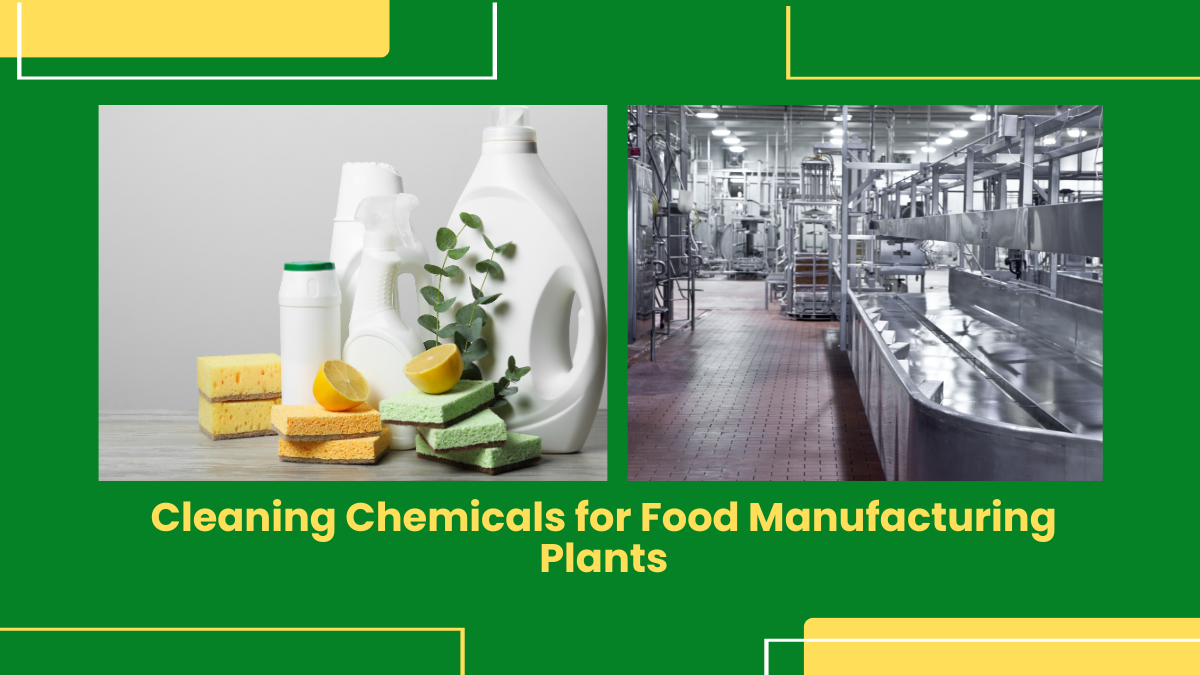
Food manufacturing plants deal with a wide range of residues every day. Oils, fats, proteins, starch, sugar, spices, food particles, dust and water can accumulate on production equipment, floors, drains, storage areas and work surfaces.
Cleaning these areas with water alone is often not enough. Different residues require different cleaning methods and food manufacturing cleaning chemicals.
A suitable cleaning programme should do more than make a production area look clean. It should remove food residues, reduce contamination risks, protect equipment and support consistent food plant hygiene.
For food manufacturers, the right approach is to identify the cleaning problem first, select the appropriate chemical, apply it correctly and then verify that the cleaning process is working.
Why Food Manufacturing Plants Need Specialised Cleaning
Food production environments have multiple contamination points. Raw materials enter the facility, ingredients are processed, equipment handles food, products are packaged and finished goods move into storage.
During these operations, residues can remain on surfaces.
Common cleaning problems include:
- Oil and grease on machinery
- Protein deposits on processing equipment
- Starch and flour residues
- Sugar and sticky food deposits
- Burnt or carbonised food residue
- Dirt and grease on production floors
- Food particles around drains
- Deposits on conveyors and worktables
- Water and mineral deposits
- Residues in difficult-to-reach equipment areas
If cleaning is inconsistent, residues can accumulate between production cycles. FSSAI guidance stresses the need for cleaning and sanitation programmes covering specific areas, cleaning frequency, procedures, equipment and materials used.
This is why food manufacturing cleaning should be treated as part of the plant’s food safety and hygiene programme, not simply as routine housekeeping.
Which Food Industries Need Cleaning Chemicals?
The exact cleaning requirement depends on the product being manufactured and the production process.
Dairy Processing Plants
Dairy operations can leave behind milk fats, proteins, mineral deposits and other residues.
Cleaning may be required for:
- Milk tanks
- Processing vessels
- Pipelines
- Filling equipment
- Floors
- Storage areas
- Work surfaces
FSSAI’s milk-sector guidance recommends established cleaning and sanitation programmes and notes that equipment should be cleaned with suitable chemical detergents and then disinfected as applicable.
Bakery and Confectionery Plants
Bakeries commonly deal with:
- Flour
- Dough
- Sugar
- Butter
- Oils
- Chocolate
- Food particles
Dry residues may collect around mixers, conveyors, ovens and production floors. Some areas may benefit from dry cleaning methods where introducing water could increase contamination or operational problems.
Snack and Fried Food Manufacturing
Frying and snack production can create heavy oil and grease deposits.
Common cleaning areas include:
- Fryers
- Processing equipment
- Exhaust areas
- Conveyors
- Production floors
- Preparation surfaces
These applications may require suitable degreasing products that can break down oily contamination without compromising compatible surfaces.
Ready-to-Eat Food Plants
Ready-to-eat products require careful hygiene management because the finished food may not receive another cooking step before consumption.
Cleaning programmes may cover:
- Processing equipment
- Conveyors
- Preparation areas
- Packaging equipment
- Floors
- Food-contact surfaces
Cleaning chemicals should be selected and used according to the plant’s validated procedures and applicable food-safety requirements.
Beverage and Packaged Food Plants
Beverage and packaged-food facilities may experience sugar, syrup, product residue, mineral deposits and general dirt.
The cleaning programme should account for production frequency, equipment design, product characteristics and the type of residue being removed.
What Types of Food Manufacturing Cleaning Chemicals Are Used?
There is no single cleaning chemical that works equally well for every food manufacturing application.
The chemical should match the residue, surface and cleaning method.
1. Food Processing Degreasers
Grease and oil can accumulate on machinery, floors and processing equipment.
A suitable industrial degreaser may be used for compatible applications involving:
- Oil
- Grease
- Fat
- Lubricant residues
- Heavy industrial grime
For food manufacturing environments, the product and application should be assessed carefully, particularly where there is a possibility of direct or indirect contact with food-contact surfaces.
2. Alkaline Cleaning Chemicals
Alkaline cleaners are commonly selected for organic residues such as fats, proteins and food soils.
They may be appropriate for certain:
- Processing equipment
- Production surfaces
- Floors
- Food-processing machinery
The exact formulation, concentration and contact time should be determined according to the product instructions and the plant’s cleaning procedure.
3. Acidic Cleaners and Descalers
Mineral deposits and hard-water scale can create a different cleaning problem from grease.
Suitable acidic cleaning products may be used for compatible surfaces to address:
- Mineral scale
- Hard-water deposits
- Lime deposits
- Certain inorganic residues
Acidic products should never be selected solely because a surface looks dirty. Surface compatibility and the nature of the deposit should be confirmed first.
4. Floor Cleaning Chemicals
Production floors can accumulate food particles, oil, grease, water and dirt.
A suitable floor cleaner can be used for compatible flooring in:
- Production areas
- Processing rooms
- Packaging zones
- Warehouses
- Corridors
- Utility areas
Floor cleaning is also connected with workplace safety. Wet, greasy or contaminated floors can increase slip risks.
5. Multipurpose Cleaners
Multipurpose cleaners can be useful for compatible non-food-contact surfaces where contamination is lighter.
Typical applications may include:
- Walls
- Doors
- External equipment surfaces
- Storage areas
- General housekeeping areas
Using a suitable general cleaner for light contamination can avoid using a heavy-duty chemical where it is not required.
Food-Grade Cleaning Chemicals: What Does It Mean?
The term food-grade cleaning chemicals needs to be used carefully.
For food manufacturing facilities, cleaning and disinfection chemicals that could come into direct or indirect contact through equipment or plant surfaces need to be selected and handled appropriately. FSSAI guidance states that cleaning and disinfection chemicals should be food grade where applicable, used according to manufacturers’ instructions, correctly diluted and stored separately from food in clearly identified containers.
This does not mean that every chemical used inside a food factory has to be the same product.
For example:
- A food-contact surface may require a specific suitable cleaner.
- A production floor may require a compatible floor-cleaning chemical.
- An external machine surface may require a suitable degreaser.
- A washroom requires separate cleaning products.
The important factor is matching the chemical to the application and following the plant’s approved cleaning procedure.
How to Apply Cleaning Chemicals in Food Manufacturing
Selecting the correct chemical is only part of the process. The cleaning method also affects the result.
A typical cleaning sequence can include the following steps.
Step 1: Remove Loose Food Residues
Remove visible food particles, packaging waste and loose dirt before applying the chemical.
This reduces the amount of contamination that the cleaning solution has to handle.
Step 2: Apply the Appropriate Cleaning Solution
Select the chemical according to the type of residue and surface.
For example:
Grease → Degreaser
Mineral scale → Suitable descaler
General dirt → Suitable multipurpose or floor cleaner
Food residues → Appropriate food-processing cleaner
Step 3: Allow the Required Contact Time
Some cleaning products need time to loosen or dissolve deposits.
Follow the manufacturer’s instructions rather than assuming that immediate rinsing will produce the best result.
Step 4: Mechanical Cleaning
Depending on the surface and procedure, use appropriate brushing, scrubbing, pressure or other mechanical action.
Mechanical action can help remove deposits that have been loosened by the cleaning chemical.
Step 5: Rinse Where Required
Remove loosened soil and cleaning residues using the required water quality and rinsing procedure.
FSSAI guidance describes cleaning as a process that may include removing visible debris, applying detergent, rinsing to remove loosened soil and residues, and disinfection where necessary.
Step 6: Disinfect Where Required
Cleaning and disinfection are not always the same step.
Cleaning removes soil and residues. Disinfection is used where required to reduce microorganisms after appropriate cleaning.
The plant’s sanitation programme should define when disinfection is required and which product and concentration should be used.
Food Plant Hygiene: Areas That Need Regular Attention
A food manufacturing plant should not focus only on visible production equipment.
Important areas include:
Production Equipment
Inspect mixers, conveyors, tanks, processing machines and other equipment for food residue and deposits.
Food-Contact Surfaces
These require particular attention because contamination can directly affect food.
Floors and Drains
Food particles, grease and water can accumulate in these areas.
Drains should be maintained as part of the plant’s overall hygiene programme rather than treated as an isolated cleaning task.
Walls and Ceilings
Dust, condensation and deposits can accumulate over time.
Storage Areas
Raw materials, packaging and finished products should be protected from contamination while storage areas are maintained.
Employee Hygiene Areas
Handwashing stations, changing rooms and toilets require their own cleaning schedules.
How to Choose Food Manufacturing Cleaning Chemicals
Before buying cleaning chemicals for a food plant, consider the following factors.
1. Identify the Residue
Ask what you are trying to remove:
- Oil?
- Grease?
- Protein?
- Starch?
- Sugar?
- Food particles?
- Mineral scale?
- General dirt?
The answer determines the type of cleaner required.
2. Identify the Surface
Consider whether the chemical will be applied to:
- Stainless steel
- Ceramic
- Concrete
- Plastic
- Aluminium
- Painted surfaces
- Other equipment materials
A chemical suitable for one surface may not be suitable for another.
3. Check Food-Contact Requirements
If there is direct or indirect contact risk, verify that the selected product is appropriate for the application and compatible with the facility’s food-safety procedure.
Do not assume that a product is suitable for food-contact surfaces simply because it is marketed as an industrial cleaner.
4. Check Dilution and Application Instructions
Always follow the manufacturer’s specified dilution and application method.
Using excessive chemical does not automatically improve cleaning. Incorrect concentration can increase chemical use, create residue concerns or affect surfaces.
5. Consider Cleaning Method
A chemical intended for manual cleaning may have different requirements from a product used with spray equipment, foam cleaning or a CIP system.
The cleaning process should be considered before purchasing the product.
6. Evaluate Cost Per Cleaning
Compare products based on:
- Purchase price
- Dilution ratio
- Area coverage
- Cleaning frequency
- Labour required
- Water consumption
- Cleaning performance
This provides a better picture of the actual operating cost.
7. Ask for Technical Information
Before purchasing in bulk, ask the supplier for relevant information such as:
- Product specifications
- Recommended dilution
- Surface compatibility
- Application method
- Storage instructions
- Safety information
- Packaging options
- Technical support
Why Choose Ecochem for Food Manufacturing Cleaning?
Ecochem manufactures industrial and commercial cleaning chemicals and provides solutions for manufacturing and food-processing environments. Its current product range includes industrial degreasers, floor cleaners, multipurpose cleaners, metal cleaners and other housekeeping products.
Ecochem’s existing food-processing content also focuses on plant hygiene, food-grade cleaning requirements and the selection of chemicals according to different food-processing areas.
For a food manufacturing facility, the useful approach is to assess the actual cleaning application before selecting a product. Production equipment, floors, storage areas, washrooms and general facility surfaces may require different solutions.
Businesses can discuss their cleaning requirements with Ecochem to identify suitable products based on the type of residue, surface, cleaning method and facility requirements.
Food Plant Cleaning Checklist
Before starting a cleaning programme, food manufacturers can use this simple checklist:
- Identify all production and non-production areas
- Identify food-contact surfaces
- Identify the type of residue in each area
- Select the appropriate cleaning chemical
- Check surface compatibility
- Confirm dilution requirements
- Define cleaning frequency
- Define responsibility for each cleaning task
- Store chemicals away from food
- Train cleaning personnel
- Maintain cleaning records
- Verify cleaning effectiveness
FSSAI guidance specifically recommends documented cleaning programmes that identify areas, equipment, responsibilities, cleaning methods, frequency and monitoring arrangements.
Final Takeaway
Food manufacturing requires a cleaning programme built around the residue, the surface and the application.
Grease may require a suitable degreaser. Mineral deposits may require a compatible descaler. Production floors need an appropriate floor cleaner, while food-contact surfaces require products and procedures that meet the applicable food-safety requirements.
The best food manufacturing cleaning chemicals are therefore not simply the strongest products. They are the products that are suitable for the specific cleaning task, compatible with the surface, correctly diluted and used as part of a documented sanitation programme.
For manufacturers looking for food processing chemicals, Ecochem provides industrial and commercial cleaning solutions that can be selected according to the facility’s cleaning requirements, helping businesses maintain consistent cleaning across production and support areas.
FAQ’S
What cleaning chemicals are used in food manufacturing plants?
Common categories include degreasers, alkaline cleaners, suitable acidic cleaners or descalers, floor cleaners, multipurpose cleaners and sanitation chemicals. The correct product depends on the food residue, surface and cleaning procedure.
What are food manufacturing cleaning chemicals?
Food manufacturing cleaning chemicals are products selected for cleaning equipment, surfaces and facilities within food production environments. They are chosen according to the type of soil, surface compatibility and food-safety requirements.
How often should food processing equipment be cleaned?
There is no single frequency for every food plant. Cleaning frequency depends on the product, equipment, production schedule, residue and sanitation programme. Some equipment may require cleaning after each production cycle, while other areas may follow daily, weekly or periodic schedules.
What chemical removes grease from food-processing equipment?
A suitable food-processing degreaser can be used for compatible equipment and surfaces where grease and oil are the main contaminants. The product should be selected according to the equipment material and the plant’s approved cleaning procedure.
How can food manufacturers choose the right cleaning chemical?
Start by identifying the residue and surface. Then check whether the product is suitable for the application, review its dilution and safety instructions, and consider the cleaning method, required frequency and cost per use.
Wruuten By: Vinny Jain