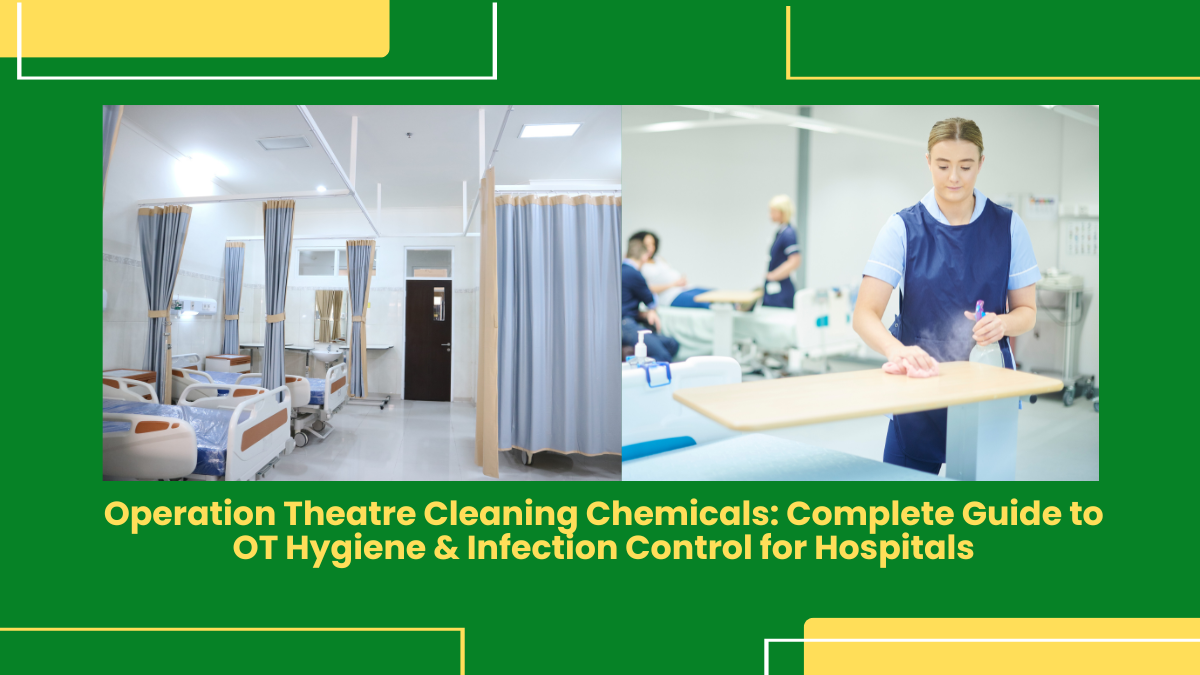
Operation Theatres (OTs) are among the most critical areas in any hospital. Every surgical procedure depends on a clean, controlled environment to reduce the risk of infections and protect both patients and healthcare professionals. Even a small amount of contamination on floors, walls, surgical tables, or medical equipment can increase the chances of healthcare-associated infections (HAIs).
Cleaning an Operation Theatre involves much more than making surfaces look clean. It requires the use of suitable Operation Theatre Cleaning Chemicals that can remove dirt, blood stains, body fluids, microorganisms, and organic matter while remaining compatible with hospital-grade surfaces and equipment.
Hospitals follow strict cleaning protocols before, during, and after surgical procedures. Choosing the right hospital cleaning chemicals helps maintain these standards while supporting infection prevention programs.
Why OT Cleaning Is Critical in Hospitals
An Operating Theatre is a controlled environment where patients are most vulnerable to infections. Unlike other hospital areas, contamination in an OT can directly affect surgical outcomes.
Proper cleaning helps hospitals:
- Reduce the spread of harmful microorganisms
- Maintain sterile conditions
- Improve patient safety
- Support infection control programs
- Comply with NABH and hospital hygiene protocols
- Extend the life of hospital infrastructure
Routine cleaning with suitable Operation Theatre Cleaning Chemicals is an important part of hospital housekeeping.
Common Cleaning Challenges in Operation Theatres
Operation theatres experience continuous movement of medical staff, equipment, patients, and surgical instruments. These activities create several cleaning challenges that require specialised cleaning solutions.
1. Blood and Body Fluid Stains
During surgical procedures, blood, tissue particles, and body fluids may come into contact with OT floors, operating tables, walls, and nearby equipment.
If these contaminants are not removed properly, they can become a source of microbial growth and cross-contamination.
2. High Risk of Cross-Contamination
Operation theatres handle multiple surgeries every day.
Without proper cleaning between procedures, bacteria, viruses, and other pathogens can spread from one patient to another through contaminated surfaces.
Cross-contamination remains one of the primary concerns in healthcare facilities.
3. Difficult-to-Clean Equipment
Modern operation theatres contain numerous medical devices, including:
- Surgical tables
- Operating lights
- Anaesthesia machines
- Instrument trolleys
- Monitors
- Stainless steel workstations
Each surface requires suitable cleaning methods and compatible cleaning chemicals.
4. Floor Contamination
OT floors frequently come into contact with:
- Foot traffic
- Medical waste
- Liquid spills
- Blood droplets
- Dust particles
- Equipment wheels
A contaminated floor can spread microorganisms throughout the operating room.
5. Continuous Use of Operation Theatres
Many hospitals conduct multiple surgeries throughout the day.
Cleaning teams often have limited time between procedures to prepare the OT for the next patient.
Using effective Hospital Cleaning Chemicals helps reduce cleaning time without compromising hygiene.
Problems Caused by Poor OT Cleaning
Insufficient cleaning can affect hospital operations in many ways.
Common problems include:
- Increased risk of surgical site infections (SSIs)
- Cross-contamination
- Poor patient outcomes
- Unpleasant odours
- Reduced confidence among patients
- Damage to expensive medical equipment
- Failure to meet hospital hygiene standards
- Higher maintenance costs
A structured cleaning programme helps hospitals reduce these risks.
Choosing the Right Operation Theatre Cleaning Chemicals
Different areas within an OT require different cleaning products.
Selecting the right solution improves cleaning efficiency while protecting hospital infrastructure.
Hospital Surface Cleaners
Surface cleaners are used on:
- OT walls
- Stainless steel workstations
- Operating tables
- Medical furniture
- Storage cabinets
These cleaners remove dust, stains, and organic residues while helping maintain a hygienic environment.
Hospital Floor Cleaners
Operation theatre floors require regular cleaning throughout the day.
An effective OT floor cleaner should:
- Remove dirt and stains
- Clean blood spills
- Remove grease marks from equipment wheels
- Dry without leaving slippery residues
Regular floor cleaning improves both hygiene and workplace safety.
Multipurpose Cleaning Chemicals
Hospitals often require cleaning products suitable for different departments.
Multipurpose cleaners can be used in:
- Corridors
- Changing rooms
- Utility rooms
- Wash areas
- Nursing stations
- Administrative areas
Using multipurpose cleaning chemicals simplifies housekeeping operations.
Washroom Cleaning Chemicals
Hospital washrooms receive continuous use from staff, patients, and visitors.
Regular cleaning helps prevent bacterial growth while maintaining hygiene standards.
Common applications include:
- Toilets
- Wash basins
- Urinals
- Mirrors
- Tiles
- Drainage areas
Effective Cleaning Solutions for Operating Theatres
Hospitals should follow structured cleaning procedures instead of relying only on cleaning chemicals.
A good OT cleaning programme includes:
Before Surgery
- Clean floors
- Wipe all work surfaces
- Remove dust from OT furniture
- Check waste bins
- Prepare disinfected workstations
Between Surgeries
- Remove surgical waste
- Clean blood and fluid spills immediately
- Wipe operating tables
- Replace contaminated materials
- Clean frequently touched surfaces
End-of-Day Cleaning
- Deep clean floors
- Wash walls where required
- Clean OT lights and support equipment
- Empty biomedical waste bins
- Inspect the theatre before closing
Following these steps helps maintain consistent hygiene throughout the day.
Prevention Tips for Maintaining a Hygienic Operation Theatre
Cleaning an Operation Theatre (OT) is not limited to scheduled housekeeping. It requires a systematic approach that combines trained personnel, appropriate cleaning chemicals, and standard operating procedures. Preventive cleaning helps hospitals maintain a safe surgical environment while reducing the risk of infections.
1. Follow a Daily Cleaning Schedule
Every hospital should have a documented cleaning schedule for operating theatres. The schedule should clearly define:
- Pre-operative cleaning
- Between-case cleaning
- Terminal cleaning at the end of the day
- Weekly deep cleaning
- Monthly maintenance cleaning
Maintaining a cleaning log helps housekeeping teams ensure that no cleaning activity is missed.
2. Clean High-Touch Surfaces Frequently
Many surfaces inside an OT are touched repeatedly by surgeons, nurses, and technicians throughout the day.
These include:
- Door handles
- Operating tables
- Instrument trolleys
- Monitor controls
- Anaesthesia machines
- Light handles
- Storage cabinets
- Workstations
Routine cleaning of these surfaces helps reduce the spread of microorganisms.
3. Use Separate Cleaning Equipment for OTs
Cleaning tools used in operation theatres should never be shared with other hospital departments.
Hospitals should assign dedicated:
- Mops
- Buckets
- Microfiber cloths
- Cleaning brushes
- Trolleys
Colour-coded cleaning tools also help prevent cross-contamination between critical and non-critical areas.
4. Train Housekeeping Staff Regularly
Hospital cleaning staff play an important role in infection prevention.
Training should include:
- Proper use of Operation Theatre Cleaning Chemicals
- Chemical dilution procedures
- Cleaning sequence
- Safe handling of biomedical waste
- Personal protective equipment (PPE)
- Spill management procedures
Regular training helps maintain consistency across all cleaning shifts.
5. Store Cleaning Chemicals Safely
Hospital cleaning chemicals should always be stored according to the manufacturer’s recommendations.
Storage areas should be:
- Well ventilated
- Clearly labelled
- Away from patient care areas
- Protected from direct sunlight
- Accessible only to authorised personnel
Proper storage helps maintain product quality and improves workplace safety.
6. Inspect the OT Before Every Surgery
Before each surgical procedure, housekeeping supervisors should inspect the operation theatre for cleanliness.
Inspection should include:
- Floor condition
- Operating table cleanliness
- Equipment surfaces
- Waste disposal
- Wash basins
- Air vents
- Storage shelves
Routine inspections help identify cleaning issues before patient entry.
Choosing the Right Hospital Cleaning Chemical Supplier
Selecting the right supplier is just as important as selecting the cleaning chemicals.
Look for a supplier that offers:
- Hospital housekeeping chemicals
- Multipurpose cleaning solutions
- Floor cleaning chemicals
- Washroom cleaners
- Glass cleaners
- Industrial degreasers for utility and engineering departments
- Technical product guidance
- Consistent product quality
Working with one reliable supplier simplifies inventory management and ensures consistent cleaning standards.
How Ecochem Supports Hospital Cleaning Requirements
Hospitals require cleaning solutions that perform consistently across different departments while supporting routine housekeeping activities.
Ecochem manufactures a wide range of industrial and institutional cleaning chemicals suitable for healthcare facilities.
Our product portfolio includes:
- Floor Cleaning Chemicals
- Multipurpose Cleaners
- Glass Cleaners
- Washroom Cleaning Chemicals
- Toilet Bowl Cleaners
- Air Fresheners
- Hand Hygiene Products
- Housekeeping Chemicals for Commercial Facilities
These products are suitable for maintaining cleanliness in:
- Operation Theatres
- ICUs
- Patient Rooms
- Laboratories
- Waiting Areas
- Hospital Corridors
- Administrative Offices
- Washrooms
Ecochem focuses on delivering cleaning solutions that help housekeeping teams maintain clean, organised, and hygienic healthcare environments.
Conclusion
Maintaining a clean operation theatre is one of the most important responsibilities in any healthcare facility. A structured cleaning programme, supported by appropriate Operation Theatre Cleaning Chemicals, trained housekeeping staff, and routine inspections, helps create a hygienic surgical environment and reduces the risk of contamination.
From daily surface cleaning to terminal cleaning after the final procedure, every step contributes to patient safety and operational efficiency. Hospitals that invest in the right cleaning practices are better equipped to maintain consistent hygiene standards across their surgical departments.
Ecochem supports healthcare facilities with a range of professional housekeeping and cleaning solutions designed for hospitals, clinics, laboratories, and other institutional environments. Whether you are looking for floor cleaners, multipurpose cleaners, washroom cleaning products, or complete housekeeping solutions, Ecochem offers products that help maintain clean and well-managed healthcare facilities.
FAQ’S
What are Operation Theatre Cleaning Chemicals?
Operation Theatre Cleaning Chemicals are specialised cleaning products used to clean OT floors, walls, workstations, furniture, and other hospital surfaces to maintain hygiene and reduce contamination.
Why is OT cleaning important?
A clean operation theatre helps reduce the risk of surgical site infections, supports infection control practices, and provides a safer environment for patients and healthcare professionals.
Which areas of an OT require regular cleaning?
Operation tables, floors, walls, lights, instrument trolleys, storage cabinets, workstations, and frequently touched surfaces should be cleaned according to hospital protocols.
How often should an operation theatre be cleaned?
Operation theatres are typically cleaned before the first surgery, between surgical procedures, after every surgery when required, and through terminal cleaning at the end of the day.
How do hospitals choose suitable Operation Theatre Cleaning Chemicals?
Hospitals should select cleaning products based on the surface type, cleaning application, compatibility with hospital materials, and housekeeping requirements while following manufacturer instructions.
Written By: Vinny Jain