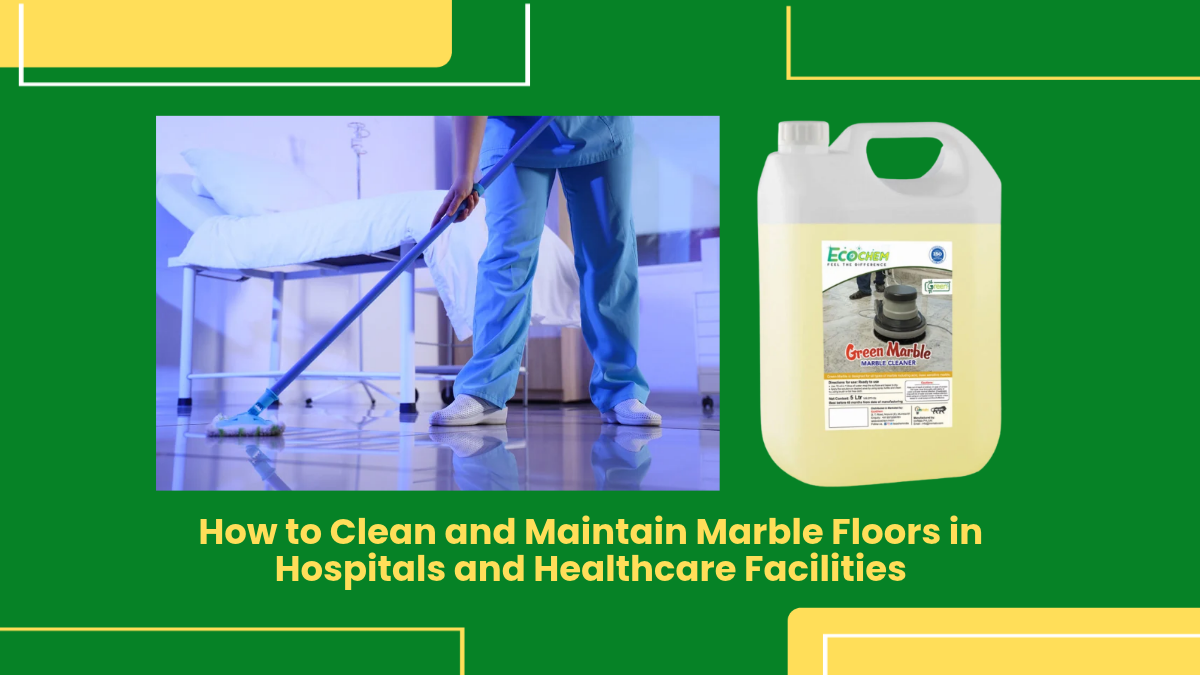
Choosing a suitable marble floor cleaner for hospitals means selecting a product compatible with natural stone and following a consistent cleaning procedure. Hospital marble floors in reception areas, corridors and administrative spaces can collect dust, footprints and spills throughout the day. Regular dust removal, prompt spill cleaning and a suitable marble cleaner help maintain the floor’s appearance while reducing the risk of surface damage.
In healthcare facilities, floor cleaning must also follow the hospital’s housekeeping and infection-control procedures. A marble cleaner should not be treated as a disinfectant unless its antimicrobial performance is independently established.
Why Does Marble Flooring Need Special Care in Hospitals?
Marble is a natural stone that can be affected by unsuitable chemicals, abrasive tools and poor cleaning practices. Busy hospital areas face additional challenges because of continuous movement by patients, visitors, staff and cleaning equipment.
Common problems include:
- Dust and footprints: Shoes and trolley wheels bring dirt into corridors and reception areas.
- Liquid spills: Water and other spills can leave marks if not cleaned promptly.
- Dull patches: Unsuitable cleaning chemicals or abrasive scrubbing can affect the polished finish.
- Stains: Certain substances can penetrate porous stone if left untreated.
- Frequent cleaning: High-traffic areas need regular maintenance without damaging the surface.
How to Choose a Marble Floor Cleaner for Hospitals
Before purchasing a marble cleaning chemical, evaluate these factors.
1. Check the pH and stone compatibility
Marble contains calcium carbonate and is sensitive to acidic substances. Acidic cleaners can cause etching, leaving dull marks on polished surfaces. Choose a product specifically intended for marble and confirm its suitability for the particular stone and finish.
2. Consider the type of dirt
Identify whether the floor has ordinary dust, footprints, water marks or stubborn stains. Routine maintenance and specialised stain removal may require different products or methods.
3. Review dilution instructions
Follow the manufacturer’s recommended dilution and application method. Using excess chemical can leave residue, while incorrect dilution may affect cleaning results or surface appearance.
4. Consider the hospital area
A reception floor, administrative corridor and patient-care area may have different cleaning requirements. The hospital’s infection-control team should define where routine cleaning is sufficient and where an approved disinfectant is required.
Practical Marble Floor Cleaning Procedure
A standard housekeeping process helps maintain consistent results across hospital common areas.
- Restrict the cleaning area: Place wet-floor signs and guide visitors around the work area.
- Remove loose dirt: Use a soft dust mop or suitable dry-cleaning method to remove dust and grit before wet mopping.
- Prepare the solution: Measure the marble cleaner and water according to the product label.
- Test a small area: Apply the solution to an inconspicuous section and check for changes in colour, finish or appearance.
- Mop with suitable equipment: Use a clean, non-abrasive mop. Avoid excessive water and harsh scrubbing.
- Remove residue if required: Follow the manufacturer’s rinsing or wiping instructions.
- Allow the floor to dry: Keep the area restricted until it is safe for foot traffic.
- Inspect the result: Check for remaining stains, streaks, residue or surface damage.
The CDC recommends selecting healthcare cleaning products that do not damage the surfaces being cleaned. It also advises preparing solutions according to manufacturer instructions and using appropriate cleaning procedures for each area. CDC+1
Hospital Marble Floor Maintenance Checklist
| Area or task | Recommended housekeeping action |
|---|---|
| Reception and entrance | Remove dust and footprints regularly |
| Main corridors | Inspect frequently and clean according to foot traffic |
| Waiting areas | Address visible dirt and spills promptly |
| Marble surfaces | Use a compatible, non-abrasive cleaning method |
| Cleaning equipment | Keep mops and cloths clean and maintained |
| After cleaning | Check for residue, wet patches and slip hazards |
Prevention tips for facility managers:
- Use entrance mats to reduce the amount of grit brought inside.
- Clean spills promptly using a method suitable for marble.
- Avoid acidic cleaners, abrasive powders and rough scrubbers.
- Maintain a written floor-cleaning schedule.
- Train housekeeping staff to identify marble-safe products.
- Keep marble floor cleaning separate from disinfection procedures where both are required.
For patient-care areas, follow the hospital’s infection-control schedule. Cleaning and disinfection requirements can vary by area and contamination risk. CDC+1
How Eco-Green Marble Supports Hospital Floor Maintenance
Ecochem describes Eco-Green Marble as a marble maintenance cleaner intended for marble and other listed surfaces. Its product information highlights compatibility with acid- and base-sensitive marble.
View official product details
The product information available from Ecochem states:
- Intended use: Marble floor cleaning and maintenance.
- Stated pH characteristic: Neutral pH, also described in Ecochem’s service information.
- Listed surfaces: Marble floors, floor tiles, lacquered surfaces and ceramic walls.
- Dilution ratio: 10 ml in 1 litre of water.
- Other stated cleaning applications: Hard water and rust stains. Ecochem+1
For hospitals, Eco-Green Marble may be evaluated for routine cleaning of compatible marble floors in reception areas, corridors and other approved spaces. Facility teams should check the current product label, test a small area and confirm suitability for the specific marble finish before wider use.
The product should not be considered a hospital disinfectant or a substitute for an approved infection-control product.
Common Marble Floor Cleaning Mistakes to Avoid
- Using acidic toilet cleaners on marble.
- Scrubbing polished marble with abrasive pads.
- Applying excessive cleaning chemical.
- Allowing spills and stains to remain for long periods.
- Using dirty mops that spread soil across the floor.
- Ignoring wet-floor safety signs.
- Assuming a marble cleaner also provides disinfection.
FAQ’S
Which marble floor cleaner is suitable for hospitals?
Choose a marble-compatible cleaner with clear dilution instructions and suitability for the specific stone and finish.
Can acidic cleaners damage hospital marble floors?
Yes. Acidic chemicals can etch marble, leaving dull marks and damaging its polished appearance.
What is the dilution ratio of Eco-Green Marble?
Ecochem lists 10 ml of Eco-Green Marble in 1 litre of water. Check the current product label before use.
Can Eco-Green Marble remove hard water stains?
Ecochem lists hard water and rust stains among the cleaning applications described on its product page.
Does marble floor cleaner disinfect hospital floors?
Not necessarily. Use a separately approved disinfectant wherever the hospital’s infection-control procedure requires it.
Written By: Vinny Jain