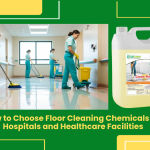
An industrial degreaser for hospitals should be selected according to the type of grease, surface material, cleaning task and safety requirements of the area. Hospital maintenance rooms, workshops and utility spaces may accumulate oil, grease and workshop residues. The right degreaser can help remove these deposits from compatible surfaces, but it must not replace healthcare-approved cleaning and disinfection products in patient-care areas.
A degreaser is a cleaning chemical designed to remove oily and greasy deposits. It is not automatically a disinfectant, and its suitability for hospital use depends on the specific application.
2. Why Do Hospital Maintenance Areas Need Degreasing?
Hospitals operate more than patient rooms and treatment areas. Their maintenance teams also manage equipment rooms, engineering workshops, utility spaces, service areas and facility infrastructure.
These spaces may develop grease and oil deposits from routine maintenance activities.
Common cleaning challenges include:
- Oil marks around maintenance equipment.
- Grease deposits on compatible metal surfaces.
- Oily residue on workshop floors.
- Dirt mixed with lubricant around machinery.
- Grease accumulation on tools and maintenance work surfaces.
If these deposits are not cleaned properly, they can make maintenance work harder and contribute to slippery floors. Cleaning frequency should depend on equipment use, visible contamination and the facility’s maintenance schedule.
3. How to Choose an Industrial Degreaser for Hospitals
Before purchasing a degreaser, facility managers should evaluate these five factors.
1. Identify the Type of Grease
Not all contamination is the same. Identify whether the surface has light oil marks, lubricant deposits, heavy grease or mixed workshop dirt.
Choose a product whose stated cleaning applications match the deposit. A routine surface cleaner may not be suitable for heavy grease accumulation.
2. Check Surface Compatibility
Hospital maintenance areas can contain stainless steel, painted metal, aluminium, plastic, concrete and other materials.
A chemical suitable for one material may affect another surface or its coating. Review the product instructions and confirm compatibility before applying it.
3. Check Dilution Requirements
A suitable degreaser should have clear preparation and application instructions. Check the recommended dilution, contact time, rinsing requirements and whether the solution needs to be prepared fresh.
Avoid increasing the concentration to remove stubborn grease unless the manufacturer specifically permits it.
4. Consider the Cleaning Location
A maintenance workshop has different cleaning requirements from a patient room, ICU or treatment area.
For example, a degreaser considered for a maintenance workbench should not automatically be used on medical equipment, patient-contact surfaces or clinical floors. Those applications require products and procedures approved for the specific healthcare setting.
5. Review Handling and Safety Instructions
Check the product label and safety information for:
- Required gloves and protective equipment.
- Application and ventilation requirements.
- Storage and disposal instructions.
- First-aid guidance.
- Restrictions on particular surfaces or applications.
4. Practical Degreasing Procedure for Maintenance Teams
A consistent procedure helps staff remove grease without spreading contamination.
- Inspect the area: Identify the greasy surface, contamination level and nearby equipment.
- Prepare the workspace: Restrict access where needed and protect nearby materials.
- Check compatibility: Confirm that the degreaser is suitable for the surface.
- Prepare the solution: Follow the manufacturer’s stated dilution instructions.
- Apply the product: Use the recommended application method and contact time.
- Remove the residue: Wipe or rinse as instructed. Do not leave cleaning residue on floors or work surfaces.
- Inspect the result: Check for remaining grease and ensure the floor is safe before reopening the area.
For machinery, follow equipment isolation procedures and the equipment manufacturer’s cleaning instructions. Do not apply chemicals to electrical components, controls or sensitive parts unless specifically approved.
5. How Eco-Green Kleen Fits Hospital Maintenance Requirements
Eco-Green Kleen is listed on Ecochem’s official website as a water-based industrial degreaser. Its product page describes it as a cleaning option for stubborn grease and industrial stains. The page lists a dilution ratio of 10 ml in 1 litre of water.
Hospital facility managers may evaluate Eco-Green Kleen for suitable non-clinical maintenance cleaning tasks, subject to confirmation of the particular surface and application.
Before introducing it into a hospital cleaning procedure:
- Confirm that the product is compatible with the material being cleaned.
- Check the current product label for dilution and application instructions.
- Obtain guidance for use around electrical equipment or sensitive machinery.
- Keep it separate from products used for clinical disinfection.
Important: Ecochem’s product page does not establish hospital-grade disinfection efficacy or approval for medical equipment and patient-contact surfaces. The published page also contains different dilution guidance in its FAQ, so confirm the correct dilution directly with Ecochem or the current product label before use.
6. Common Degreasing Mistakes to Avoid
- Using an industrial degreaser on every hospital surface without checking compatibility.
- Applying chemicals to medical equipment without manufacturer approval.
- Increasing the concentration beyond the stated instructions.
- Mixing degreasers with bleach or other cleaning chemicals.
- Leaving oily or chemical residue on maintenance floors.
- Ignoring equipment isolation and electrical safety procedures.
- Treating degreasing as a substitute for disinfection.
7. Prevention Tips for Hospital Maintenance Areas
- Include maintenance workshops and utility rooms in the facility cleaning schedule.
- Clean fresh oil and grease deposits promptly using an approved procedure.
- Investigate recurring grease accumulation to identify leaks or maintenance issues.
- Train housekeeping and engineering teams on product handling.
- Maintain separate cleaning equipment for different zones.
- Record cleaning activities and report damaged or slippery surfaces.
CDC guidance recommends selecting appropriate cleaning products, following manufacturer instructions and maintaining standardised, area-specific cleaning procedures in healthcare facilities.
8. Frequently Asked Questions
What is an industrial degreaser used for in hospitals?
It removes oil and grease from compatible surfaces in maintenance workshops, utility areas and other non-clinical spaces.
Can industrial degreasers be used on hospital floors?
Only when the product is approved for the floor material and application, with appropriate residue removal and slip-safety precautions.
Can a degreaser be used on medical equipment?
Not automatically. Follow the equipment manufacturer’s cleaning instructions and confirm chemical compatibility before use.
What is the dilution ratio of Eco-Green Kleen?
Ecochem’s product page lists 10 ml per litre, but confirm the current label because its page contains differing FAQ guidance.
Does an industrial degreaser disinfect hospital surfaces?
No. Degreasing removes oily deposits; disinfection requires a separately approved product and procedure.
Written By: Vinny Jain