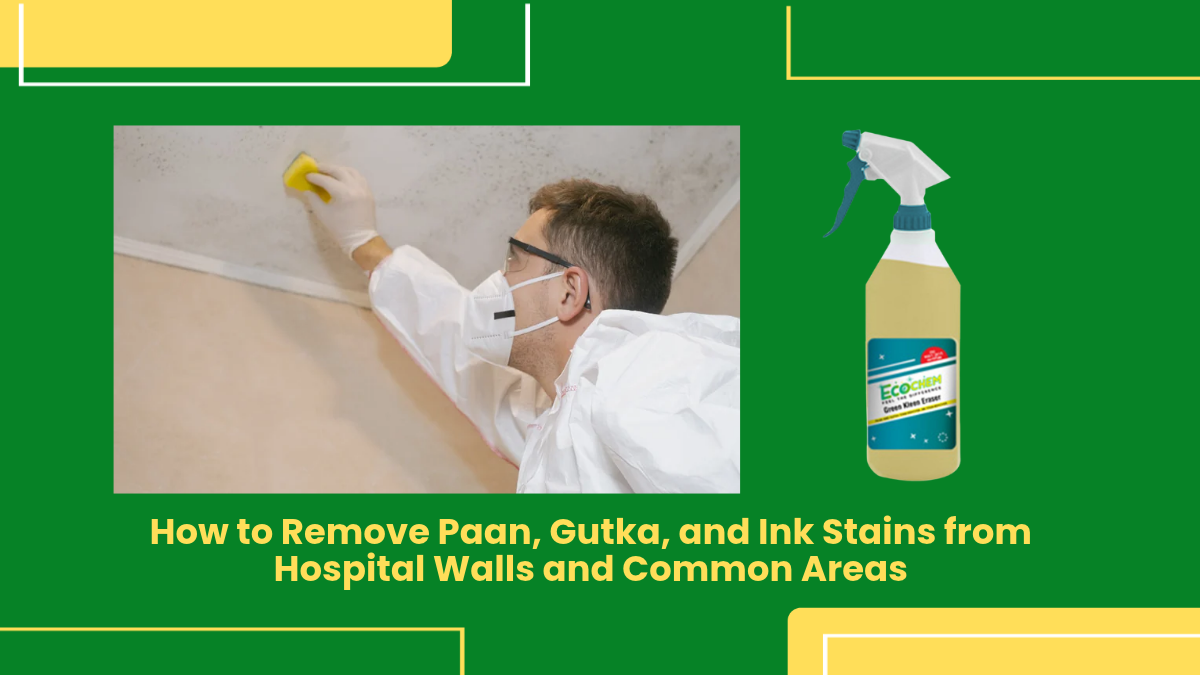
Paan, gutka, and ink stains can make hospital corridors, waiting areas, staircases, and other common spaces look poorly maintained. Removing them requires a suitable stain remover for hospitals, a surface-compatible cleaning method and proper staff precautions. The correct approach is to identify the stain, check the wall finish, follow the chemical instructions, and clean the area without disrupting patient care.
Hospital wall cleaning also needs to follow infection-control procedures. Removing a visible stain does not automatically disinfect the surface.
2. Why Are Paan, Gutka and Ink Stains Difficult to Remove?
These stains can penetrate porous or damaged surfaces and become harder to remove when left untreated.
Common locations include:
- Corridor and staircase walls
- Waiting areas and visitor zones
- Staircase corners and building entrances
- Washroom walls and nearby common areas
- Painted walls around notice boards and public spaces
Paan and gutka stains: These often leave visible reddish or brown marks that may spread when wiped without the right technique.
Ink stains: Marker pens, ballpoint pens and other writing materials can leave marks that are difficult to remove from painted or porous walls.
Repeated staining: Cleaning the same area without addressing recurring misuse can increase maintenance work and damage the wall finish over time.
3. How to Choose a Stain Remover for Hospitals
Before selecting a cleaning chemical, facility managers should consider three important factors.
Check the wall surface
Hospital walls may have washable paint, emulsion paint, tiles, laminate or other finishes. A chemical that works on one surface may affect another.
Check the product instructions and test it on a small, hidden area before cleaning a visible section. Stop if the paint softens, fades or transfers onto the cleaning cloth.
Match the product to the stain
Choose a product whose stated applications include the stain you need to remove. A general-purpose cleaner may not be suitable for stubborn ink or paan marks.
Review handling instructions
Check the dilution ratio, application method, rinsing requirements and protective equipment instructions. Housekeeping staff should know how to handle the product before using it in patient or visitor areas.
4. Step-by-Step Method to Remove Wall Stains
Use the following procedure as a starting point, adapting it to the hospital’s cleaning SOP and the product label.
- Secure the area: Keep patients and visitors away from the cleaning activity. Display a warning sign if the work area creates a temporary hazard.
- Wear protective equipment: Use the gloves and other protective equipment required by the product instructions and hospital policy.
- Identify the stain: Check whether it is paan, gutka, ink or another type of mark.
- Check the surface: Test the cleaning solution on a small, inconspicuous area first.
- Apply the cleaner: Follow the manufacturer’s stated dilution and application instructions. Avoid creating spray mist in occupied patient-care areas.
- Allow the specified contact time: Do not leave the product on the wall longer than instructed.
- Remove the stain: Wipe or rinse using the method specified by the manufacturer.
- Inspect the wall: Check whether the stain has been removed and whether the paint or surface remains intact.
CDC guidance recommends cleaning walls in patient-care areas when visibly dusty or soiled. It also advises avoiding large-surface cleaning methods that create mists or aerosols in patient-care areas. CDC+1
5. How Eco-Green Kleen Eraser Can Help
Eco-Green Kleen Eraser is listed by Ecochem as a stain remover for paan, gutka, ink and paint marks. Its product page identifies industrial walls, grills and corners among its intended applications. Ecochem
The published product instructions specify:
- Dilution: 10 ml in 1 litre of water.
- Application: Spray directly onto the stain.
- Waiting time: 5–10 minutes.
- After application: Wash off with normal water.
- Precaution: Wear rubber gloves. The product page warns that direct handling with bare hands may cause itching. Ecochem
For hospitals, consider this product for the listed stain-removal requirements only after confirming compatibility with the particular wall finish. Follow the current product label and hospital cleaning procedures.
The product information does not establish hospital-grade disinfection performance. It should therefore be treated as a stain-removal option, not as a substitute for an approved disinfectant.
6. Safety and Prevention Tips
- Clean visible stains promptly before they become harder to remove.
- Use separate cleaning cloths for different areas according to hospital procedures.
- Avoid excessive scrubbing that can remove paint or damage wall finishes.
- Do not mix stain removers with bleach, disinfectants or other chemicals.
- Keep cleaning chemicals away from patients and unauthorised personnel.
- Follow the hospital’s infection-control procedure for any suspected biological contamination.
- Inspect frequently affected areas and include them in the housekeeping checklist.
7. Common Mistakes to Avoid
- Using the same chemical on painted walls, tiles and other surfaces without checking compatibility.
- Applying concentrated chemicals without following dilution instructions.
- Scrubbing aggressively and damaging the paint.
- Spraying chemicals in occupied patient-care areas without considering aerosol exposure.
- Assuming stain removal means the surface has been disinfected.
- Repeating cleaning without addressing recurring staining in common areas.
8. Frequently Asked Questions
Which stain remover is suitable for hospital walls?
Choose a product specifically intended for the stain type and compatible with the wall’s paint or surface finish.
How can paan stains be removed from painted walls?
Test a suitable stain remover on a hidden area, follow its instructions and gently clean the affected section.
Can gutka stains be removed from hospital corridors?
Yes, suitable stain removers may remove gutka marks, depending on the stain age and wall-surface compatibility.
Can ink stains be removed without damaging wall paint?
Often, but results depend on paint type and ink. Test first and avoid aggressive scrubbing.
Is Eco-Green Kleen Eraser suitable for hospital wall stains?
Its listed applications include paan, gutka, ink and paint stains on industrial walls. Confirm hospital surface compatibility before use.
Written By: Vinny Jain