Choosing a multipurpose cleaner for hospitals involves checking the type of surface, cleaning requirements, product instructions and the hygiene protocol for each area. Hospital reception areas, waiting rooms, corridors, and administrative offices need regular cleaning to remove dust, fingerprints, marks, and everyday dirt. A suitable multipurpose cleaner can support routine housekeeping, but it should not replace an approved disinfectant in areas where disinfection is required.
Why Do Hospital Common Areas Need Regular Cleaning?
Hospital common areas receive visitors, patients, attendants, and staff throughout the day. Frequent movement can lead to dust, footprints, stains and marks on floors, furniture and other surfaces.
Common cleaning challenges include:
- Dust accumulation: Dust collects on reception counters, furniture, window ledges and other horizontal surfaces.
- Frequent surface contact: Door handles, waiting-area chairs, counters and lift buttons are touched regularly.
- Footprints and stains: Corridors and waiting areas can develop visible marks due to continuous foot traffic.
- Different surface materials: Hospitals may have tiles, granite, glass, laminated furniture, and upholstery that require different cleaning methods.
- High visitor movement: Cleaning teams must maintain consistent standards without disrupting hospital activities.
Regular environmental cleaning is an important part of healthcare facility management. The CDC recommends setting cleaning procedures according to contamination risk, patient vulnerability and how frequently surfaces are touched.
How to Choose a Multipurpose Cleaner for Hospitals
Before selecting a cleaning chemical, consider these factors.
1. Identify the area and surface
A reception counter, tiled corridor and upholstered waiting-room chair do not necessarily need the same cleaning method. Identify the surface material and check whether the product is suitable for it.
2. Understand the cleaning requirement
Choose a product according to the type of dirt:
- Dust and everyday dirt on furniture and counters.
- Grease or fingerprints on suitable hard surfaces.
- Footprints and marks on compatible floors.
- General soil on noncritical housekeeping surfaces.
For blood or body-fluid spills, follow the hospital’s specific spill-management procedure rather than using a general multipurpose cleaner.
3. Check dilution and application instructions
A concentrated cleaning chemical should be measured according to the manufacturer’s instructions. Correct dilution helps maintain consistency and prevents unnecessary chemical use.
4. Separate cleaning from disinfection
Cleaning removes visible dirt and soil. Disinfection is a separate process intended to reduce or inactivate specified microorganisms. In patient-care areas and on high-touch surfaces, follow the hospital’s infection prevention and control protocol to determine when an approved disinfectant is required.
Practical Cleaning Procedure for Hospital Common Areas
A consistent housekeeping procedure helps staff cover surfaces systematically.
- Prepare the area: Place cleaning signs where needed and arrange the required cloths, mops and PPE.
- Remove loose dust and dirt: Use an appropriate method that does not spread dust into the surrounding area.
- Prepare the cleaning solution: Follow the product’s stated dilution and instructions.
- Clean surfaces: Wipe counters, furniture and other compatible hard surfaces using clean cloths.
- Clean floors last: Use the approved floor-cleaning method and keep the area safe from slip hazards.
- Disinfect where required: Use a hospital-approved disinfectant according to the relevant SOP and product label.
- Inspect the area: Check for missed marks, residue and wet floors before reopening the area.
The CDC recommends cleaning in a systematic order, moving from cleaner to dirtier areas and cleaning higher surfaces before floors. It also advises changing cloths when soiled and avoiding double-dipping used cloths into cleaning solutions.
Safety and Prevention Tips
Hospital housekeeping teams should follow these practices:
- Check product labels and safety data sheets before use.
- Confirm compatibility with tiles, granite, furniture finishes and other surfaces.
- Wear task-appropriate personal protective equipment.
- Never mix different cleaning chemicals.
- Use separate cleaning equipment for toilets, common areas and patient-care zones.
- Follow the hospital’s approved procedure for high-touch surfaces and spill management.
- Keep cleaning records and train staff on correct product application.
How Eco-Greener May Fit Hospital Common-Area Cleaning
Eco-Greener
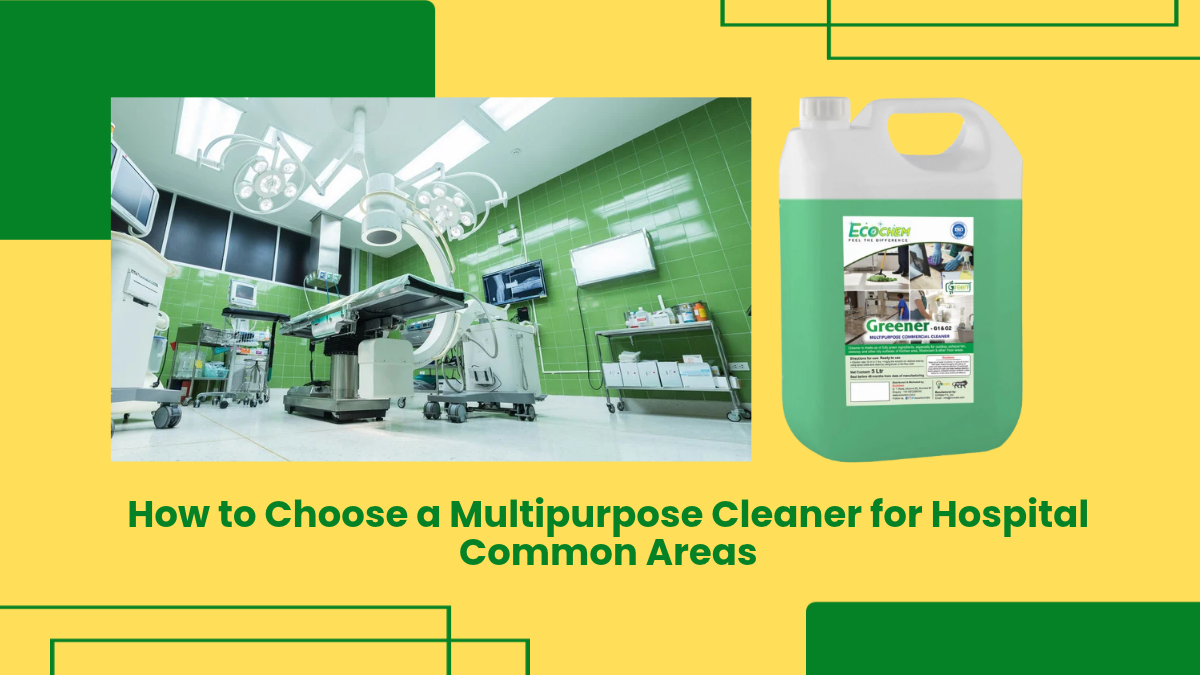
Ecochem describes Eco-Greener as an acid-free, water-based multipurpose cleaner for different cleaning applications. Its product page specifically lists hospitals and pharmaceutical facilities among its intended user sectors.
View Eco-Greener product details
The official product page provides these details:
- Product type: Multipurpose cleaner.
- Stated characteristics: Acid-free and water-based.
- Dilution ratio: 10 ml in 1 litre of water.
- Cleaning applications described: Removal of accumulated dirt and grease.
- Surfaces mentioned: Hard and soft surfaces, including tiles, granite, carpets and upholstery.
For hospital common areas, Eco-Greener may be evaluated for compatible routine cleaning tasks, subject to checking the surface material and the facility’s product approval process.
The product page does not provide sufficient evidence to establish hospital-grade disinfectant efficacy. Therefore, do not use it as a substitute for an approved disinfectant wherever infection-control procedures require disinfection.
Common Mistakes to Avoid
- Using one cleaning chemical on every surface without checking compatibility.
- Treating a multipurpose cleaner as a hospital disinfectant.
- Ignoring the recommended dilution.
- Reusing dirty cloths across different areas.
- Cleaning floors without warning signs.
- Applying general housekeeping procedures to specialised patient-care areas without approval.
Conclusion
Selecting a suitable multipurpose cleaner for hospitals requires attention to surface compatibility, cleaning requirements, dilution and healthcare hygiene procedures. Reception areas, corridors and waiting rooms need regular housekeeping, while patient-care areas require risk-based cleaning and disinfection protocols.
Ecochem’s Eco-Greener is a multipurpose cleaning option described for applications in hospitals and other facilities. Review its product specifications and confirm suitability with your housekeeping or infection-control team before introducing it into your cleaning schedule.
FAQ’S
What is a multipurpose cleaner used for in hospitals?
It helps remove everyday dirt, dust and grease from compatible surfaces in designated housekeeping areas.
Can multipurpose cleaners be used in hospital waiting rooms?
Yes, if the product is suitable for the surface and permitted under the hospital’s cleaning procedure.
Is a multipurpose cleaner the same as a hospital disinfectant?
No. A multipurpose cleaner removes soil; an approved disinfectant is required when microbial disinfection is specified.
What is the dilution ratio of Eco-Greener?
Ecochem lists 10 ml of Eco-Greener in 1 litre of water on its official product page.
Can Eco-Greener be used on tiles and granite?
Its product page mentions tiles and granite. Confirm compatibility and follow the manufacturer’s application instructions.
Written By: Vinny Jain