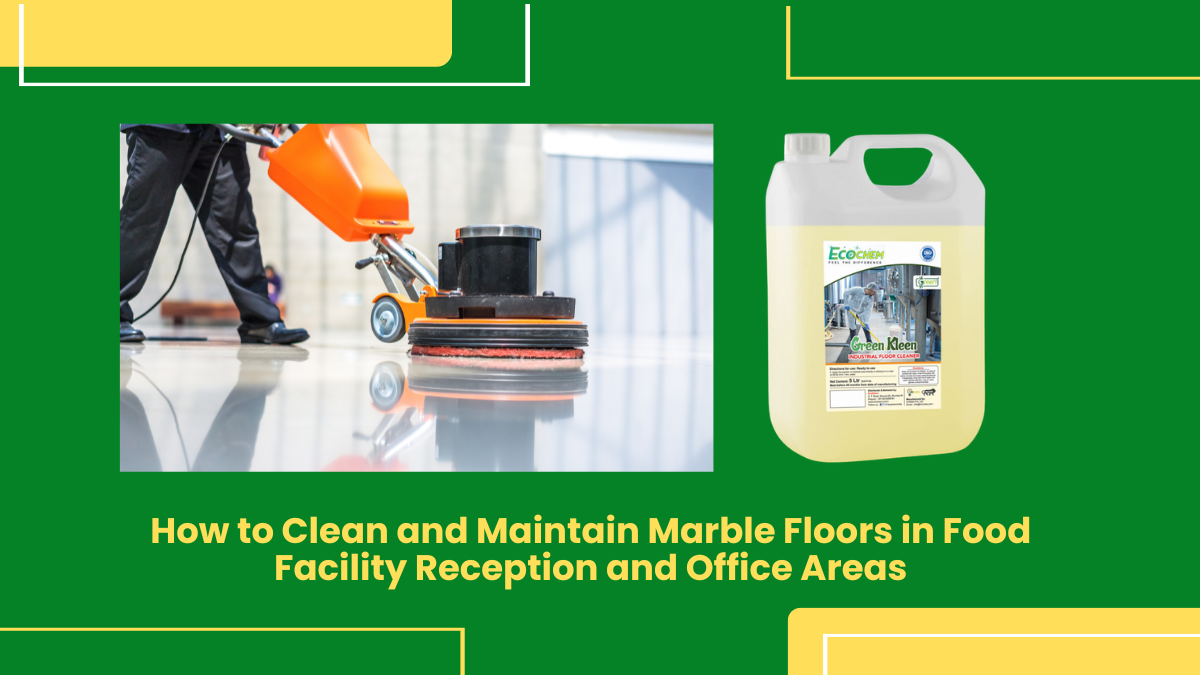
A marble floor care for food processing Facility should be selected according to the stone type, surface finish and cleaning requirements. Marble in reception areas, administrative offices and visitor corridors needs regular dust removal, prompt spill cleaning and a product suitable for natural stone. Avoid acidic cleaners and abrasive tools, which can dull or scratch marble.
Food processing facilities often focus on production hygiene, but reception and office floors also influence the appearance and upkeep of the premises. A consistent marble maintenance routine helps facility teams manage everyday dirt without using unsuitable chemicals.
Why Marble Floors Need Special Care
Marble is a natural stone that can react to acidic substances. Common office and reception spills—such as coffee, fruit juice or soft drinks—may dull the polished surface. Dirt and grit brought in through footwear can also scratch the floor when walked over or pushed around during cleaning.
Common maintenance challenges include:
- Foot traffic: Visitors and employees bring dust, sand and grit into the facility.
- Food and beverage spills: Coffee, tea and acidic drinks may stain or etch marble.
- Unsuitable cleaning chemicals: Acidic or abrasive products can damage the finish.
- Residue and streaks: Excess cleaner or dirty mop water may leave a visible film.
- Wet floors: Poor moisture control can create slip risks in busy reception areas.
How to Choose a Marble Floor Cleaner for Food Processing Facilities
1. Confirm the floor material and finish
Check whether the floor is natural marble and whether it has a polished or honed finish. Different stones and finishes may respond differently to cleaning products. If the material is uncertain, confirm it with the flooring supplier or maintenance contractor.
2. Choose a product intended for marble
Use a cleaner specifically designed for marble or confirmed as suitable for the stone. A general commercial floor cleaner may be appropriate for some surfaces but should not automatically be used on marble.
For routine care, natural stone guidance recommends mild or neutral cleaning products and following the product manufacturer’s instructions. Avoid vinegar, lemon-based cleaners and other acidic products. Natural Stone Institute guidance.
3. Check dilution and usage instructions
Review the cleaner’s label and technical information before use. Confirm the recommended dilution, application method, rinsing requirements and any precautions. Do not assume that a concentrated product should be used directly on the floor.
4. Consider the facility’s traffic level
Reception entrances and visitor corridors may need more frequent dust removal than offices with limited foot traffic. Place suitable entrance mats to reduce the amount of grit carried onto marble.
Step-by-Step Marble Floor Cleaning Procedure
A practical routine for reception and office areas can help prevent avoidable floor damage.
- Remove loose dirt: Sweep or dust-mop with a clean, soft tool before wet cleaning.
- Prepare the solution: Follow the cleaner’s specified dilution and use clean water.
- Damp-mop the floor: Avoid leaving excess water or allowing the cleaning solution to pool.
- Change dirty water: Replace the solution when it becomes visibly soiled to prevent spreading dirt.
- Address spills promptly: Blot liquids rather than spreading them across the floor. Follow an approved stone-care method for the spill.
- Rinse if instructed: Follow the product’s label, especially if residue may remain.
- Allow the floor to dry: Keep people away from wet areas and use the facility’s wet-floor signage procedure.
Marble Maintenance Chemicals: What to Avoid
The wrong product can damage the marble surface even when the floor looks clean afterwards.
| Avoid | Why it matters |
|---|---|
| Vinegar and lemon-based cleaners | Acidic products may etch or dull marble |
| Abrasive powders and scouring pads | They may scratch the surface |
| Unverified tile or washroom cleaners | They may not be suitable for natural stone |
| Excessive cleaner concentration | It can leave film or streaks |
| Dirty mop heads and water | They may redistribute soil across the floor |
For guidance on natural stone cleaning and common product risks, refer to the Natural Stone Institute’s care recommendations. <Cite refs={[“turn336152search0″,”turn336152search2”]} />
How Eco-Green Marble May Support Routine Floor Maintenance
Ecochem’s Eco-Green Marble is described on its product page as a marble maintenance cleaner intended for different types of marble. The page states that it has a neutral pH and lists a dilution ratio of 10 ml in 1 litre of water. <Cite refs={[“turn336152search1″,”turn336152search5”]} />
These are the product page’s stated details. Facility teams should check the current product label and confirm suitability for their specific marble, finish and cleaning procedure before use. The product should not be assumed to restore etched or scratched marble; surface restoration may require a qualified stone-care professional.
Explore Ecochem Eco-Green Marble
Prevention Tips for Facility Managers
- Place entrance mats where visitors and employees enter.
- Remove dust and grit regularly using suitable cleaning tools.
- Clean beverage spills as soon as they occur.
- Use a dedicated, clean mop for marble areas.
- Train housekeeping teams to identify marble and avoid unsuitable chemicals.
- Schedule periodic inspections for dull patches, scratches or recurring stains.
- Keep reception and office cleaning procedures separate from production-area hygiene procedures.
Conclusion
Maintaining marble floors in food facility reception and office areas depends on choosing a suitable marble floor cleaner for food processing facilities and following a consistent care routine. Regular dust removal, prompt spill response, correct dilution and avoiding acidic or abrasive products can help protect the stone’s appearance.
Ecochem’s Eco-Green Marble is listed for marble maintenance, with a stated neutral pH and dilution instructions. Explore the product or contact Ecochem to confirm its suitability for your facility’s marble flooring.
FAQ’S
What is a marble floor cleaner for food processing facilities?
It is a cleaner suitable for marble floors in facility areas such as reception spaces and offices, used according to product instructions.
Can vinegar be used to clean marble floors?
No. Vinegar is acidic and can etch or dull marble. Use a cleaner confirmed suitable for natural stone.
How often should marble floors in reception areas be cleaned?
Remove dust and grit frequently; damp-clean as needed based on foot traffic, spills and the facility’s maintenance schedule.
Is Eco-Green Marble suitable for marble office floors?
Ecochem describes it as a marble maintenance cleaner. Confirm the current label and suitability for the specific floor and finish.
How can marble floors be protected from scratches?
Use entrance mats, remove grit regularly, and avoid abrasive cleaning tools or dragging furniture across the floor.
Written By: Vinny Jain