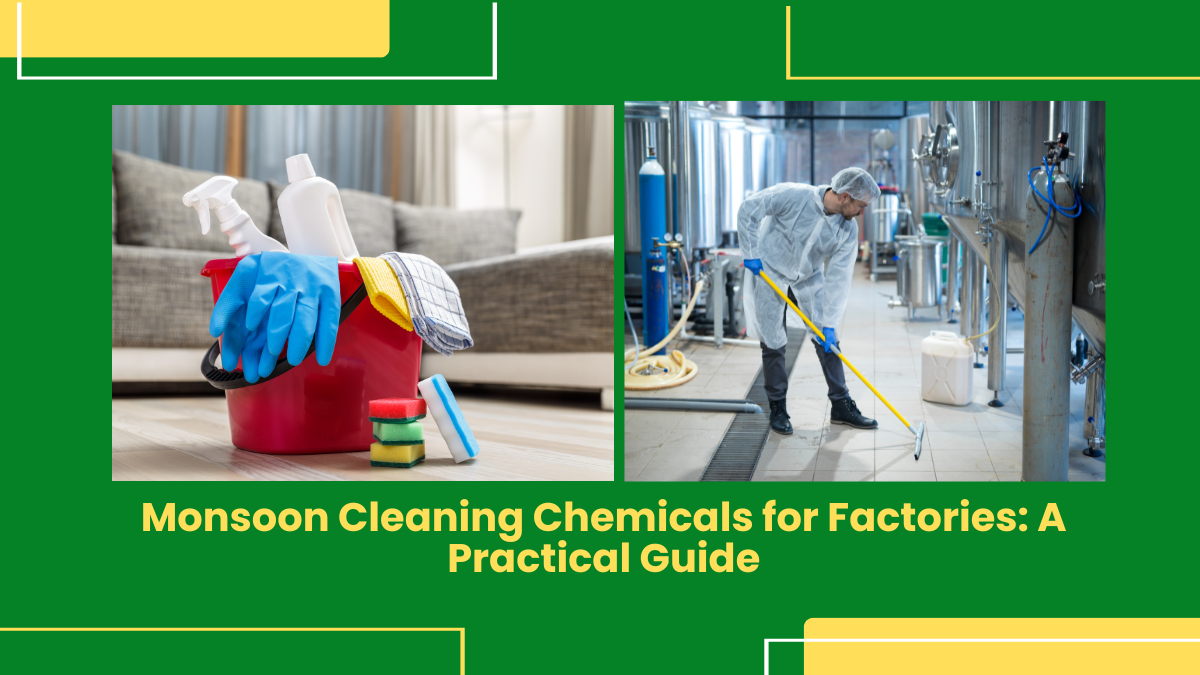
The monsoon season creates a different set of cleaning challenges for factories. Rainwater, mud, excess moisture, humidity, oil residues and stagnant water can quickly affect floors, machinery, production areas and employee safety. A cleaning routine that works during dry weather may not be enough during the rainy season.
For manufacturing facilities, choosing the right monsoon cleaning chemicals is not only about keeping surfaces clean. It is also about controlling moisture-related dirt, preventing slippery floors, protecting equipment and maintaining workplace hygiene.
The right approach combines suitable factory cleaning chemicals, regular cleaning schedules and proper application methods.
Why Monsoon Creates More Cleaning Problems in Factories
Rain increases the amount of moisture and outside dirt entering industrial premises. Vehicles and workers can carry mud, water and contaminants into production areas, warehouses and corridors.
Higher humidity can also make surfaces remain wet for longer. When moisture mixes with dust, oil or grease, it can create difficult-to-remove deposits.
Common monsoon cleaning problems include:
- Mud and dirt entering factory premises
- Slippery floors caused by water and oily residues
- Oil and grease sticking to wet surfaces
- Water stains on floors and metal surfaces
- Rust and corrosion on exposed metal
- Unpleasant odours in damp areas
- Moisture accumulation around drains and corners
- Increased cleaning requirements in high-traffic areas
- Greater risk of microbial contamination in wet environments
These problems can affect different parts of a manufacturing facility at the same time. For example, a wet entrance may create a slip hazard, while moisture around machinery can contribute to corrosion.
This makes industrial cleaning during monsoon a planned maintenance activity rather than an occasional cleaning task.
Which Industries Need Monsoon Cleaning Chemicals?
Although every industrial facility experiences some impact from rain, the cleaning requirements vary according to the type of operation.
Manufacturing Plants
Manufacturing facilities often deal with oil, grease, metal particles, dust and heavy foot or vehicle traffic. During monsoon, water can combine with these contaminants and create stubborn deposits.
Factories may need:
- Heavy-duty degreasers for machinery and oily surfaces
- Floor cleaners for production and movement areas
- Metal cleaners for equipment and tools
- Multipurpose cleaners for general surfaces
The chemical should be selected according to the contaminant and surface rather than using one cleaner for every application.
Food Processing Facilities
Food manufacturing and processing areas require a more controlled hygiene programme. Moisture management becomes particularly important because standing water and poor sanitation can create hygiene concerns.
FSSAI’s hygiene requirements for food businesses include documented food safety management systems and good hygiene and manufacturing practices. Its hygiene assessment criteria also address cleaning schedules, sanitation, prevention of stagnant water, pest control and waste removal.
For these facilities, monsoon cleaning should cover:
- Production floors
- Processing equipment
- Drains and surrounding areas
- Storage zones
- Food-contact and non-food-contact surfaces according to the applicable procedure
- Staff and material movement areas
Cleaning chemicals should always be selected according to the surface, contamination type and applicable food-safety requirements.
Pharmaceutical and Healthcare Facilities
Pharmaceutical manufacturing and healthcare environments require controlled cleaning practices. Moisture, dust and contamination should be managed through documented cleaning procedures.
The cleaning programme should define:
- Which areas require cleaning
- Which chemical is suitable for each surface
- Dilution requirements
- Cleaning frequency
- Contact or dwell time where applicable
- PPE requirements
- Storage and handling procedures
Warehouses and Commercial Facilities
Warehouses, offices and commercial buildings also experience increased dirt during the rainy season. Entrance areas, loading zones, corridors and washrooms often require more frequent cleaning.
In these areas, floor and multipurpose cleaners can be used as part of a scheduled housekeeping programme.
What Types of Monsoon Cleaning Chemicals Do Factories Need?
There is no single chemical that is suitable for every monsoon cleaning problem. A better approach is to match the chemical with the type of contamination.
1. Industrial Degreasers
Oil and grease become more difficult to manage when mixed with water, dust and mud.
An industrial degreaser can be used for the following:
- Machinery surfaces
- Industrial floors
- Equipment exteriors
- Maintenance areas
- Oily tools and components
Ecochem’s Eco Green Kleen HDD is a water-based heavy-duty industrial cleaner designed for oil, grease and stubborn grime on floors, metals and machine surfaces. The product information lists applications including stainless steel, aluminium, industrial floors and hard equipment areas.
Always check the product label and manufacturer’s instructions before applying a degreaser to a new surface.
2. Industrial Floor Cleaners
Wet factory floors are a major concern during the monsoon. Mud, water, oil and dust can create a slippery layer that ordinary cleaning may not remove effectively.
A suitable industrial floor cleaner can help maintain:
- Production floors
- Factory corridors
- Warehouse floors
- Entry areas
- Utility areas
- High-traffic zones
Ecochem’s Eco-Green Flo is positioned for floor cleaning across industrial and commercial environments and is listed for use on surfaces such as ceramic floors, tiles and marble.
The cleaning method should still consider the floor material and manufacturer’s maintenance instructions.
3. Metal Cleaning Chemicals
Moisture is a major concern for exposed metal surfaces during the monsoon. Water and humidity can accelerate corrosion where protective conditions are poor.
Metal cleaning chemicals can help remove:
- Rust stains
- Water stains
- Dirt deposits
- Surface contamination
Ecochem’s Eco-Met Tap Shinner is a water-based metal cleaning product intended for heavy metals and tools and is positioned for removing rust and hard-water stains.
For valuable machinery or sensitive metal surfaces, conduct a small compatibility test before full-scale application.
4. Multipurpose Cleaners
Not every factory surface requires a heavy-duty chemical. Offices, doors, walls, workstations and general hard surfaces may need a suitable multipurpose cleaner.
Using the correct product for lighter contamination can help avoid unnecessarily aggressive cleaning methods.
How to Use Cleaning Chemicals During the Monsoon
Choosing the right chemical is only one part of the process. Application also affects cleaning results and workplace safety.
Step 1: Remove Loose Dirt First
Sweep or remove mud, leaves, dust and loose particles before applying a liquid cleaner.
This reduces the amount of contamination that the chemical has to handle.
Step 2: Identify the Contamination
Determine whether the surface contains:
- Mud
- Oil
- Grease
- Rust
- Water stains
- General dirt
- Organic residue
Then select the appropriate chemical.
Step 3: Follow the Correct Dilution
Do not assume that using more chemical will produce better cleaning.
Follow the manufacturer’s recommended dilution ratio and application instructions. Incorrect dilution can reduce cleaning performance or increase the risk of surface damage.
Step 4: Allow the Surface to Dry
After cleaning, remove excess water where practical and allow the area to dry.
Particular attention should be given to:
- Walkways
- Production floors
- Machine bases
- Corners
- Drain areas
- Loading and unloading zones
Step 5: Increase Cleaning Frequency Where Needed
Not every area needs the same cleaning frequency.
Entrance areas and loading zones may need cleaning several times during a shift, while low-traffic areas may follow a different schedule.
Monsoon Hygiene Checklist for Factories
A simple seasonal checklist can help facility managers identify problems before they become recurring maintenance issues.
Daily
- Check entrances for mud and standing water
- Clean high-traffic floors
- Inspect oily areas
- Check drains and water collection points
- Remove waste and wet debris
- Inspect machinery for moisture accumulation
Weekly
- Deep-clean production floors
- Clean difficult-to-reach corners
- Inspect metal equipment for rust or water stains
- Clean loading and storage areas
- Review chemical consumption
Monthly
- Review the monsoon cleaning schedule
- Check whether the selected chemicals are suitable for each application
- Inspect equipment and storage areas
- Review recurring stains and contamination
- Train cleaning staff on dilution and safe handling
How to Choose the Right Factory Cleaning Chemicals
Before purchasing monsoon cleaning chemicals, facility managers should evaluate more than price.
Consider the Surface
A chemical suitable for concrete may not be appropriate for aluminium, stainless steel, painted surfaces or sensitive flooring.
Identify the Contaminant
Select the chemical according to the actual cleaning problem. Grease, rust, mud and general dust require different approaches.
Check Dilution and Coverage
Compare products based on their recommended dilution, application method and expected coverage rather than comparing only the container price.
Review Safety Information
Check the product label, safety instructions, storage requirements and PPE recommendations before introducing a chemical into the facility.
Consider Environmental Requirements
Factories looking to reduce the environmental impact of their cleaning programme can consider suitable biodegradable, bio-based or plant-based formulations where they meet the required cleaning performance and application requirements.
Look for Industry-Specific Support
A cleaning chemical supplier should be able to understand your application and recommend the appropriate product, dilution and cleaning method rather than simply offering a general-purpose chemical.
Why Choose Ecochem for Monsoon Factory Cleaning?
Ecochem manufactures cleaning chemicals for industrial and commercial applications, with product categories covering floor cleaning, industrial degreasing, metal cleaning, glass cleaning and general housekeeping. Its current product range includes Eco Green Kleen HDD for heavy-duty industrial cleaning, Eco-Green Flo for floor cleaning and Eco-Met Tap Shinner for metal and tool cleaning.
For factories, the practical advantage is the ability to select cleaning products according to the specific surface and contamination rather than applying the same chemical throughout the facility.
Ecochem also provides business-focused cleaning solutions for industrial/manufacturing and commercial environments.
If your facility has different cleaning requirements across production, maintenance, warehouse and office areas, discuss the application with the supplier before finalising the chemical.
Final Takeaway
Monsoon cleaning in a factory requires more than increasing the amount of cleaning. Rain, humidity, mud, oil, standing water and corrosion can affect different areas of a facility in different ways.
A practical monsoon hygiene programme should connect each cleaning problem with the right chemical and application method.
Use industrial degreasers for suitable oil and grease contamination, floor cleaners for factory floors, metal cleaners for rust and water stains, and multipurpose cleaners for general surfaces. Combine these products with proper dilution, regular inspections, dry-area management and staff training.
The goal is simple: keep production areas, equipment, floors and common spaces clean and safe throughout the rainy season while using cleaning chemicals responsibly.
For factories looking for suitable factory cleaning chemicals, Ecochem offers industrial and commercial cleaning solutions that can be selected according to surface, contamination and application requirements.
FAQ’S
What are monsoon cleaning chemicals?
Monsoon cleaning chemicals are cleaning products selected for problems that become more common during the rainy season, such as mud, grease, water stains, slippery floors, rust and moisture-related contamination.
Which chemicals are used for factory cleaning during monsoon?
Factories may require different products for different problems, including industrial degreasers for oil and grease, floor cleaners for wet and high-traffic areas, metal cleaners for rust and water stains, and multipurpose cleaners for general surfaces.
Why does factory cleaning become more difficult during monsoon?
Rainwater, mud, humidity and increased moisture can mix with oil, dust and other contaminants. This can create slippery surfaces, stubborn deposits, odours and corrosion-related problems.
How often should factories be cleaned during monsoon?
There is no single frequency for every factory. High-traffic entrances, loading areas and production floors may need more frequent cleaning than low-traffic areas. The schedule should be based on contamination, foot traffic, production activity and hygiene requirements.
How should a factory choose cleaning chemicals?
Start by identifying the surface and type of contamination. Then check chemical compatibility, dilution requirements, safety information, application method and environmental requirements before purchasing.
Written By: Vinny Jain