Cleanliness is essential across every industry, but the cleaning requirements of a food processing plant are not the same as those of a manufacturing factory or a hospital. Each environment faces unique challenges, including grease, dust, bacteria, chemical residues, oils, production waste, and high-touch surfaces. Using the wrong cleaning chemical can lead to poor cleaning results, equipment damage, product contamination, and safety risks.
This is why businesses need cleaning chemicals used in different industries that are specifically designed for their applications. Selecting the right industrial cleaning chemicals not only improves hygiene but also supports equipment performance, employee safety, regulatory compliance, and operational efficiency.
This guide compares the most common cleaning chemicals by industry, explains where they are used, highlights common cleaning challenges, and provides practical tips for choosing the right industrial cleaning solutions.
Why Different Industries Need Different Cleaning Chemicals
No single cleaning product is suitable for every industrial environment.
For example:
- A heavy-duty degreaser used in an engineering workshop may not be appropriate for a food processing line.
- Hospital cleaning requires disinfectants that help reduce harmful microorganisms.
- Pharmaceutical facilities demand controlled cleaning processes to minimise contamination risks.
- Commercial buildings focus on appearance, hygiene, and daily housekeeping.
Choosing industry-specific cleaning products improves cleaning effectiveness while protecting surfaces, machinery, and employees.
Common Problems Caused by Using the Wrong Cleaning Chemicals
Many facilities use general-purpose cleaners for every cleaning task. While this may seem convenient, it often creates larger problems.
Common issues include:
- Incomplete grease removal
- Product contamination
- Surface damage
- Equipment corrosion
- Higher chemical consumption
- Poor workplace hygiene
- Increased maintenance costs
- Audit and compliance challenges
Using appropriate industrial hygiene chemicals helps avoid these issues.
Cleaning Chemicals Used in Manufacturing Industries
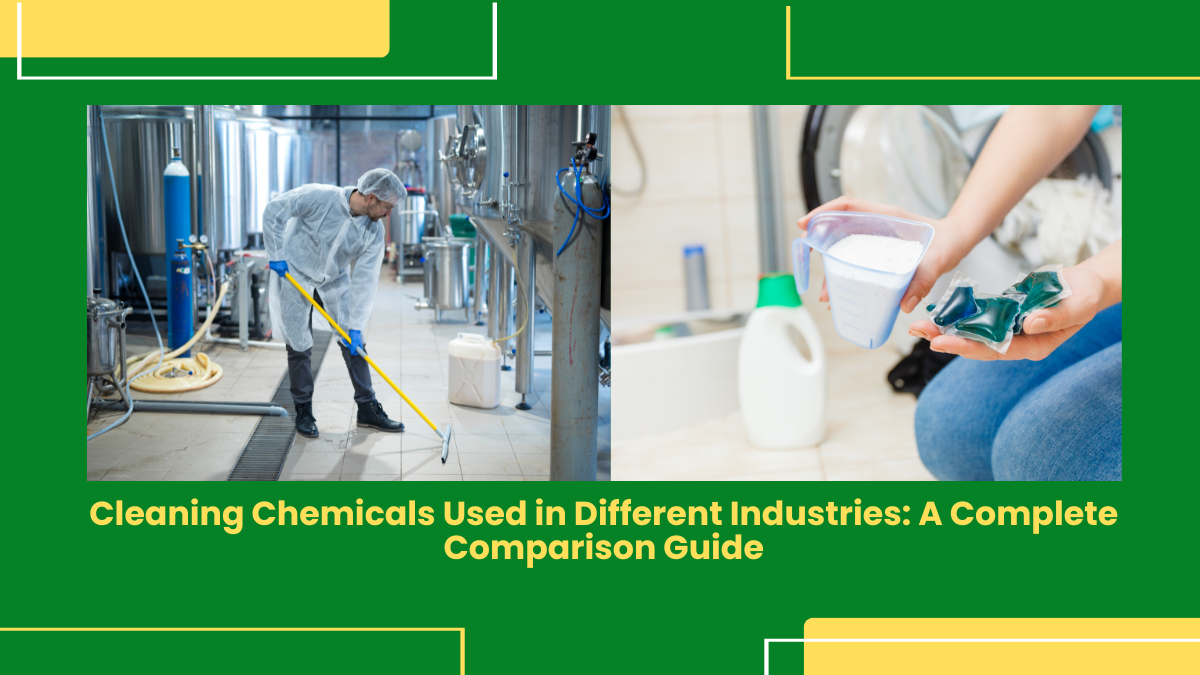
Manufacturing facilities generate grease, oil, dust, metal particles, coolants, and production residues.
These contaminants require durable manufacturing cleaning chemicals that can clean machinery and production areas without affecting equipment performance.
Common Manufacturing Cleaning Chemicals
- Heavy-duty industrial degreasers
- Multi-purpose industrial cleaners
- Neutral floor cleaners
- Machine cleaning chemicals
- Rust removers
- Glass cleaners
- Hand cleaning products for workers
Typical Applications
- Production lines
- CNC machines
- Assembly areas
- Engineering workshops
- Warehouses
- Factory floors
Common Challenges
- Oil buildup
- Dust accumulation
- Hydraulic fluid leaks
- Metal shavings
- Dirty production equipment
Recommended Cleaning Approach
- Daily floor cleaning
- Routine machine degreasing
- Scheduled preventive cleaning
- Immediate spill removal
Food Processing Cleaning Chemicals
Food manufacturing requires higher hygiene standards than most industries.
Cleaning products must remove grease, food residues, proteins, sugars, and microorganisms while helping businesses maintain food safety requirements.
Common Food Processing Cleaning Chemicals
- Food-safe degreasers
- Alkaline cleaners
- Surface sanitizers
- Floor cleaners
- Equipment cleaning chemicals
- Drain cleaners
- Hand hygiene products
Areas of Application
- Processing lines
- Food preparation equipment
- Packaging sections
- Cold storage
- Washrooms
- Employee hygiene stations
Common Challenges
- Cross-contamination
- Bacterial growth
- Grease accumulation
- Organic residue
- Pest attraction
Best Practices
- Clean equipment after production.
- Follow documented sanitation schedules.
- Use food-safe cleaning products.
- Maintain proper chemical dilution.
Hospital Cleaning Chemicals
Healthcare facilities require consistent cleaning to support infection prevention and patient safety.
Unlike industrial factories, hospitals focus heavily on reducing microorganisms on high-touch surfaces.
Common Hospital Cleaning Chemicals
- Surface disinfectants
- Floor cleaners
- Toilet cleaners
- Glass cleaners
- Multi-purpose cleaners
- Hand wash solutions
- Sanitizers
Areas of Application
- Patient rooms
- Operation theatres
- Waiting areas
- Washrooms
- Laboratories
- Reception areas
Common Challenges
- Cross-infection
- Blood and body fluid contamination
- High-touch surfaces
- Continuous foot traffic
Best Practices
- Clean high-touch areas multiple times daily.
- Follow separate cleaning procedures for critical zones.
- Replace cleaning tools regularly.
- Train housekeeping staff on infection control procedures.
Pharmaceutical Cleaning Chemicals
Pharmaceutical manufacturing demands strict hygiene controls to protect products from contamination.
Cleaning processes often form part of Good Manufacturing Practices (GMP).
Common Pharmaceutical Cleaning Chemicals
- Equipment cleaners
- Surface disinfectants
- Neutral cleaners
- Floor cleaning chemicals
- Glass cleaners
- Hand hygiene products
Cleaning Areas
- Cleanrooms
- Manufacturing equipment
- Packaging rooms
- Quality control laboratories
- Storage areas
Common Challenges
- Product contamination
- Chemical residues
- Dust particles
- Regulatory compliance
Best Practices
- Document every cleaning activity.
- Validate cleaning procedures.
- Follow approved Standard Operating Procedures (SOPs).
- Schedule routine inspections.
Commercial Cleaning Chemicals
Commercial buildings require cleaning solutions that support employee health and maintain a professional appearance.
Common Commercial Cleaning Chemicals
- Floor cleaners
- Glass cleaners
- Toilet cleaners
- Multi-purpose cleaners
- Carpet cleaners
- Air fresheners
- Hand hygiene products
Areas of Application
- Offices
- Reception areas
- Conference rooms
- Washrooms
- Cafeterias
- Elevators
Common Challenges
- Dust
- Fingerprints
- Food spills
- Washroom hygiene
- High visitor traffic
Best Practices
- Clean common areas daily.
- Maintain washroom hygiene throughout the day.
- Use separate cleaning tools for different zones.
- Schedule deep cleaning periodically.
Housekeeping Chemicals for Industrial and Commercial Facilities
Every facility requires routine housekeeping to maintain cleanliness beyond production areas.
Common housekeeping chemicals include:
- Floor cleaners
- Toilet cleaners
- Glass cleaners
- Multi-purpose cleaners
- Air fresheners
- Liquid hand wash
- Dishwashing liquids
- Surface cleaners
These products help maintain offices, employee facilities, cafeterias, reception areas, and administrative buildings.
How to Select the Right Industrial Cleaning Chemicals
Choosing suitable industrial cleaning chemicals involves more than selecting the strongest product available.
Consider the following factors:
Type of Contamination
Different contaminants require different cleaning solutions.
Examples include:
- Oil → Industrial Degreaser
- Food residue → Food-safe cleaner
- Dust → Neutral cleaner
- Washrooms → Toilet cleaner
- Glass → Glass cleaner
Surface Compatibility
Ensure the product is suitable for:
- Stainless steel
- Aluminum
- Plastic
- Painted surfaces
- Concrete floors
- Ceramic tiles
Incorrect chemicals may damage equipment or flooring.
Safety Requirements
Review:
- Chemical labels
- Safety Data Sheets (SDS)
- Recommended PPE
- Storage requirements
Employee safety should always be part of the cleaning program.
Compliance Requirements
Industries such as food processing and pharmaceuticals often require documented cleaning procedures and approved chemicals.
Choose products that support your industry’s hygiene standards.
Prevention Tips for Better Industrial Hygiene
Preventive cleaning reduces contamination, improves equipment life, and lowers maintenance costs.
Follow these practices:
Develop Industry-Specific Cleaning SOPs
Every department should have documented cleaning procedures based on operational requirements.
Train Employees
Teach workers:
- Correct chemical usage
- Dilution methods
- PPE requirements
- Spill response procedures
Proper training reduces chemical waste and improves cleaning quality.
Use Recommended Dilution Ratios
Overusing chemicals increases costs without improving cleaning performance.
Measure chemicals accurately before use.
Follow a Cleaning Schedule
Daily, weekly, and monthly cleaning routines help prevent heavy contamination and reduce downtime.
Inspect Cleaning Results
Conduct regular inspections to ensure cleaning standards are maintained across all departments.
How Ecochem Supports Different Industries
Every industry has unique cleaning requirements, and using the right products is essential for achieving consistent hygiene standards. Ecochem manufactures a wide range of industrial cleaning chemicals designed to meet the needs of manufacturing plants, food processing facilities, pharmaceutical industries, hospitals, educational institutions, commercial buildings, hospitality businesses, and other industrial sectors.
Ecochem’s product portfolio includes:
- Heavy-duty industrial degreasers
- Food processing cleaning chemicals
- Floor cleaning solutions
- Multi-purpose cleaners
- Washroom cleaning products
- Glass cleaners
- Industrial disinfectants
- Hand hygiene products
- Speciality industrial cleaning solutions
By providing cleaning chemicals used in different industries, Ecochem helps businesses maintain cleaner workplaces, protect equipment, improve employee safety, and support industry-specific hygiene requirements.
FAQ’S
What are industrial cleaning chemicals?
Industrial cleaning chemicals are specialized products used to remove grease, oil, dust, stains, bacteria, and production residues from industrial and commercial environments.
Which cleaning chemicals are commonly used in manufacturing plants?
Manufacturing facilities typically use industrial degreasers, floor cleaners, multi-purpose cleaners, machine cleaning chemicals, rust removers, and hand cleaning products.
What cleaning chemicals are suitable for food processing facilities?
Food processing facilities commonly use food-safe degreasers, alkaline cleaners, sanitizers, floor cleaners, and hand hygiene products designed for food production environments.
Why are disinfectants important in hospitals?
Disinfectants help reduce microorganisms on frequently touched surfaces, supporting infection prevention and maintaining hygienic healthcare environments.
How can businesses choose the right cleaning chemicals?
Consider the type of contamination, surface material, industry regulations, safety requirements, and recommended application before selecting cleaning products.
Written By: Vinny Jain