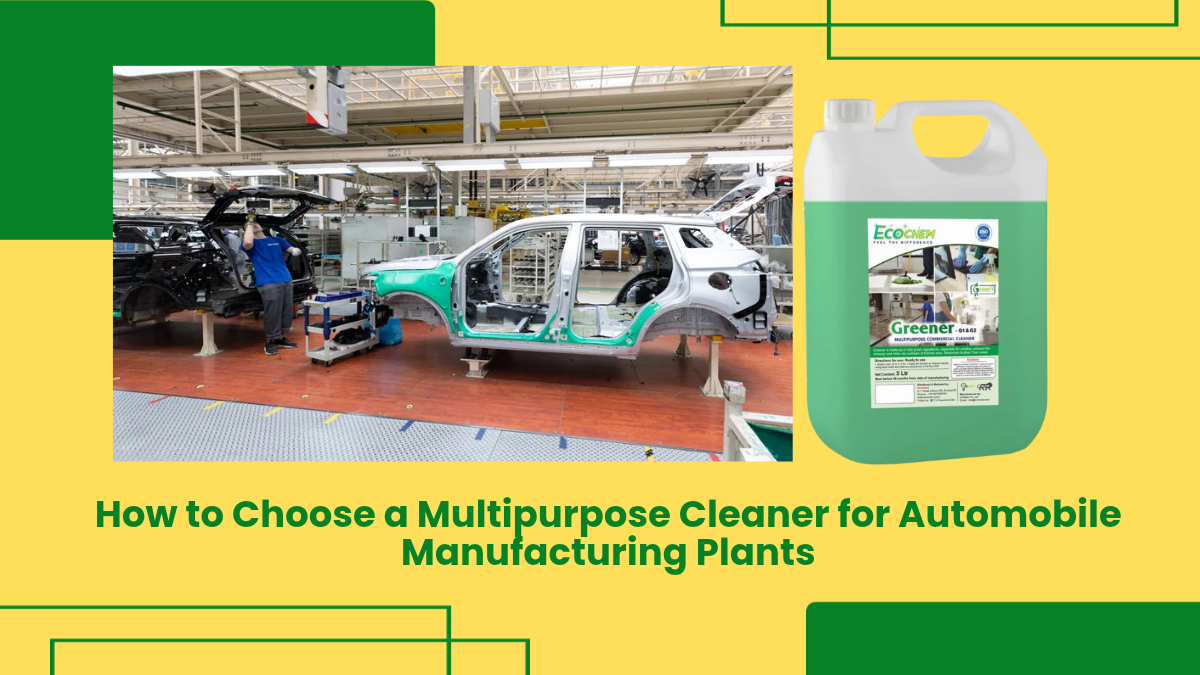
Choosing a multipurpose cleaner for the automobile industry starts with identifying the surface, type of dirt, and cleaning requirements. Automobile manufacturing plants need regular cleaning in assembly areas, inspection zones, offices, corridors, floors, and other shared spaces. A suitable multipurpose cleaner can support routine cleaning of approved surfaces by removing general dirt and accumulated grime.
However, one cleaner should not automatically be used on every vehicle component, machine, electrical unit, or production surface. Facility managers should check product instructions, material compatibility, and the plant’s cleaning procedures before selecting a chemical.
Common Cleaning Challenges in Automobile Manufacturing Plants
Automobile plants handle metal components, plastic parts, painted panels, lubricants, dust and packaging materials. Different production and support areas therefore have different cleaning requirements.
Common challenges include:
- Dust and loose particles: Assembly areas, storage spaces and walkways collect dust from daily operations.
- General surface dirt: Workstations, cabinets, walls and common-use surfaces accumulate fingerprints and everyday grime.
- Oil and grease: Machinery and maintenance areas may develop lubricant and grease deposits that require a dedicated degreaser.
- Paint and coating sensitivity: Painted panels and finished components can be affected by unsuitable chemicals.
- Mixed surface materials: Plants contain tiles, granite, plastics, metals, coated surfaces and other materials that may respond differently to cleaning products.
The first step is to separate routine housekeeping from specialised production-equipment cleaning. A general-purpose cleaner may suit some housekeeping tasks, while heavy oil, grease, paint or process residues may need a product designed specifically for that contamination.
How to Choose a Multipurpose Cleaner for the Automobile Industry
Before purchasing a cleaning chemical, assess the following factors.
1. Identify the cleaning area
List the surfaces and areas where routine cleaning is required. These may include:
- Administrative offices and reception areas
- Employee common areas and corridors
- Suitable floors and wall surfaces
- General workstations and housekeeping surfaces
- Selected maintenance-area surfaces, subject to approval
Do not assume a cleaner suitable for office surfaces is also suitable for vehicle bodies, precision components or production machinery.
2. Match the cleaner to the type of dirt
A multipurpose cleaner is generally intended for routine dirt and soil on compatible surfaces. Heavy industrial grease, machining oil, paint residue and specialised process contamination may require a dedicated cleaning product.
| Cleaning requirement | Product selection consideration |
|---|---|
| Dust and everyday dirt | Suitable routine surface cleaner |
| General grime on approved surfaces | Multipurpose cleaner |
| Heavy oil and grease | Check for a suitable industrial degreaser |
| Paint or coating residue | Use a product specifically approved for the material |
| Electrical components | Follow equipment manufacturer instructions; avoid unapproved liquid cleaners |
This distinction helps prevent the wrong chemical from being used for a specialised cleaning task.
3. Check surface compatibility
Automobile plants use a range of materials, including painted metal, stainless steel, aluminium, plastics, glass, tiles and coated surfaces.
Before introducing a cleaner, review its product instructions and confirm compatibility with the intended material. Where appropriate, test a small, inconspicuous area first. Keep cleaning liquids away from electrical connections, sensors and sensitive equipment unless the manufacturer specifically approves the application.
4. Review dilution and safety instructions
Concentrated cleaning chemicals must be prepared according to the manufacturer’s specified dilution. Also check the application method, rinsing requirements, storage instructions, and safety information.
Housekeeping teams should have access to the relevant product label and Safety Data Sheet (SDS). Train staff to measure solutions correctly, use required personal protective equipment, and avoid mixing cleaning chemicals.
Practical Cleaning Procedure for Automobile Plants
A standard routine helps housekeeping teams clean consistently without interfering with production.
- Identify the area: Confirm the surface, contamination and approved cleaning method.
- Coordinate with production: Clean production areas only when access is authorised and equipment is in a safe condition.
- Remove loose dirt: Use an appropriate dry-cleaning method before applying a liquid cleaner.
- Prepare the solution: Follow the product’s stated dilution and preparation instructions.
- Apply correctly: Use approved cloths, mops or other cleaning tools. Avoid spraying near electrical equipment.
- Inspect the surface: Check for remaining dirt, streaks or unwanted residue.
- Record the activity: Update the housekeeping checklist and report any surface damage or maintenance concern.
How Eco-Greener May Support Routine Automobile Plant Cleaning
Eco-Greener is described on its official product page as an acid-free, water-based multipurpose cleaning agent for different areas and spaces. The page states a dilution ratio of 10 ml in 1 litre of water and describes its use for removing accumulated dirt and grease. It also mentions applications on hard and soft surfaces, including tiles, granite, carpets and upholstery. Ecochem
Automobile manufacturers may evaluate Eco-Greener for suitable routine housekeeping tasks on compatible surfaces. Its use on painted vehicle panels, production machinery, electrical equipment, precision components or specialised automotive materials should not be assumed. Confirm the intended application and material compatibility with Ecochem before use.
Explore the Eco-Greener Multipurpose Cleaner product page for the available product information.
Common Mistakes to Avoid
- Using a multipurpose cleaner for heavy industrial degreasing without checking suitability.
- Applying one chemical to every surface in the plant.
- Using general cleaners on painted panels or precision components without approval.
- Ignoring dilution, rinsing and safety instructions.
- Cleaning around operating machinery without proper authorisation.
- Mixing different cleaning chemicals.
- Failing to train housekeeping staff or maintain cleaning records.
Conclusion
Selecting a multipurpose cleaner for the automobile industry requires a clear understanding of the cleaning area, surface material and type of contamination. A routine cleaner can support general housekeeping, but specialised grease, paint and machinery-cleaning tasks may need dedicated products.
Ecochem’s Eco-Greener is an acid-free, water-based multipurpose cleaner with a stated dilution ratio of 10 ml per litre of water. Automobile manufacturing facilities can review its product details and contact Ecochem to confirm whether it is suitable for their specific housekeeping applications.
Frequently Asked Questions
What is a multipurpose cleaner used for in automobile manufacturing plants?
It supports routine cleaning of compatible surfaces, including workstations, common areas, floors, and other approved housekeeping areas.
Can a multipurpose cleaner remove heavy grease from automotive machinery?
Not necessarily. Heavy oil and grease may require a dedicated industrial degreaser designed for the specific contamination.
Can Eco-Greener be used on painted automobile parts?
Do not assume compatibility. Confirm suitability with Ecochem and test according to the manufacturer’s instructions before application.
What is the dilution ratio of Eco-Greener?
Ecochem lists 10 ml in 1 litre of water. Always check the current product instructions before preparing a solution.
What should automobile plants check before buying cleaning chemicals?
Assess the surface material, type of dirt, product dilution, safety information, application method and compatibility with the facility’s cleaning procedure.
Written By: Vinny Jain