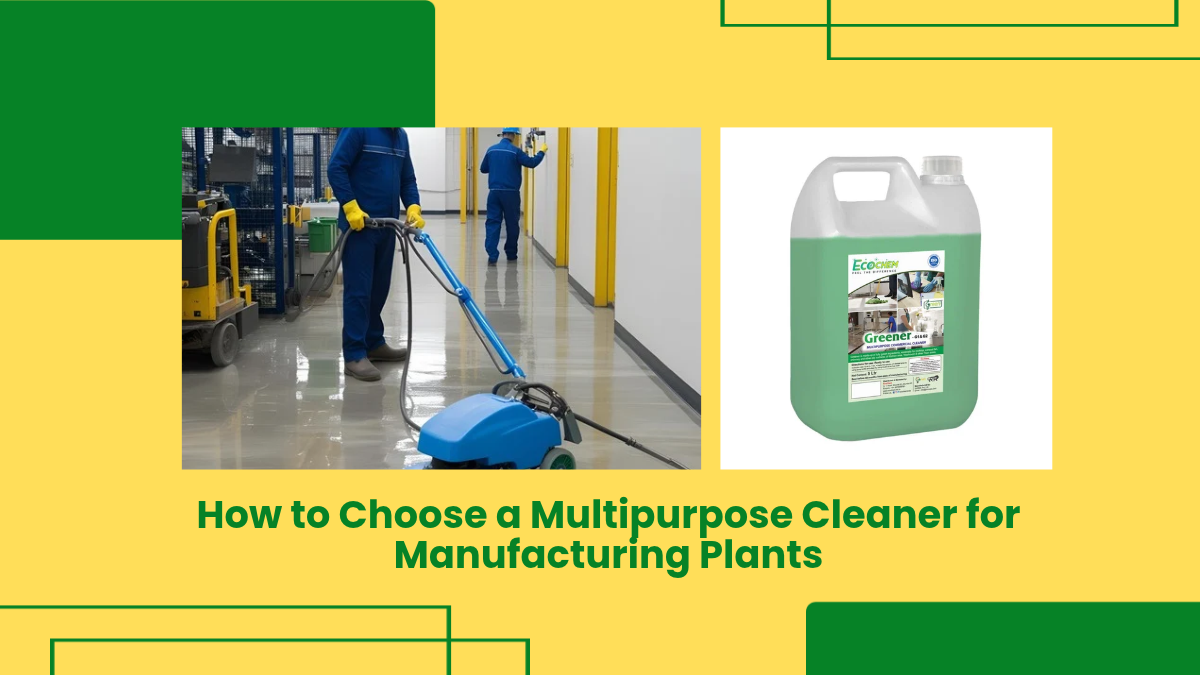
Manufacturing plants need suitable cleaning chemicals to remove everyday dirt, maintain clean work areas, and support routine facility maintenance. Choosing a multipurpose cleaner for manufacturing plants requires evaluating the type of contamination, surface compatibility, application method, and safety requirements. The right product should meet the cleaning needs of the facility while following the manufacturer’s usage instructions.
An industrial multipurpose cleaner may be suitable for routine cleaning of approved work surfaces and common areas. However, heavy grease, specialised residues, and hygiene-critical applications may require dedicated cleaning products. Understanding these differences helps facility managers select appropriate factory cleaning solutions.
What Is a Multipurpose Cleaner?
A multipurpose cleaner is a cleaning product designed to remove common dirt and soil from multiple suitable surfaces. Depending on its formulation, it may be used for routine cleaning in commercial and industrial environments.
In manufacturing facilities, these products may be considered for suitable workstations, tables, external equipment surfaces, and general areas. The permitted applications depend on the product label and technical instructions.
A multipurpose cleaner is not automatically a disinfectant or heavy-duty degreaser. Facilities should select chemicals according to the actual cleaning requirement.
Why Do Manufacturing Plants Need Appropriate Cleaning Chemicals?
Factories experience different cleaning challenges throughout the working day. Dust, fingerprints, oil, grease, packaging residue, and general dirt can accumulate on surfaces and increase housekeeping requirements.
Using an unsuitable chemical may lead to ineffective cleaning, residue, or surface damage. Common challenges include:
- Dust and dirt: Accumulate on workstations, shelves, and frequently used surfaces.
- Oil and grease: May require a specialised industrial degreaser.
- Floor contamination: Requires cleaning products suitable for the floor material and type of soil.
- Surface sensitivity: Painted metal, plastics, coatings, and other materials may react differently to chemicals.
- Inconsistent cleaning: Incorrect dilution and application can increase product consumption and labour time.
Selecting the right industrial cleaning chemical helps facilities establish consistent cleaning procedures.
How to Choose a Multipurpose Cleaner for Manufacturing Plants
1. Identify the Type of Contamination
First, determine what needs to be removed. Light dirt and fingerprints may require a different product from heavy oil, grease, rust, or process residues.
For example, routine cleaning of a factory office may require a multipurpose cleaner, while machinery covered with heavy grease may need a dedicated degreaser.
Tip: List the cleaning requirements of each production and support area before choosing a product.
2. Check Surface Compatibility
Manufacturing facilities contain different materials, including metal, plastic, glass, painted surfaces, tiles, and coated components. A cleaner suitable for one material may not be appropriate for another.
Before application:
- Read the product label and technical instructions.
- Confirm that the intended surface is compatible.
- Test a small, inconspicuous area when appropriate.
- Follow the specified dilution and application method.
- Keep liquids away from electrical components and sensitive equipment.
Never assume that a multipurpose cleaner is suitable for every factory surface.
3. Review Dilution and Application Instructions
Some cleaning products are concentrated, while others are supplied ready to use. Concentrates must be diluted according to the manufacturer’s instructions.
Check the recommended dilution, contact time, application method, and rinsing requirements. Train housekeeping staff to prepare solutions correctly and avoid estimating quantities.
Incorrect dilution can affect cleaning performance and may create avoidable safety risks.
4. Consider Safety and Handling
Cleaning chemicals should be selected with worker safety and workplace conditions in mind. Review the product label and Safety Data Sheet (SDS), where available.
Workers should use the required protective equipment, keep containers labelled, follow storage instructions, and never mix different cleaning products unless the manufacturers explicitly approve the combination.
For regulated manufacturing areas, confirm whether additional cleaning or disinfection procedures are required.
5. Evaluate the Total Cleaning Cost
The purchase price alone does not determine whether a product is economical. Consider product consumption, dilution, labour time, rinsing requirements, and cleaning frequency.
Where possible, conduct a controlled trial before purchasing in bulk. Record product consumption, cleaning results, application time, and any surface compatibility concerns.
This approach helps facility managers compare products based on their practical performance rather than price alone.
Multipurpose Cleaner vs Industrial Degreaser
A multipurpose cleaner generally supports routine cleaning of common dirt on suitable surfaces. An industrial degreaser is designed for specified oil and grease removal requirements.
| Cleaning requirement | Product to consider |
|---|---|
| Routine dirt on suitable surfaces | Multipurpose cleaner |
| Heavy oil and grease | Industrial degreaser |
| Regular floor maintenance | Floor cleaner |
| Specialised stains or deposits | Appropriate stain remover |
| Disinfection requirements | Suitable approved disinfectant |
These are general guidelines. Always confirm the product’s intended application and surface compatibility.
Best Practices for Factory Cleaning
Manufacturing facilities should establish clear procedures for routine cleaning.
- Inspect the area: Identify the surface, contamination, and nearby equipment.
- Prepare the workplace: Follow site procedures for protecting equipment and restricting access where necessary.
- Prepare the solution: Use the specified dilution and recommended protective equipment.
- Clean as directed: Follow the approved application method and contact time.
- Rinse or wipe: Follow the manufacturer’s instructions for removing residues.
- Inspect the surface: Check for remaining dirt, residue, or signs of an unsuitable application.
- Record the task: Document cleaning activities and report any problems where required.
Regular staff training and documented procedures help maintain consistent housekeeping standards.
How Eco-Greener May Support Manufacturing Cleaning
Ecochem offers Eco-Greener, a multipurpose cleaner described on its official product page as a water-based, acid-free cleaning agent. The page lists a dilution ratio of 10 ml per litre of water.
Manufacturing facilities can evaluate Eco-Greener for suitable routine cleaning requirements. However, its suitability for specific surfaces, machinery, and types of contamination should be confirmed with Ecochem before use.
Before selecting the product, clarify its approved applications, preparation instructions, surface compatibility, and any rinsing or handling requirements. Heavy industrial grease or specialised process residues may require a different product.
Visit the Eco-Greener Multipurpose Cleaner product page to review the available product information.
Common Mistakes to Avoid
- Choosing only by price: Consider usage costs and labour requirements.
- Ignoring surface compatibility: Verify suitability before applying chemicals.
- Using incorrect dilution: Follow the manufacturer’s instructions.
- Using one product for every task: Specialised contamination may need a dedicated cleaner.
- Skipping staff training: Ensure workers understand proper handling and application.
- Avoiding product trials: Test products under controlled conditions before wider use.
Conclusion
Choosing a multipurpose cleaner for manufacturing plants involves evaluating contamination, surface compatibility, safety, and operating costs. A suitable product can support routine housekeeping, while heavy grease and specialised cleaning requirements may need dedicated solutions.
Ecochem’s Eco-Greener is an option to evaluate for appropriate routine cleaning applications. Review its product information and confirm suitability before introducing it into your facility.
Looking for a suitable factory cleaning solution? Explore the Eco-Greener Multipurpose Cleaner or contact Ecochem to discuss your manufacturing facility’s cleaning requirements.
FAQ’S
What is a multipurpose cleaner used for in manufacturing plants?
It supports routine cleaning of suitable surfaces by removing common dirt and soil, depending on the product’s intended applications.
How do I choose an industrial multipurpose cleaner?
Assess contamination, surface compatibility, application methods, safety instructions, dilution requirements, and total cleaning cost.
Can a multipurpose cleaner be used on all factory surfaces?
No. Always check the manufacturer’s instructions and confirm compatibility with the intended surface before application.
What is the difference between a multipurpose cleaner and a degreaser?
A multipurpose cleaner generally handles routine dirt, while a degreaser targets specified oil and grease contamination.
What precautions should workers follow?
Workers should follow label and SDS instructions, use required protective equipment, avoid mixing products, and store chemicals in labelled containers.
Written By: Vinny Jain