
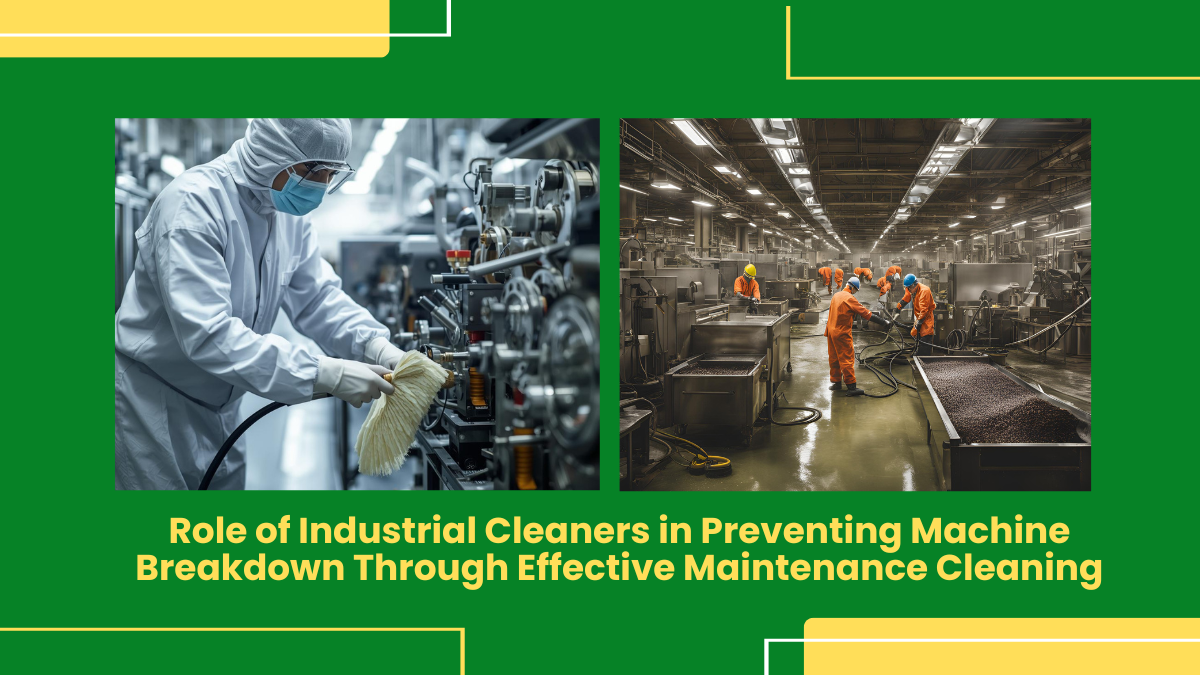
Machines are the backbone of every manufacturing unit. From production lines to packaging systems, every operation depends on reliable equipment performance. When machines fail, factories face downtime, repair expenses, and delayed deliveries.
One of the most overlooked reasons for machine failure is poor cleaning practices. Dust, grease, oil residue, and metal particles slowly damage components. Proper machine maintenance and cleaning using industrial cleaners helps prevent these issues and keeps equipment running smoothly.
This guide explains the common problems, practical solutions, and prevention tips related to industrial cleaning and how it supports factory equipment care.
Understanding Machine Maintenance Cleaning in Industrial Facilities
Machine maintenance cleaning is the regular removal of dirt, grease, and contaminants from mechanical and electrical parts. It plays a key role in:
- Extending machine life
- Reducing repair costs
- Improving safety
- Maintaining productivity
Without structured industrial degreasing maintenance, machines gradually lose efficiency and reliability.
Common Problems Caused by Poor Machine Cleaning
1. Accumulation of Oil, Grease, and Dust
Problem
Industrial environments generate continuous dust and oil vapours. When these settle on machines, they cause:
- Blocked ventilation paths
- Overheating
- Increased friction
- Reduced performance
Over time, this buildup makes it harder to prevent equipment damage.
2. Corrosion and Rust Formation
Problem
Moisture mixed with metal particles and chemicals leads to corrosion. Rust affects:
- Bearings
- Shafts
- Panels
- Bolts and fasteners
Corroded parts fail faster and require frequent replacement.
3. Sensor and Control System Failure
Problem
Modern machines depend on sensors and control panels. Dust and grease can:
- Block sensor signals
- Cause false readings
- Damage circuit boards
- Trigger shutdowns
This leads to production delays and costly troubleshooting.
4. Increased Wear and Tear on Moving Parts
Problem
When debris enters moving components, it works like sandpaper. This causes:
- Faster surface erosion
- Chain and belt damage
- Misalignment
- Noise and vibration
Without proper factory equipment care, wear accelerates quickly.
5. Fire and Safety Hazards
Problem
Oil and chemical residue near heat sources increases fire risks. Poor cleaning may lead to:
- Electrical short circuits
- Spark ignition
- Slippery surfaces
- Workplace accidents
These hazards affect both safety and compliance.
6. Unplanned Machine Downtime
Problem
Neglected cleaning causes sudden breakdowns. Emergency repairs result in:
- Production stoppage
- Overtime labor
- Rush spare purchases
- Missed deadlines
This affects profitability and customer trust.
Practical Solutions Using Industrial Cleaners
1. Use Specialised Industrial Degreasers
Solution
Industrial degreasing maintenance requires products designed for heavy machinery. These cleaners help:
- Remove stubborn oil deposits
- Dissolve grease safely
- Protect metal surfaces
- Reduce manual scrubbing
Selecting machine-specific cleaners improves cleaning efficiency and surface safety.
2. Create a Structured Machine Cleaning Schedule
Solution
A well-planned machine cleaning schedule ensures consistency. It should include:
- Daily surface cleaning
- Weekly deep cleaning
- Monthly internal inspection
- Quarterly system checks
Scheduling prevents sudden buildup and supports preventive maintenance.
3. Standardise Cleaning Procedures
Solution
Each machine should have defined cleaning steps covering:
- Areas to be cleaned
- Approved chemicals
- Application methods
- Safety requirements
Standardisation reduces errors and supports long-term machine maintenance and cleaning.
4. Train Staff on Proper Cleaning Techniques
Solution
Well-trained workers understand:
- Correct chemical dilution
- Surface sensitivity
- Electrical safety
- Waste disposal
Training reduces chemical misuse and improves cleaning quality.
5. Use Digital Systems for Task Monitoring
Solution
With digital signage platforms like Ecochem, factories can:
- Display cleaning schedules
- Track task completion
- Share maintenance alerts
- Monitor performance indicators
This reduces dependence on paper logs and manual supervision.
6. Apply Protective Coatings After Cleaning
Solution
After degreasing, protective sprays or coatings can:
- Prevent moisture contact
- Reduce dust attraction
- Slow corrosion
- Improve surface life
This strengthens factory equipment care programs.
7. Maintain Clean Surrounding Work Areas
Solution
Machine cleanliness depends on the environment. Regular floor and wall cleaning helps:
- Reduce airborne dust
- Minimise oil spread
- Improve visibility
- Support hygiene standards
Clean surroundings reduce repeated contamination.
Prevention Tips for Long-Term Machine Protection
1. Implement Preventive Maintenance Plans
Preventive maintenance combines cleaning with inspection. This helps in:
- Detecting loose parts
- Identifying early corrosion
- Spotting leaks
- Avoiding breakdowns
Regular checks strengthen machine reliability.
2. Use Protective Covers and Enclosures
Covering sensitive components protects them from:
- Dust
- Chemical splashes
- Moisture
- Physical impact
This reduces daily cleaning effort and damage risks.
3. Maintain Proper Ventilation Systems
Good ventilation limits dust and vapour accumulation. It supports:
- Lower surface contamination
- Better temperature control
- Reduced moisture levels
- Improved working conditions
Ventilation systems should be cleaned regularly.
4. Monitor Chemical Storage and Handling
Incorrect chemical storage reduces product effectiveness. Maintain:
- Proper labeling
- Controlled temperatures
- Sealed containers
- Expiry tracking
This ensures consistent industrial degreasing maintenance.
5. Create Machine-Specific Cleaning Logs
Each machine should have a record showing:
- Last cleaning date
- Used chemicals
- Observed issues
- Follow-up actions
These logs help improve planning and accountability.
6. Conduct Periodic Cleaning Audits
Quarterly audits help review:
- Cleaning quality
- Chemical usage
- Labor efficiency
- Equipment condition
Audits identify improvement areas early.
7. Display Maintenance Metrics on Digital Screens
Using EcoChem’s signage system, factories can display:
- Cleaning compliance rates
- Downtime statistics
- Maintenance alerts
- Safety reminders
Visual updates keep teams aligned and responsible.
How Industrial Cleaning Prevents Equipment Damage
Proper machine maintenance and cleaning protect equipment in several ways:
Reduces Friction and Heat
Clean surfaces move smoothly, lowering wear and overheating risks.
Prevents Chemical Reactions
Removing residue stops harmful reactions between metals and chemicals.
Maintains Component Accuracy
Clean sensors and gears perform more accurately.
Preserves Structural Integrity
Rust-free frames and parts remain strong longer.
These benefits directly support efforts to prevent equipment damage.
Connecting Cleaning Practices with Productivity
When machines are cleaned properly:
- Breakdowns decrease
- Maintenance becomes predictable
- Production remains stable
- Product quality improves
This creates a reliable operational environment where delays and losses are minimized.
Role of Digital Signage in Maintenance Management
Ecochem’s digital signage platform helps integrate cleaning and maintenance processes by:
- Showing live cleaning schedules
- Sharing standard procedures
- Displaying safety instructions
- Connecting with ERP and maintenance systems
- Reducing paperwork
With centralised communication, maintenance teams work more efficiently and respond faster to issues.
Building a Strong Factory Equipment Care Culture
Long-term equipment protection depends on mindset and systems. A strong care culture includes:
- Management involvement
- Regular training
- Digital monitoring
- Performance reviews
- Recognition for compliance
When employees understand the value of cleaning, machines receive better attention.
Economic Benefits of Effective Machine Cleaning
Proper industrial cleaning leads to:
- Lower repair costs
- Reduced spare part usage
- Fewer emergency shutdowns
- Longer asset life
- Improved return on investment
These savings support sustainable growth.
Key Takeaways for Maintenance Managers
To strengthen machine reliability and reduce breakdowns:
- Follow a structured machine cleaning schedule
- Use proper industrial degreasing maintenance products
- Train staff regularly
- Monitor tasks digitally
- Maintain detailed records
- Use Ecochem’s platform for visibility
These steps improve factory equipment and help prevent costly failures.
FAQ’S
Why is machine maintenance cleaning important for factories?
It removes grease, dust, and residue, helping prevent equipment damage, reduce breakdowns, and extend machine lifespan.
How does industrial degreasing maintenance improve machine performance?
It eliminates oil buildup, reduces friction, supports smooth operation, and prevents overheating and premature component failure.
How often should a machine cleaning schedule be followed?
Daily surface cleaning, weekly deep cleaning, and monthly inspections ensure consistent factory equipment care and reliable performance.
Can poor cleaning practices cause unexpected machine downtime?
Yes, residue buildup damages components, disrupts sensors, increases wear, and leads to sudden failures and production delays.
How does digital monitoring support machine maintenance and cleaning?
It tracks cleaning tasks, displays schedules, improves accountability, reduces missed activities, and supports preventive maintenance planning.
Written By: Vinny Jain