
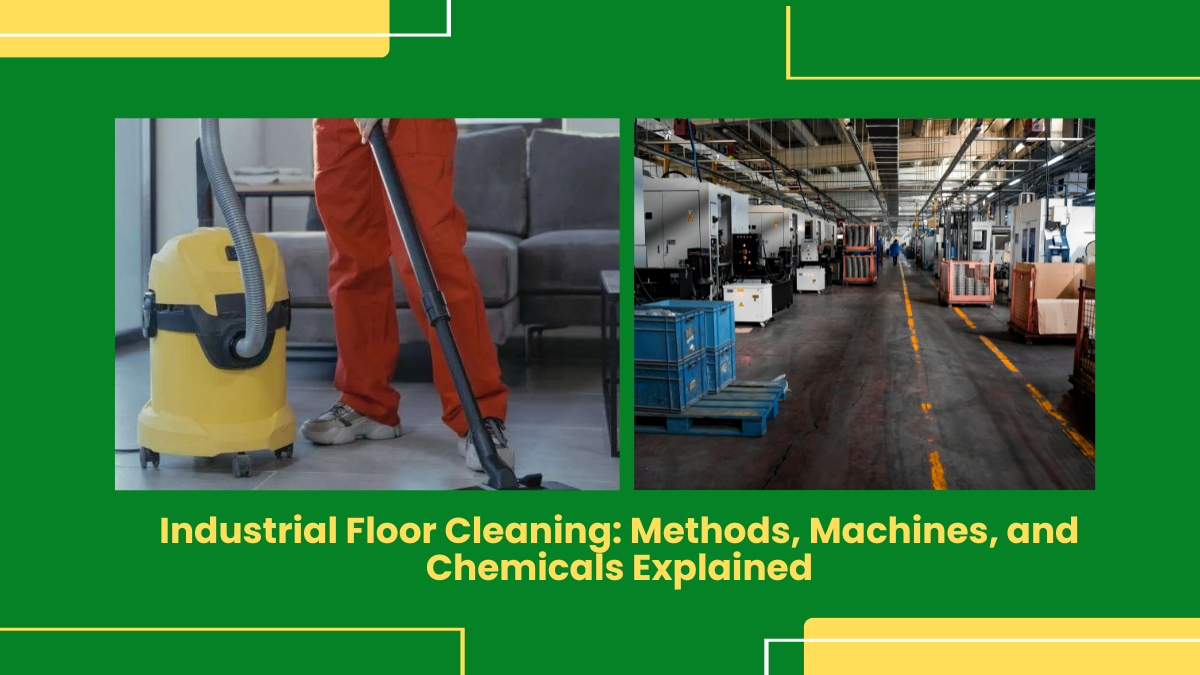
Industrial floors face constant exposure to dust, oil, chemicals, forklift traffic, and heavy equipment. Over time, these factors reduce surface strength, create safety risks, and increase maintenance costs. Without proper systems, even routine cleaning becomes expensive and ineffective.
Choosing the right industrial floor cleaning methods, machines, and chemicals helps factories maintain safety, hygiene, and productivity. This guide explains common problems, practical solutions, and prevention tips for long-term floor care.
Importance of Industrial Floor Cleaning
Clean factory floors support:
- Worker safety
- Equipment movement
- Hygiene standards
- Regulatory compliance
- Professional workplace appearance
A structured warehouse floor cleaning system prevents accidents and extends floor life.
Common Problems in Industrial Floor Cleaning
1. Oil, Grease, and Chemical Spills
Problem
Manufacturing plants frequently experience spills from machines and vehicles. These causes:
- Slippery surfaces
- Stain formation
- Safety hazards
- Dust attraction
Without proper concrete floor degreasing, spills spread quickly.
2. Dust and Debris Accumulation
Problem
Dust from raw materials, packaging, and traffic settles daily. This leads to:
- Poor air quality
- Slippery layers
- Machine contamination
- Frequent re-cleaning
Manual sweeping cannot manage heavy buildup.
3. Surface Wear and Cracks
Problem
Continuous load and vibration weaken floors. Damaged surfaces:
- Trap dirt and liquids
- Increase chemical consumption
- Require deeper cleaning
- Deteriorate faster
Cracks make cleaning difficult.
4. Use of Incorrect Cleaning Chemicals
Problem
Many facilities use general-purpose cleaners on industrial floors. This results in:
- Poor grease removal
- Chemical residue
- Surface discoloration
- Reduced durability
Choosing the wrong factory floor cleaner chemical increases costs.
5. Inefficient Manual Cleaning Methods
Problem
Traditional mopping and scrubbing cause:
- High labor costs
- Uneven cleaning
- Water wastage
- Longer downtime
Manual methods lack consistency.
6. Lack of Structured Maintenance Plans
Problem
Without fixed schedules, cleaning becomes reactive. This causes:
- Missed deep cleaning
- Emergency cleaning expenses
- Increased accidents
- Faster surface damage
Unplanned cleaning reduces efficiency.
Industrial Floor Cleaning Methods Explained
1. Manual Scrubbing and Mopping
Method
Workers use brushes, mops, and buckets for small areas.
Best for:
- Offices
- Storage rooms
- Low-traffic zones
Limitations:
- High labor effort
- Inconsistent results
- Limited grease removal
2. Pressure Washing
Method
High-pressure water removes dirt and oil.
Best for:
- Outdoor yards
- Loading bays
- Concrete floors
Limitations:
- Water consumption
- Drying time
- Drainage requirements
3. Steam Cleaning
Method
Hot steam loosens grease and kills bacteria.
Best for:
- Food plants
- Chemical zones
- Sensitive areas
Limitations:
- High energy use
- Equipment cost
- Limited area coverage
4. Mechanical Scrubbing
Method
Scrubber machines combine brushing, water, and suction.
Best for:
- Large warehouses
- Production halls
- Parking areas
Benefits:
- Faster cleaning
- Uniform results
- Reduced water usage
5. Polishing and Burnishing
Method
Machines polish surfaces to restore shine.
Best for:
- Showrooms
- Entry zones
- Finished floors
Benefits:
- Improved appearance
- Dust resistance
- Surface protection
Industrial Floor Cleaning Machines
1. Walk-Behind Scrubber Dryers
Used for medium-sized areas.
Features:
- Compact size
- Easy operation
- Affordable maintenance
2. Ride-On Scrubber Machines
Used for large warehouses.
Features:
- High cleaning speed
- Operator comfort
- Large water tanks
3. Industrial Sweepers
Remove dry dust and debris.
Features:
- Dust filtration
- High coverage
- Low noise options
4. Wet and Dry Vacuum Cleaners
Handle liquid and solid waste.
Features:
- Spill recovery
- Flexible usage
- Portable design
5. Floor Polishers
Restore surface finish.
Features:
- High-speed rotation
- Gloss improvement
- Protective coating support
These machines form the backbone of a modern warehouse floor cleaning system.
Industrial Floor Cleaning Chemicals
1. Heavy Duty Floor Cleaner
Used for removing stubborn dirt, grease, and stains.
Applications:
- Workshops
- Machine areas
- Dockyards
2. Concrete Floor Degreasers
Specially formulated for oil and lubricant removal.
Benefits:
- Deep penetration
- Reduced scrubbing
- Faster drying
3. Neutral Detergents
Used for routine cleaning.
Benefits:
- Surface safety
- Low residue
- Daily maintenance
4. Acid-Based Cleaners
Used for scale and mineral deposits.
Benefits:
- Restores the concrete appearance
- Removes hard stains
5. Disinfectant Cleaners
Used in food and pharmaceutical plants.
Benefits:
- Microbial control
- Hygiene compliance
- Odor reduction
Selecting the correct factory floor cleaner chemical prevents damage and improves efficiency.
Practical Solutions for Effective Floor Cleaning
1. Match Methods with Floor Type
Solution
Select techniques based on surface:
- Concrete: Mechanical scrubbing + degreasers
- Epoxy: Neutral detergents
- Tiles: Low-pressure washing
- Outdoor: Pressure cleaning
Matching methods improves results.
2. Use Machine-Based Cleaning for Large Areas
Solution
Replace manual cleaning with machines for:
- Production floors
- Warehouses
- Parking spaces
This reduces labour and improves consistency.
3. Develop Standard Cleaning Procedures
Solution
Create SOPs covering:
- Cleaning frequency
- Chemical dilution
- Machine operation
- Safety measures
Standardisation supports long-term maintenance.
4. Monitor Cleaning Digitally
Solution
With digital signage platforms like Ecochem, factories can:
- Display cleaning schedules
- Track task completion
- Share safety instructions
- Monitor chemical usage
- Integrate with ERP systems
Ecochem connects with over 100 applications, improving visibility and accountability.
5. Train Cleaning Staff
Solution
Training should include:
- Machine handling
- Chemical safety
- Spill response
- Surface protection
Skilled staff reduce wastage.
6. Implement Spill Response Systems
Solution
Maintain:
- Spill kits
- Absorbent materials
- Emergency signage
- Reporting procedures
Quick response prevents damage.
Prevention Tips for Long-Term Floor Protection
1. Apply Protective Floor Coatings
Coatings reduce:
- Chemical penetration
- Dust generation
- Water absorption
- Surface erosion
This extends floor life.
2. Schedule Preventive Maintenance
Plan:
- Daily sweeping
- Weekly scrubbing
- Monthly deep cleaning
- Annual polishing
Structured schedules reduce emergency cleaning.
3. Control Vehicle and Equipment Movement
Use:
- Marked lanes
- Speed limits
- Wheel cleaning stations
This reduces abrasion and dirt spread.
4. Improve Drainage Systems
Good drainage prevents:
- Water stagnation
- Mold formation
- Slippery surfaces
Dry floors stay cleaner longer.
5. Maintain Proper Ventilation
Ventilation reduces:
- Moisture buildup
- Chemical residue
- Dust settlement
Cleaner air supports cleaner floors.
6. Store Chemicals Safely
Ensure:
- Proper labeling
- Sealed containers
- Expiry tracking
- Controlled storage areas
Correct storage preserves chemical effectiveness.
7. Conduct Regular Floor Inspections
Inspect quarterly for:
- Cracks
- Stains
- Coating damage
- Drain blockages
Early repairs reduce major costs.
How Digital Signage Supports Floor Maintenance
Ecochem’s digital signage platform helps floor management by:
- Showing cleaning checklists
- Displaying machine usage rules
- Sharing safety alerts
- Tracking performance metrics
- Reducing paper records
Digital communication improves compliance and coordination.
Benefits of Proper Industrial Floor Cleaning
A structured system delivers:
- Reduced accident risk
- Better equipment movement
- Lower repair expenses
- Improved hygiene
- Professional appearance
- Higher employee confidence
These benefits support operational stability.
Connecting Floor Maintenance with Productivity
Clean floors reduce:
- Machine breakdowns
- Forklift delays
- Worker injuries
- Product contamination
This improves workflow and output quality.
Building a Strong Floor Care Culture
Effective maintenance depends on:
- Management involvement
- Regular training
- Digital monitoring
- Performance reviews
- Employee participation
When floor care becomes routine, quality improves naturally.
Key Takeaways for Facility Managers
To manage industrial floors effectively:
- Use suitable industrial floor cleaning methods
- Install proper machines
- Select the correct factory floor cleaner chemicals
- Implement concrete floor degreasing programs
- Monitor operations digitally with EcoChem
- Follow preventive maintenance schedules
These steps ensure safer, cleaner, and more durable factory floors
FAQ’S
Why are industrial floor cleaning methods important for factories?
They reduce accidents, remove grease and dust, protect surfaces, improve hygiene, and support smooth equipment movement and daily operations.
What is the best warehouse floor cleaning system for large facilities?
Ride-on scrubber dryers combined with industrial sweepers provide fast, consistent cleaning and reduce labor effort in large warehouses.
How does concrete floor degreasing improve safety?
It removes oil and grease spills, prevents slipping hazards, reduces stain formation, and improves floor grip for workers and vehicles.
Which factory floor cleaner chemical should be used daily?
Neutral detergents are ideal for routine cleaning because they protect surfaces, leave minimal residue, and maintain long-term floor durability.
How can digital monitoring improve industrial floor maintenance?
It tracks cleaning schedules, monitors machine usage, improves accountability, reduces missed tasks, and supports preventive maintenance planning.
Written By: Vinny Jain