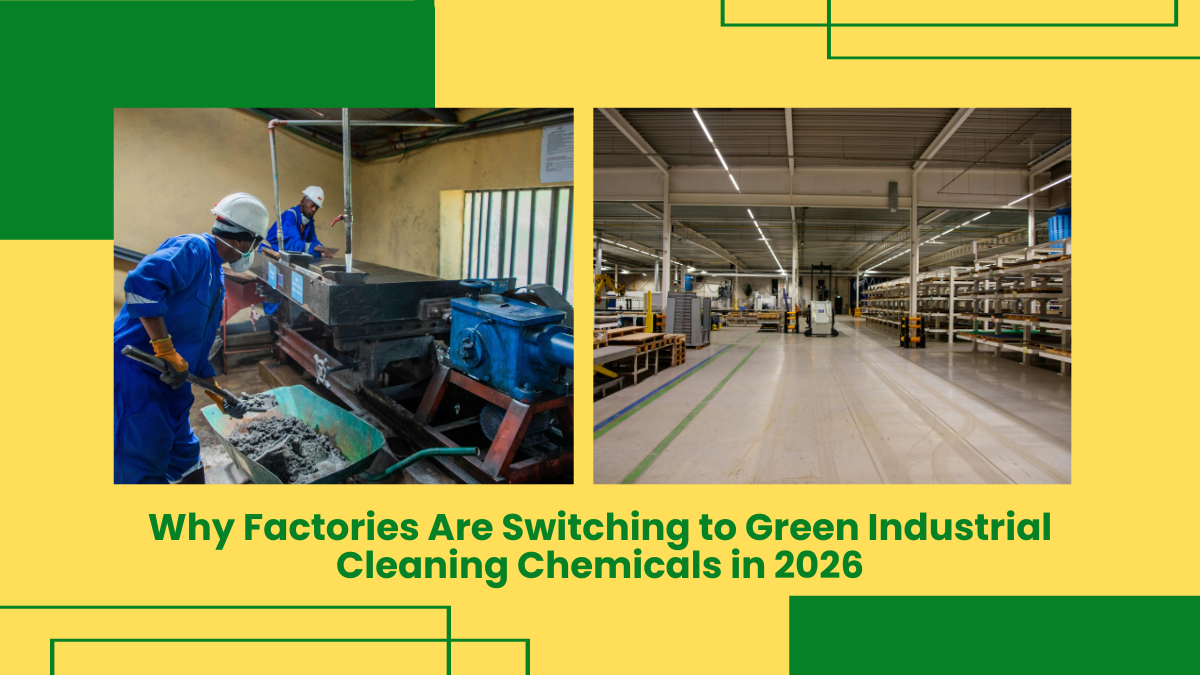
Industrial cleaning has always been essential for safety, productivity, and compliance. However, traditional chemical-based cleaners often create long-term health, environmental, and cost-related challenges. In 2026, more factories are shifting toward green industrial cleaning chemicals to manage these concerns responsibly.
This transition is driven by stricter regulations, rising environmental awareness, employee safety needs, and long-term cost efficiency. Green cleaning solutions now match industrial performance requirements while supporting sustainable industrial cleaning goals.
This guide explains the problems with conventional chemicals, modern solutions using eco-friendly products, and prevention tips for long-term success.
Understanding Green Industrial Cleaning Chemicals
Green industrial cleaning chemicals are products made using biodegradable, low-toxicity, and environmentally responsible ingredients. These solutions are designed to:
- Reduce environmental pollution
- Improve worker safety
- Lower waste generation
- Support sustainability goals
They include eco-friendly factory cleaners, biodegradable degreasers, and non-toxic industrial cleaner formulations suitable for heavy industrial use.
Problems with Traditional Industrial Cleaning Chemicals
1. Health Risks to Workers
Problem
Conventional cleaners often contain harsh solvents, acids, and synthetic compounds. Regular exposure can cause:
- Skin irritation
- Respiratory problems
- Eye damage
- Long-term health issues
These risks increase absenteeism and insurance costs.
2. Environmental Pollution
Problem
Chemical discharge from factories contaminates soil and water bodies. This leads to:
- Groundwater pollution
- Damage to aquatic life
- Regulatory penalties
- Community complaints
Poor waste management makes compliance difficult.
3. Corrosion and Surface Damage
Problem
Strong chemicals damage metal, rubber, and plastic parts. This results in:
- Faster equipment wear
- Higher repair costs
- Reduced machine life
- Increased downtime
Aggressive cleaners weaken production systems over time.
4. Rising Compliance and Legal Costs
Problem
Environmental regulations are becoming stricter. Non-compliance leads to:
- Heavy fines
- License suspensions
- Legal disputes
- Brand damage
Many factories struggle to meet modern sustainability expectations.
5. High Long-Term Operating Costs
Problem
Traditional cleaners appear cheap initially, but hidden costs include:
- Protective equipment
- Medical expenses
- Waste disposal fees
- Frequent equipment replacement
These costs reduce profitability.
6. Unsafe Storage and Handling Requirements
Problem
Hazardous chemicals require special storage, labeling, and handling. This creates:
- Higher infrastructure costs
- Safety training expenses
- Accident risks
- Inspection pressure
Managing hazardous materials becomes complex.
Why Factories Are Adopting Green Cleaning Solutions in 2026
1. Improved Worker Safety
Solution
Non-toxic industrial cleaners reduce exposure to harmful fumes and residues. Benefits include:
- Safer working conditions
- Lower health complaints
- Reduced protective gear usage
- Better employee morale
Healthier workers are more productive and reliable.
2. Environmental Responsibility
Solution
Sustainable industrial cleaning supports eco-friendly practices by:
- Using biodegradable ingredients
- Reducing wastewater toxicity
- Lowering carbon footprint
- Supporting circular economy goals
Many factories now include sustainability in corporate policies.
3. Compliance with Updated Regulations
Solution
Green industrial cleaning chemicals help meet environmental and safety standards. They:
- Simplify audits
- Reduce documentation burden
- Lower inspection risks
- Improve regulatory relationships
Compliance becomes easier and more predictable.
4. Protection of Machinery and Infrastructure
Solution
Eco-friendly factory cleaners are less corrosive. They:
- Preserve metal surfaces
- Protect seals and hoses
- Reduce scaling
- Extend equipment lifespan
This supports long-term asset management.
5. Better Brand Image and Market Position
Solution
Customers and partners prefer responsible manufacturers. Using green solutions helps:
- Build customer trust
- Attract eco-conscious clients
- Improve public image
- Strengthen corporate reputation
Sustainability now influences purchasing decisions.
6. Cost Efficiency Over Time
Solution
Although some green products cost more initially, they reduce:
- Medical expenses
- Equipment repairs
- Waste treatment fees
- Legal risks
Long-term savings often exceed traditional alternatives.
Types of Green Industrial Cleaning Products
1. Biodegradable Degreasers
Used for removing oils and grease without leaving harmful residues.
2. Plant-Based Detergents
Made from renewable sources for light and medium cleaning tasks.
3. Enzyme-Based Cleaners
Break down organic waste in drains and pipelines naturally.
4. Water-Based Solvents
Replace petroleum-based solvents for safe surface cleaning.
5. Low-VOC Cleaners
Reduce air pollution and indoor toxicity.
Using the right product mix supports sustainable industrial cleaning.
Practical Solutions for Switching to Green Cleaning Chemicals
1. Evaluate Current Chemical Usage
Solution
Start by reviewing:
- Existing products
- Usage frequency
- Safety data sheets
- Disposal methods
This helps identify replacement priorities.
2. Select Certified Green Products
Solution
Choose suppliers offering:
- Biodegradability certificates
- Toxicity reports
- Environmental compliance records
- Performance testing results
Certification ensures reliability.
3. Redesign Cleaning Procedures
Solution
Update SOPs to include:
- New dilution ratios
- Application methods
- Safety guidelines
- Disposal processes
Green products often require different handling techniques.
4. Train Employees on New Systems
Solution
Training should cover:
- Proper usage
- Storage practices
- Spill management
- Emergency response
Well-trained staff maximise product effectiveness.
5. Monitor Performance Digitally
Solution
Using platforms like EcoChem, factories can:
- Display updated cleaning SOPs
- Track chemical consumption
- Show compliance dashboards
- Share safety instructions
- Monitor sustainability goals
Ecochem connects with over 100 applications, helping managers centralise cleaning and environmental data.
6. Pilot Before Full Implementation
Solution
Test green products in selected areas first. Evaluate:
- Cleaning effectiveness
- Worker feedback
- Surface impact
- Cost changes
Pilot programs reduce transition risks.
Prevention Tips for Long-Term Sustainable Cleaning
1. Maintain Preventive Maintenance Programs
Preventive maintenance reduces heavy chemical usage. Regular checks help:
- Prevent oil leaks
- Reduce residue buildup
- Control corrosion
- Lower deep-cleaning needs
Less contamination means fewer chemicals.
2. Improve Ventilation and Filtration
Good airflow reduces chemical dependency by:
- Removing dust
- Reducing moisture
- Preventing residue settlement
- Improving air quality
Clean environments need fewer cleaning agents.
3. Control Chemical Inventory Digitally
Track stock levels and usage patterns to:
- Prevent over-purchasing
- Reduce wastage
- Avoid expired products
- Support budgeting
Digital tracking improves accountability.
4. Encourage Employee Participation
Involve staff in sustainability efforts through:
- Awareness programs
- Recognition systems
- Feedback channels
- Green committees
Engaged employees follow procedures more consistently.
5. Conduct Environmental Audits
Quarterly audits should review:
- Wastewater quality
- Chemical disposal methods
- Storage conditions
- Regulatory compliance
Audits prevent long-term risks.
6. Use Protective Covers and Barriers
Protect sensitive equipment from dust and spills. This reduces:
- Frequent cleaning
- Chemical consumption
- Surface damage
- Maintenance workload
Prevention lowers operational costs.
7. Display Sustainability Metrics
Using Ecochem’s digital signage, factories can show:
- Chemical reduction targets
- Water usage trends
- Waste management data
- Safety indicators
Visual reporting builds accountability.
How Green Cleaning Supports Corporate Sustainability Goals
Adopting green industrial cleaning chemicals supports broader business objectives:
- Lower carbon footprint
- Responsible resource usage
- Community trust
- Investor confidence
- ESG compliance
Many companies now link sustainability performance with long-term growth strategies.
Challenges in Adopting Green Cleaning Solutions
Despite benefits, some factories face challenges such as:
- Higher initial costs
- Limited supplier options
- Performance concerns
- Resistance to change
These issues can be managed through pilot programs, training, and supplier partnerships.
Role of Digital Signage in Supporting Green Initiatives
Ecochem’s digital signage platform strengthens green transitions by:
- Sharing sustainability policies
- Displaying compliance updates
- Showing real-time performance metrics
- Connecting environmental data with ERP systems
- Reducing paper-based reporting
Digital communication improves coordination and transparency.
Future Trends in Sustainable Industrial Cleaning
By 2026 and beyond, factories are expected to focus on:
- Fully biodegradable formulations
- Waterless cleaning technologies
- Closed-loop waste systems
- Real-time sustainability monitoring
- Supplier sustainability scoring
These trends will further strengthen green operations.
Building a Green Cleaning Culture in Factories
Successful adoption requires cultural change. Key elements include:
- Management commitment
- Continuous training
- Transparent reporting
- Digital monitoring
- Employee involvement
When sustainability becomes part of daily routines, results improve naturally.
Key Takeaways for Factory Managers
To successfully transition to green cleaning solutions in 2026:
- Replace hazardous chemicals with eco-friendly factory cleaners
- Use biodegradable degreasers and non-toxic industrial cleaners
- Update SOPs and train staff
- Monitor performance using EcoChem’s platform
- Conduct regular environmental audits
- Encourage sustainability participation
These steps help factories reduce risks, improve compliance, and build long-term operational resilience.
FAQ’S
What are green industrial cleaning chemicals?
They are biodegradable, low-toxicity products designed to clean industrial surfaces effectively while reducing environmental pollution and worker health risks.
Why are factories switching to eco-friendly factory cleaners in 2026?
Factories want safer workplaces, regulatory compliance, lower environmental impact, improved brand reputation, and long-term operational cost savings.
Are biodegradable degreasers as effective as traditional cleaners?
Yes, modern biodegradable degreasers remove heavy grease and oil efficiently without damaging equipment or leaving harmful chemical residues.
How do non-toxic industrial cleaners improve worker safety?
They reduce exposure to hazardous fumes and chemicals, lowering risks of skin irritation, respiratory problems, and long-term health issues.
How can digital monitoring support sustainable industrial cleaning?
It tracks chemical usage, displays procedures, improves accountability, reduces wastage, and helps factories meet sustainability and compliance goals.
Written By: Vinny Jain