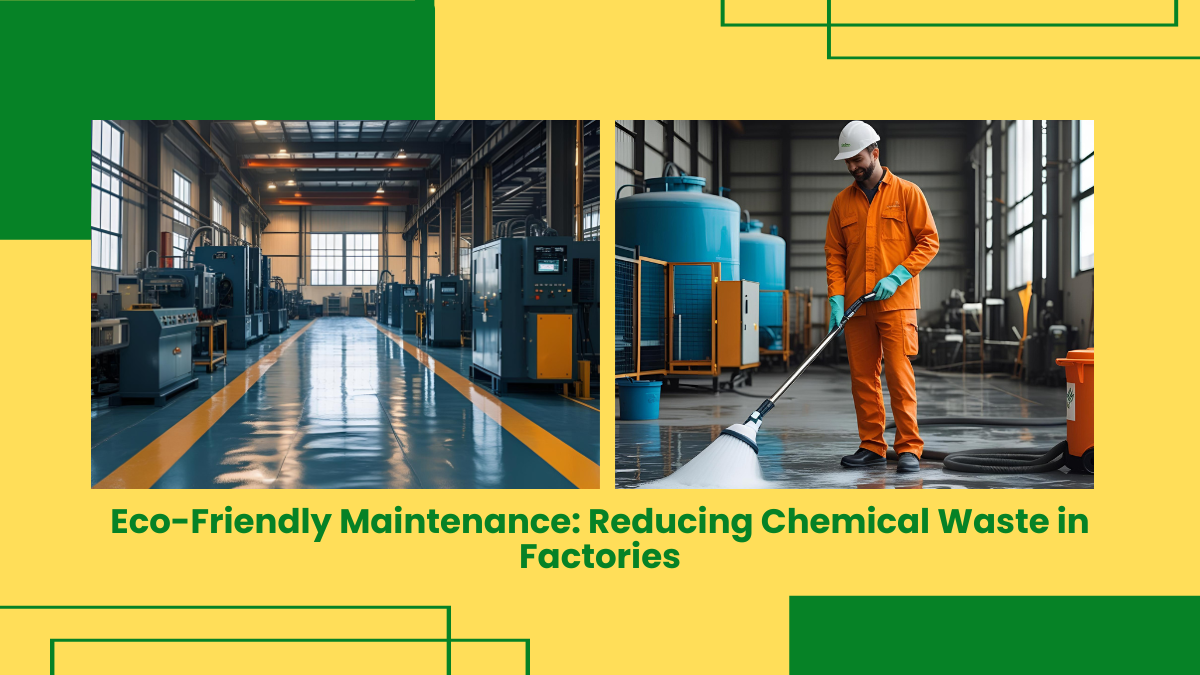
Eco-Friendly: Keeping factories running means regular cleaning, degreasing, lubrication, and surface preparation. Those tasks often rely on chemical products — some necessary, some overused. Left unchecked, chemical use creates costly waste streams, safety risks, and regulatory headaches.
This guide breaks the problem down, shows realistic solutions factories can adopt right away, and gives prevention tips to make maintenance both cleaner and more efficient. Throughout, we reference how Ecochem’s tools and integrations can help teams stay consistent and compliant.
Problems: Why is chemical waste still a big issue in industry
Health and safety exposure
Repeated use of strong solvents, acids, and caustics increases the risk of skin irritation, respiratory problems, and accidental chemical burns among maintenance staff. Poor ventilation or improper handling multiplies those risks.
Uncontrolled disposal and environmental impact
Rinse water, spent solutions, and contaminated absorbents often end up in drains or landfills when disposal procedures are weak. That harms local waterways, creates compliance risk, and can lead to fines.
Hidden operational costs
Chemical waste isn’t just the cost of the bottle. It includes special storage, licensed disposal services, additional PPE, downtime for cleanups, and the replacement of corroded components. Those line items add up fast.
Inconsistent procedures and human error
When teams lack clear SOPs, dosing is guesswork: too much chemical, over-application, or mixing incompatible products all create extra waste and hazards.
Inventory and purchasing inefficiencies
Large on-site inventories lead to expired chemicals and unnecessary stockpiles. Buying broad categories of products rather than fit-for-purpose solutions means more waste and higher long-run costs.
Solutions: Practical steps to cut chemical waste now
1) Choose safer alternatives and concentrate on product selection
Eco-Friendly Maintenance: Switch to responsibly formulated cleaning and maintenance products — for example, degreasers and cleaners designed to be effective at low doses and with minimal hazardous components. Selecting the right product for the job reduces overuse and waste.
Action: Standardize approved product lists and require justification for exceptions.
2) Dose accurately — dispense, don’t pour
Eco-Friendly: Use dosing pumps, flow metering, or pre-measured sachets instead of manual pouring. Precise dosing saves product, reduces rinse water, and ensures consistent results.
Action: Install simple dispensers at workstations and train staff to use them.
3) Implement closed-loop and recovery approaches
Where feasible, capture and treat washwater for reuse, or recycle spent solvents through vendor take-back or in-house recovery. Even small loops (reusing rinses for a second pass) cut fresh chemical demand.
Action: Run a pilot on one production line to measure reuse potential and return on investment.
4) Improve segregation and waste handling
Separate hazardous from non-hazardous waste, label containers clearly, and set up secure collection points. Proper segregation reduces cross-contamination, which makes disposal expensive.
Action: Create labeled, color-coded waste stations and an audit schedule.
5) Train and certify maintenance teams
Short, frequent training on correct dilution, application, and spill response reduces errors. Pair training with visible SOPs at cleaning points.
Action: Use quick competency checks and refresher sessions every quarter.
6) Optimize procurement and inventory management
Move from large, infrequent orders to smaller, needs-based purchasing. Track expiry dates and rotate stock. Where possible, prefer concentrated formats to reduce packaging waste.
Action: Integrate chemical inventory with purchasing systems to trigger replenishment only when needed.
7) Use greener chemistry where performance allows
For many tasks, there are lower-impact alternatives — surfactant-based degreasers, enzymatic cleaners, or non-hazardous lubricants that perform well Eco-Friendly, and greatly reduce hazardous waste streams.
Action: Run head-to-head trials comparing performance, cost, and waste.
8) Make cleaning smarter with digital controls and reminders
Digital tools can help schedule cleanings, display correct dilution steps, and log usage. This prevents overuse while providing an audit trail for compliance.
Action: Post SOPs on site screens and track completion with a digital checklist.
Prevention tips: habits and systems that keep chemical waste low
Keep procedures simple and visible
Short, illustrated SOPs posted at the point of use eliminate guesswork. Use photos showing correct doses, contact times, and PPE.
Build waste-minimization into maintenance planning
Include chemical-saving measures in preventive maintenance plans — e.g., use dry cleaning methods where possible to avoid rinses.
Measure and report key metrics
Track chemical consumption per machine or per shift. Trends reveal leaks, overuse, or process changes that increase waste.
Encourage frontline feedback
Operators spot inefficiencies first. A simple reporting channel for ‘chemical waste observations’ leads to quick fixes and higher engagement.
Audit and improve continually
Periodic internal audits of handling, storage, and disposal reveal gaps before regulators do. Use audits to update procedures and training.
How Ecochem helps factories cut chemical waste and stay compliant
Ecochem is uniquely positioned to connect maintenance practice with communication and operations systems. Our digital signage platform securely links to over 100 applications, letting factories:
- Broadcast clear SOPs and dosing instructions on floor displays where work happens. This reduces misuse and dosing errors.
- Display live cleaning schedules and completion confirmations, allowing supervisors to identify missed tasks that may lead to emergency cleaning and waste.
- Integrate with inventory/ERP systems to display low-stock alerts for critical consumables and avoid emergency overorders.
- Surface real-time safety alerts and spill response steps from connected sensors or incident management tools. Fast response reduces cleanup waste.
- Deliver training micro-content on demand — short videos or checklists shown at the moment of need improve adherence.
These integrations make eco-friendly maintenance practical: staff see the right steps, at the right place, at the right time. The result is less chemical overuse, fewer disposal events, and a traceable compliance trail.
Quick checklist to start reducing chemical waste this month
- Replace one high-use harsh cleaner with a low-dose alternative and monitor results.
- Install one dosing station for a critical degreasing point.
- Create and post a one-page SOP next to a wash station.
- Run a single-day inventory audit to find expired or overstocked chemicals.
- Pilot Ecochem signage on one line to display SOPs and usage reminders.
Closing call to action
Eco-Friendly Maintenance: Reducing chemical waste isn’t only an environmental win — it lowers operating cost, improves worker safety, and simplifies compliance. Small process changes, better product choices, and a few targeted digital tools produce measurable results.
FAQ’S
How can factories reduce chemical waste effectively?
Eco-Friendly Maintenance: Factories reduce chemical waste by using eco-friendly maintenance products, accurate dosing systems, proper disposal methods, and consistent employee training to prevent unnecessary overuse.
Why is eco-friendly maintenance important for factories?
Eco-friendly maintenance protects workers, reduces hazardous emissions, lowers waste disposal costs, improves compliance, and supports long-term sustainability goals across factory operations
Can green maintenance products replace harsh industrial chemicals?
Yes, many green maintenance products deliver strong cleaning performance while reducing toxicity, chemical runoff, equipment damage, and long-term environmental impact.
How does staff training reduce chemical waste?
Proper training ensures workers follow correct dilution, avoid overusing chemicals, handle materials safely, and apply maintenance processes consistently across all shifts.
How does Ecochem support eco-friendly maintenance practices?
Eco-Friendly Maintenance: Ecochem displays SOPs, dosing instructions, safety alerts, and training content on connected screens, reducing errors, chemical overuse, and compliance-related problems.
Written By: Vinny Jain