Introduction
Industrial environments deal with constant contamination. Oil spills, grease buildup, carbon deposits, dust layers, and chemical residues are part of everyday operations in factories, warehouses, workshops, and processing plants. Cleanliness is not just about appearance—it directly affects safety, productivity, compliance, and equipment lifespan.
For decades, heavy cleaning meant harsh chemicals. Strong solvents, acidic cleaners, and toxic degreasers were the standard tools for removing stubborn dirt. While they delivered quick results, they also introduced long-term problems for workers, infrastructure, and the environment.
This is where heavy-duty eco cleaners are changing the way industries approach cleaning. These solutions are designed to deliver industrial-level cleaning strength while reducing environmental damage, surface corrosion, and health risks.
This guide breaks down the real problems industries face, how eco-friendly cleaning solutions solve them, and what preventive practices help maintain cleaner operations with lower long-term costs.
The Real Problems in Industrial Cleaning
Persistent Dirt and Grease Buildup
Industrial spaces generate constant contamination from:
- Lubricating oils
- Hydraulic fluids
- Carbon residues
- Production waste
- Industrial dust
- Chemical splashes
Over time, these materials stick to machines, floors, walls, ducts, and workstations. When cleaning is delayed, layers build up and become harder to remove, increasing cleaning time and chemical usage.
Dependence on Harsh Chemicals
Traditional cleaning systems often rely on aggressive formulations that contain:
- Strong solvents
- Corrosive agents
- Toxic fumes
- Non-biodegradable compounds
These chemicals may clean fast, but they introduce serious side effects for both people and systems.
Health and Safety Risks
Exposure to harsh cleaning chemicals can cause:
- Skin irritation
- Breathing discomfort
- Eye sensitivity
- Long-term health concerns with repeated exposure
In enclosed industrial areas, poor ventilation makes these risks even higher.
Equipment and Surface Damage
Aggressive cleaners do not only remove dirt. They often damage:
- Protective coatings
- Rubber seals
- Plastic components
- Painted surfaces
- Metal finishes
Over time, this leads to corrosion, surface weakening, and premature equipment failure.
Environmental and Compliance Challenges
Wastewater containing harsh chemicals creates disposal issues. Industries face:
- Higher treatment costs
- Discharge restrictions
- Compliance pressure
- Risk of penalties
Non-biodegradable cleaners add long-term pollution to water systems and soil.
Why Industries Are Moving Toward Heavy-Duty Eco Cleaners
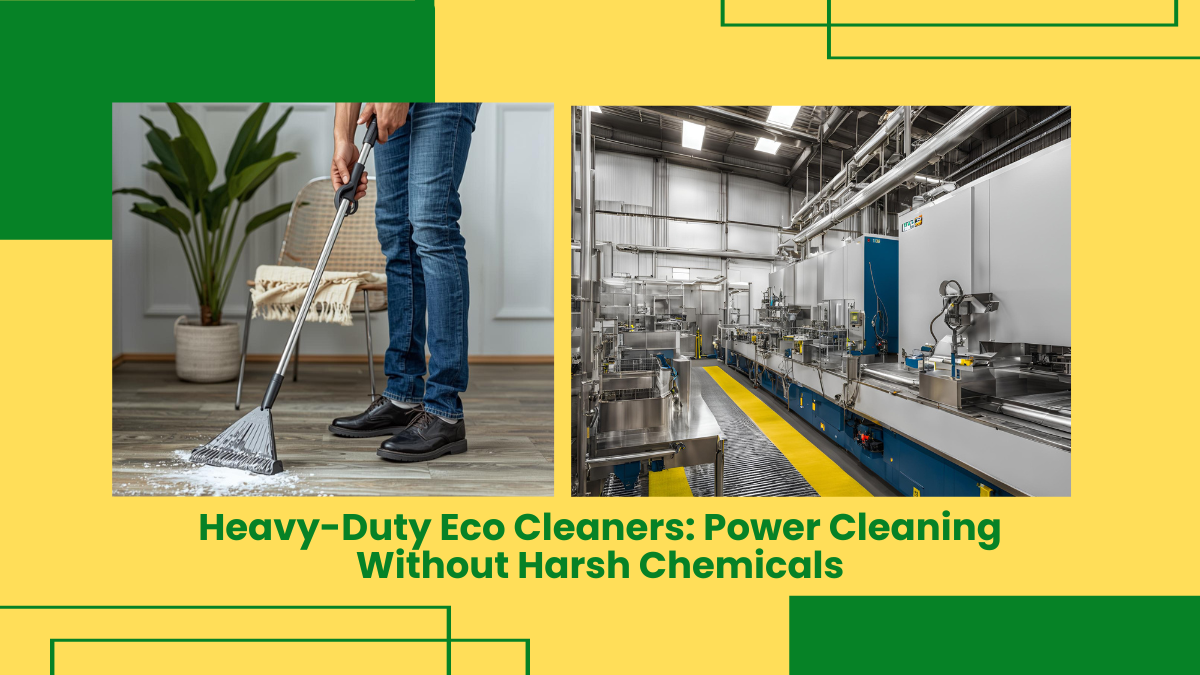
Modern industries need cleaning systems that work effectively without creating secondary problems. Heavy-duty eco cleaners are formulated to balance cleaning strength with environmental and operational responsibility.
They are built for industrial performance, not light household cleaning, making them suitable for demanding environments while remaining safer for daily use.
How Heavy-Duty Eco Cleaners Solve These Problems
Powerful Cleaning Without Aggressive Chemistry
Eco cleaners use advanced surfactant systems that break down dirt, oil, and grease at a molecular level. Instead of dissolving contaminants with harsh solvents, they:
- Loosen bonded particles
- Lift grease from surfaces
- Allow easy rinsing
- Work efficiently at controlled concentrations
This delivers strong cleaning performance without corrosive reactions.
Safer for Workers
Heavy-duty eco cleaners are typically:
- Low odor
- Non-flammable
- Free from aggressive vapors
- Safer for skin contact during controlled use
This creates healthier working conditions and reduces dependency on heavy protective gear.
Reduced Equipment Damage
Because these cleaners are surface-compatible, they clean without stripping coatings or damaging materials. This helps protect:
- Machinery components
- Production equipment
- Floor coatings
- Structural surfaces
Long-term maintenance costs are reduced as a result.
Easier Wastewater Treatment
Eco-friendly formulations break down more easily in wastewater systems. This leads to:
- Lower treatment loads
- Better compliance control
- Reduced environmental impact
- Cleaner discharge systems
Industries benefit from simpler regulatory management.
Multi-Surface Compatibility
Heavy-duty eco cleaners can be used across:
- Factory floors
- Machinery
- Storage areas
- Transport vehicles
- Production lines
- Industrial walls and ceilings
This reduces the need for multiple chemical products and simplifies procurement.
Common Industrial Applications of Heavy-Duty Eco Cleaners
Manufacturing Plants
Used for removing grease, dust, and production residues from machines, tools, and working surfaces, improving operational reliability.
Warehouses and Logistics Centers
Help maintain clean floors, loading zones, and storage areas, reducing slip risks and improving safety compliance.
Automotive and Engineering Units
Used for cleaning engine parts, workshop floors, tools, and service areas without harming materials or drainage systems.
Food and Processing Facilities
Support hygiene standards by removing grease and residues without introducing contamination risks.
Infrastructure and Utilities
Used in maintenance of power plants, water treatment units, and service corridors where safety and cleanliness are critical.
Choosing the Right Heavy-Duty Eco Cleaner
Understand the Contaminant Type
Different industries face different dirt profiles:
- Oil-based grease
- Carbon deposits
- Industrial dust
- Chemical residues
- Organic waste
Selecting the right formulation improves performance and reduces consumption.
Match the Application Method
Eco cleaners can be applied through:
- Manual scrubbing
- Spray systems
- Pressure washers
- Foam systems
- Soaking methods
The right product ensures effective cleaning across methods.
Check Safety and Environmental Profile
Choose cleaners that support:
- Biodegradability
- Low toxicity
- Surface safety
- Wastewater compatibility
This reduces long-term operational risk.
Prevention Tips: Reducing Heavy Cleaning Requirements
Heavy-Duty Eco Cleaners-Cleaning is essential, but prevention lowers costs and effort.
Schedule Regular Light Cleaning
Frequent light cleaning prevents thick buildup and reduces the need for heavy chemical usage.
Control Spill Sources
Oil leaks, chemical drips, and dust sources should be addressed through maintenance to reduce contamination at the source.
Train Staff on Correct Usage
Proper dilution, contact time, and cleaning technique reduce waste and improve results.
Maintain Equipment and Seals
Preventive maintenance reduces leaks that cause contamination in the first place.
Standardize Cleaning Protocols
Clear SOPs ensure consistent results and reduce misuse of cleaning agents.
The Role of Digital Integration in Industrial Cleaning Management
Modern cleaning operations depend on clear communication and process control. This is where Ecochem’s digital signage platform supports industrial environments.
By securely connecting with over 100 applications, Ecochem helps industries:
- Display cleaning schedules on-site
- Share SOPs and safety instructions
- Communicate chemical handling guidelines
- Track compliance notices
- Display maintenance reminders
- Reinforce sustainability practices
Digital displays placed in operational areas ensure that cleaning processes are followed correctly and consistently, reducing human error and operational gaps.
Why Heavy-Duty Eco Cleaners Are a Smart Long-Term Choice
Using responsible cleaning solutions impacts more than cleanliness. It supports:
- Worker health
- Equipment lifespan
- Compliance management
- Wastewater control
- Brand credibility
- Sustainability commitments
Industries that shift to eco-friendly systems often experience smoother operations, lower maintenance costs, and stronger compliance records.
Final Perspective
Industrial cleaning does not need to come at the cost of safety or environmental damage. Heavy-duty eco cleaners prove that strong performance and responsible chemistry can coexist.
By choosing the right cleaning solutions, following preventive practices, and supporting operations with clear communication through platforms like Ecochem, industries can maintain high cleanliness standards without compromising long-term sustainability.
Clean systems run better. Safe environments work better. And responsible cleaning builds stronger industrial operations.
FAQ’S
What are heavy-duty eco cleaners?
Heavy-duty eco cleaners remove tough industrial dirt, grease, and residues using safer, biodegradable ingredients.
Are heavy-duty eco cleaners effective for industrial use?
Yes, they clean heavy contamination while remaining safer for workers, equipment, and wastewater systems.
Where can heavy-duty eco cleaners be used?
They are suitable for factories, warehouses, workshops, food processing units, and industrial floors.
Do eco cleaners damage machines or surfaces?
No, properly formulated eco cleaners clean effectively without causing corrosion or surface damage.
How often should heavy-duty eco cleaners be used?
Regular scheduled cleaning prevents buildup, improves safety, and reduces long-term maintenance costs.
Written By: Vinny Jain