Introduction
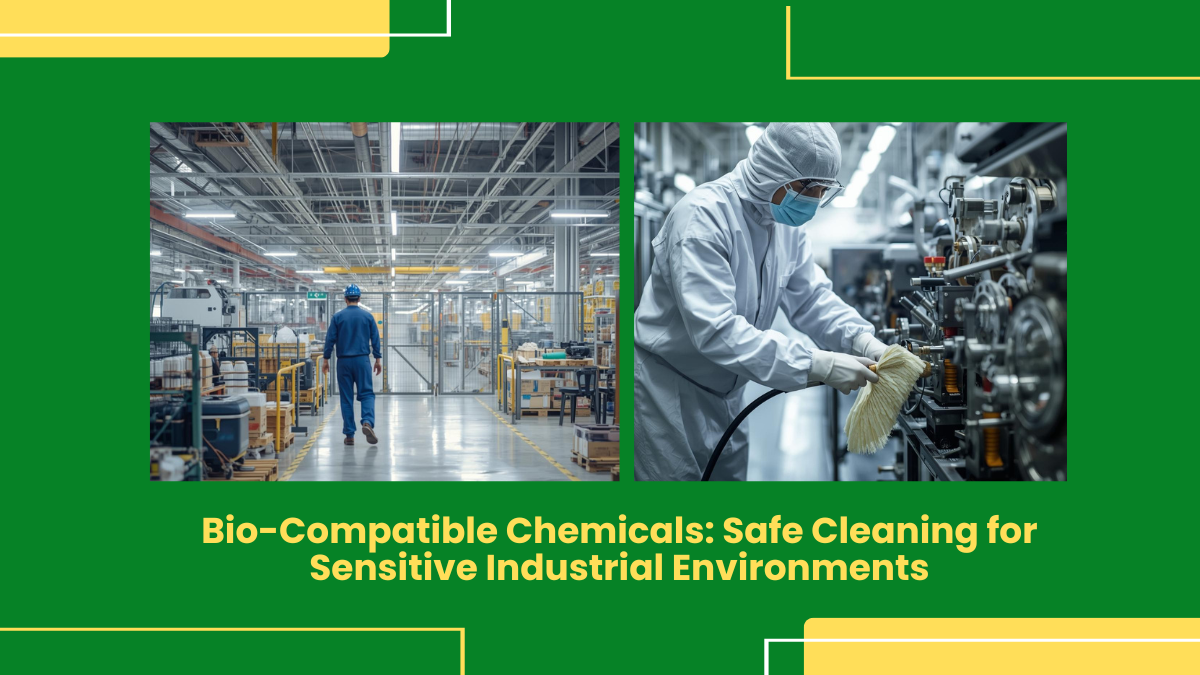
Industrial cleaning is no longer limited to removing visible dirt and grease. Many modern industries operate in environments where safety, hygiene, and material sensitivity are just as critical as cleanliness. Facilities such as pharmaceutical plants, food processing units, electronics manufacturing, laboratories, healthcare infrastructure, and cleanrooms require cleaning solutions that work without causing harm.
Traditional industrial cleaners often contain aggressive compounds that may clean quickly but leave behind risks. Chemical residues, surface reactions, and airborne vapors can compromise product quality, worker health, and compliance standards.
This is where bio-compatible chemicals play a vital role. These cleaning solutions are designed to work in harmony with sensitive environments. They remove contaminants while remaining safer for people, materials, and biological systems.
This guide explains the key challenges faced by sensitive industrial environments, how bio-compatible cleaning solutions address them, and what preventive practices help maintain long-term cleanliness and safety.
Problems in Sensitive Industrial Cleaning Environments
Risk of Chemical Contamination
Sensitive industries operate under strict hygiene and contamination controls. Conventional cleaning chemicals can introduce risks such as:
- Residual toxicity on surfaces
- Chemical traces affecting products
- Airborne vapors are settling on the equipment
- Cross-contamination between zones
Even small amounts of residue can lead to rejected batches, failed audits, or safety concerns.
Surface and Material Sensitivity
Many facilities use specialized materials, including:
- Stainless steel equipment
- Medical-grade plastics
- Electronic components
- Coated surfaces
- Rubber seals and gaskets
Aggressive cleaners may react with these materials, leading to corrosion, discoloration, or surface degradation.
Worker Exposure Concerns
Employees in sensitive environments often work in enclosed or controlled spaces. Exposure to harsh chemicals can result in:
- Skin irritation
- Breathing discomfort
- Eye sensitivity
- Long-term health risks
Protecting workers is as important as protecting products and infrastructure.
Regulatory and Compliance Pressure
Industries such as pharmaceuticals, food processing, and healthcare face strict regulatory oversight. Improper cleaning chemicals can cause:
- Non-compliance with safety standards
- Audit failures
- Documentation challenges
- Increased inspection frequency
Meeting compliance requires both effective cleaning and chemical safety.
Wastewater and Environmental Impact
Disposal of harsh chemicals places pressure on wastewater systems. Sensitive facilities often need to meet higher discharge standards, making non-biodegradable cleaners a liability.
Why Industries Are Shifting to Bio-Compatible Chemicals
Sensitive environments require cleaning agents that clean effectively without introducing new risks. Bio-compatible chemicals are formulated to align with biological systems rather than disrupt them.
They focus on safety, material compatibility, and controlled performance, making them suitable for environments where cleanliness must coexist with caution.
How Bio-Compatible Chemicals Solve These Challenges
Effective Cleaning Without Toxic Residues
Bio-compatible chemicals are designed to break down dirt, oils, and organic residues while leaving minimal chemical traces. Their formulations support:
- Efficient contaminant removal
- Easy rinsing
- Reduced residue formation
- Safer post-cleaning surfaces
This is critical in environments where product contact surfaces must remain uncontaminated.
Safe Interaction with Sensitive Materials
These chemicals are tested for compatibility with:
- Metals and alloys
- Plastics and polymers
- Seals and coatings
- Electronic housings
This ensures that repeated cleaning does not weaken surfaces or compromise equipment integrity.
Improved Worker Safety
Bio-compatible chemicals typically have:
- Low odor
- Reduced skin irritation risk
- Minimal vapor release
This creates a safer working environment and lowers reliance on heavy protective equipment.
Support for Hygiene-Critical Operations
In food, pharmaceutical, and healthcare facilities, cleaning must support hygiene goals without introducing new hazards. Bio-compatible chemicals help maintain:
- Clean production zones
- Controlled contamination levels
- Safer contact surfaces
Their balanced chemistry supports consistent sanitation practices.
Easier Wastewater Management
Many biocompatible cleaning solutions are biodegradable or easier to treat in effluent systems. This helps facilities manage:
- Discharge quality
- Treatment costs
- Environmental compliance
Lower environmental load supports long-term sustainability goals.
Industries That Benefit Most from Bio-Compatible Chemicals
Pharmaceutical Manufacturing
Cleaning agents must protect product integrity while maintaining strict hygiene standards. Bio-compatible chemicals reduce contamination risks during routine cleaning.
Food and Beverage Processing
Food-contact surfaces demand safe cleaning solutions that do not leave harmful residues. These chemicals support hygiene without affecting taste, smell, or safety.
Electronics and Precision Manufacturing
Sensitive electronic components require cleaning without moisture damage or chemical reaction. Bio-compatible formulations reduce risk to delicate parts.
Healthcare and Laboratory Facilities
Medical environments require frequent cleaning without exposing patients or staff to aggressive chemicals. Bio-compatible solutions support safety and cleanliness together.
Cleanrooms and Controlled Environments
Cleanrooms rely on controlled chemistry to prevent airborne or surface contamination. Bio-compatible chemicals align with strict cleanliness requirements.
Choosing the Right Bio-Compatible Chemical
Understand the Cleaning Objective
Different environments require different cleaning actions, such as:
- Removing organic residues
- Eliminating oils and grease
- Maintaining hygiene without disinfection
- Cleaning contact surfaces
Matching the formulation to the task improves effectiveness and safety.
Check Compatibility with Materials
Ensure the cleaner is suitable for all surfaces it will contact. Compatibility testing prevents long-term surface damage.
Review Safety and Compliance Information
Look for products that support regulatory standards relevant to your industry, including hygiene, safety, and environmental requirements.
Consider Application Methods
Bio-compatible chemicals can be applied using:
- Manual wiping
- Spray systems
- Foam application
- Controlled soaking
The right formulation supports consistent results across methods.
Prevention Tips for Maintaining Safe Cleaning Standards
Cleaning effectiveness improves when contamination is controlled at the source.
Implement Routine Cleaning Schedules
Frequent, light cleaning reduces the need for stronger chemical action and lowers residue risks.
Control Cross-Contamination
Clear zoning, color-coded tools, and defined cleaning procedures prevent contamination between sensitive areas.
Train Staff on Proper Chemical Handling
Even safe chemicals require correct dilution, contact time, and rinsing. Training ensures consistency and safety.
Maintain Equipment and Infrastructure
Leaks, worn seals, and damaged surfaces increase contamination risks. Preventive maintenance reduces cleaning demand.
Document Cleaning Protocols
Clear SOPs support audits, training, and compliance while ensuring consistent practices across shifts.
Supporting Safe Cleaning Through Digital Communication
Managing cleaning processes in sensitive environments depends on clear communication. This is where Ecochem’s digital signage platform adds operational value.
By securely connecting with over 100 applications, Ecochem enables facilities to:
- Display cleaning schedules and SOPs
- Share chemical safety guidelines
- Communicate hygiene protocols
- Display compliance updates
- Reinforce contamination control practices
Digital displays placed in production zones, cleanrooms, and staff areas help ensure that cleaning procedures are followed correctly and consistently.
Why Bio-Compatible Chemicals Support Long-Term Operational Stability
Choosing safer cleaning chemistry influences more than hygiene. It supports:
- Product quality
- Worker well-being
- Equipment lifespan
- Compliance readiness
- Environmental responsibility
Facilities that adopt bio-compatible chemicals often experience fewer disruptions, smoother audits, and safer working conditions.
Closing Perspective
Sensitive industrial environments demand more than strong cleaning. They require balance. Bio-compatible chemicals provide that balance by delivering effective cleaning while respecting people, materials, and biological systems.
When paired with preventive practices and clear operational communication through platforms like Ecochem, industries can maintain high cleanliness standards without introducing unnecessary risks.
Safe cleaning builds trust. Controlled processes protect quality. And responsible chemistry supports sustainable industrial growth.
What are bio-compatible chemicals?
Bio-compatible chemicals clean effectively while remaining safe for people, sensitive surfaces, and biological systems.
Where are bio-compatible chemicals commonly used?
They are used in pharmaceuticals, food processing, healthcare, laboratories, cleanrooms, and sensitive manufacturing environments.
Are biocompatible chemicals safe for frequent use?
Yes, they are designed for regular cleaning with reduced health, surface, and environmental risks.
Do bio-compatible chemicals leave harmful residues?
No, they rinse easily and leave minimal residues, supporting hygiene and contamination control.
How do bio-compatible chemicals support compliance?
They help meet safety, hygiene, and environmental standards required in regulated industrial environments
Written By: Vinny Jain